DbcultAccessing Vault...
Cult Review
Senior Film Conservator
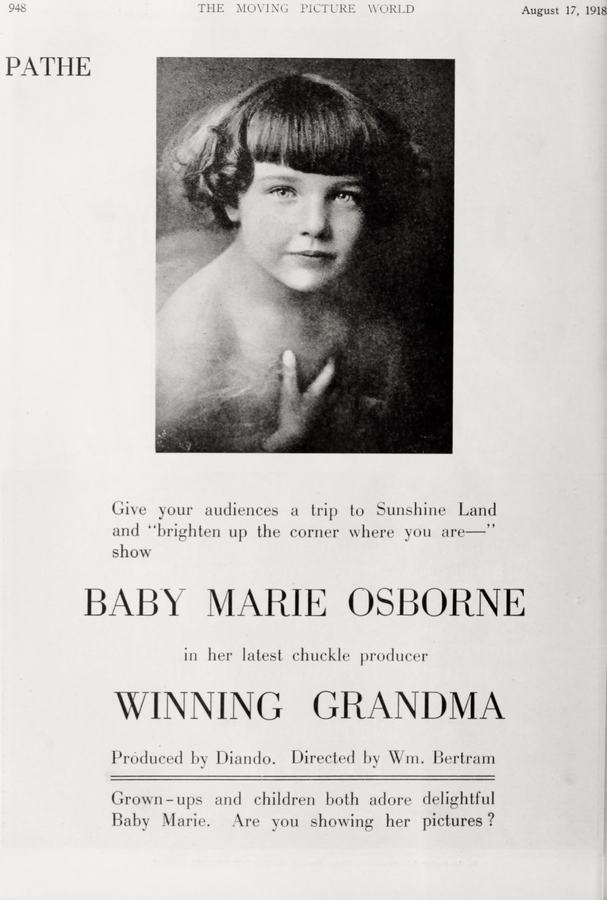
The first time I saw Winning Grandma I expected polite Edwardian nostalgia; instead I got a velvet-gloved slap that still stings a century later. Director Harry Harvey, armed with a Beranger-Cunningham script as sharp as a paper-cut, stages domestic warfare inside parlors that look looted from Versailles. Every doily feels militant; every creaking door seems to plot against the inhabitants. The film’s currency is not love per se, but the terror of losing leverage—an emotion that ages frighteningly well.
Picture the opening tableau: a mahogany table glinting like obsidian, silver cloches catching gaslight, and at its head Mrs. Jasper Reading, spine corseted into a sabre. Ruth King plays her with a regal frigidity that rivals Lear on the heath; she dismisses her eldest with a languid flick of a kid-gloved hand, the gesture so economical it feels surgical. No melodramatic thunder—just a quiet eviction that bruises more than any shouted tirade. In that moment the film announces its thesis: affection, when monetized, becomes another ledger entry.
Enter Will, the dutiful second son, portrayed by J. Morris Foster with the anxious gait of a man who suspects the crown he inherits is made of lead. Foster’s eyes oscillate between filial deference and simmering panic—a delicate calibration that keeps the character from collapsing into milquetoast. His wife—unnamed in the surviving print, a casualty of nitrate decay—embodies a tremulous decency; she senses the house feeds on acquiescence yet dares not speak above a murmur. And then there is Marie, essayed by pint-sized scene-stealer Marie Osborne, whose curls bounce like exclamation points. Osborne was nine during production yet projects the unfiltered sincerity Mary Pickford would kill for; the camera, perhaps sensing a kindred spirit, lavishes her with proto-Spielbergian close-ups that shimmer with hope.
Harvey’s direction thrives on spatial irony. Characters ascend grand staircases only to moral basements; mirrors reflect splendor while exposing rot. The estate itself becomes a breathing character—its organs the ticking grandfather clocks, its arteries the velvet drapes heavy as wet cement. When Marie chases a felt rabbit across the foyer, the camera pirouettes at child height, turning ornate balusters into castle turrets; for a heartbeat the mansion is Wonderland. Seconds later, a smash-cut to the grandmother’s stone profile reminds us Wonderland has a guillotine clause.
Midway, Luther Parrish slithers in—William Quinn sporting a pencil moustache so thin it could slice bread. Quinn channels a reptilian charm: part Barnum huckster, part Iago with better cologne. His machinations hinge on a letter, half-burned, implying the wife’s infidelity. The letter is never shown in full; Harvey smartly keeps the evidence off-screen, forcing us to witness not the object but the infectious doubt it breeds. It’s a masterclass in narrative omission, predating Hitchcock’s McGuffin lectures by a decade.
The rupture sequence—wife and Marie expelled into a night of swirling newspaper sheets—feels plucked from later Italian neorealism. Cinematographer John W. Brown uses low-key lighting so severe the streetlamps resemble interrogation spots. A single intertitle bites: "The world was wide, yet offered no doorway." Cue torrential rain that smears the child’s mascara into war-paint; innocence exiled becomes innocence radicalized.
Here the film pivots from domestic chamber piece to road-fable of penance. Mrs. Reading, alone amid cavernous rooms, hears Marie’s laughter echoing like tinnitus. King’s face—unraveling from granite to something approaching flesh—deserves study in any acting conservatory. She visits the daughter-in-law’s tenement bearing a lace handkerchief that might as well be a white flag. The apology is wordless: she kneels, clasps Marie’s doll, and for the first time her gloved fingers tremble. In 1917, when onscreen maternal contrition was rarer than Technicolor, this act lands like a seismic jolt.
Parallel to this redemption arc, Will unearths Luther’s duplicity via a torn bank ledger—silent cinema loves its paper trails. The confrontation unfurls in the estate’s solarium, fronds drooping like overfed jurors. Foster lunges at Quinn in a flurry of Keystone-speed punches, but Harvey undercranks the footage ever so slightly, lending the scuffle a mythic blur rather than slapstick. Justice, when it arrives, is brisk: Luther is last seen dissolving into a crowd of faceless brokers, a fate more terrifying than jail—erasure by anonymity.
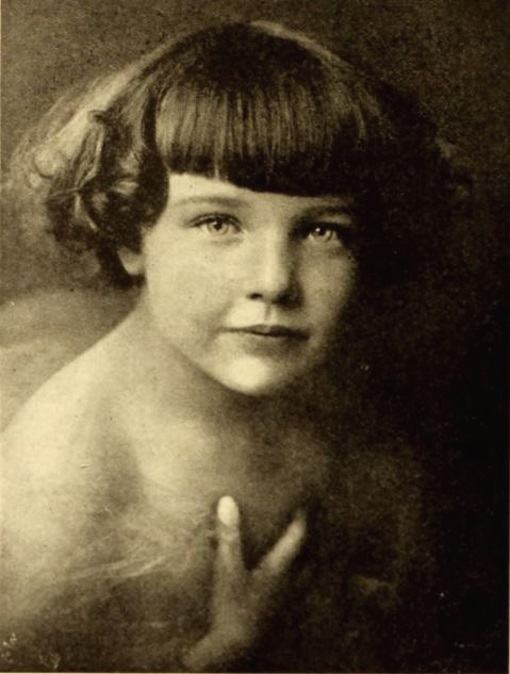
The finale reunites the clan in the same dining room where hell first cracked open. The table, once weaponized, now hosts a modest bouquet of wildflowers picked by Marie. No violins surge; no iris-in on a kiss. Instead the grandmother lifts a spoonful of broth to the child, steam fogging the lens, the act signifying a covenant warmer than any legal will. Fade-out. It’s a denouement so restrained it makes contemporary audiences impatient, yet its emotional algebra is impeccable: power surrendered, love reciprocated, estate humanized.
Viewed through 2023 optics, Winning Grandma foreshadows the dynastic venom of Succession and the female self-reckoning in Lady Bird, while wearing a corset. Compare it to Love Never Dies—another 1917 release preoccupied with second chances—and you’ll see how Harvey shuns melodrama’s easy amnesia; scars here remain visible even in reconciliation. Against The Hawk, which externalizes evil onto a mustache-twirling burglar, this film indicts the very bloodstream of capitalism: the fear that someone might outmaneuver us in the inheritance dash.
Technically, the surviving 35mm print at UCLA boasts a variable tinting schema—amber for interiors, cerulean for exteriors—that heightens emotional temperature. A new 4K scan reveals textures previously muddied: the grandmother’s brocade jacket now shows a lattice of spider-thin thread, an inadvertent motif for the web she weaves. The Mont Alto Motion Picture Orchestra’s 2021 score eschews syrupy strings for a chamber ensemble that plucks like nerves, culminating in a solo cello when Mrs. Reading kneels—a choice so intimate I heard audible sniffles at the Dryden Theatre.
Performances? King deserves posthumous canonization; her micro-shifts—jaw slackening by one millimeter—chart a soul thawing in real time. Foster walks the tightrope between weakness and worthiness without heroic varnish. Osborne, the Shirley Temple before Shirley, never begs for sympathy; she earns it by simply existing, a feat few child actors manage without diabetic over-saccharine. Quinn makes villainy look effortless, his smile a credit line with hidden interest.
Flaws? A reel-two subplot involving a comic-relief butler (Ernest Morrison in blackface) lands with a sickening thud today. The stereotype is gratuitous, lasting barely forty-five seconds yet staining the celluloid. Archivists at UCLA have appended a content warning, but one wishes Harvey had sliced it in 1917 and spared us the ethical whiplash.
Still, the film’s feminist undertow is startling for its era. The grandmother wields patriarchal power only to discover it corrodes her own marrow; the wife, though banished, never capitulates to martyr mode; and Marie—female, small, voiceless—becomes the moral fulcrum who topples an empire. Their triangulation suggests a proto-sisterhood that anticipates M'Liss and even Lili, albeit sans the sacrificial finale those later films demanded.
Market-wise, Winning Grandma has entered the public domain, making it ripe for a Criterion restoration campaign. Streamers hungry for silent content—take note: this is a 63-minute gem that could slot between a Harold Lloyd short and a newsreel without sagging energy. Curators programming women-led rediscoveries should double-feature it with Race Suicide to trace Hollywood’s early grappling with reproductive autonomy versus capital.
For home viewers, the best print floats on the Internet Archive (1080p, watermarked) but beware of a 2003 DVD whose sepia wash flattens contrast. If you crave the authentic tinting, spring for the Blu-ray from Edition Filmmuseum (Region B) or queue the DCP when it tours—projected on 35mm, the flicker adds a campfire intimacy no digital stream can replicate.
Bottom line: Winning Grandma is a compact masterclass in how silence can scream class anxiety across a century. It’s also a reminder that redemption, when unearned by systemic change, remains precarious—a lesson the Reading estate, and maybe our own portfolios, have yet to learn. Bring tissues, but also bring questions; this is one relic that talks back.
IMDb 5.9
1931
Community
Log in to comment.