DbcultAccessing Vault...
Cult Review
Senior Film Conservator
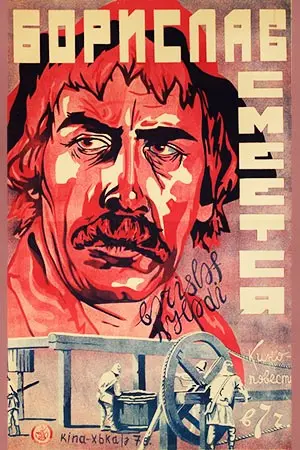
Is Borislav Smeyetsya worth your time in an era of high-definition blockbusters? Short answer: yes, but only if you possess the patience for a film that breathes through its soot and grime rather than its dialogue. This is a film for the historical purist and the lover of early Soviet-era realism; it is decidedly not for those seeking a lighthearted evening or a fast-paced narrative. It is a heavy film.
This 1927 production, directed by Iosif Rona and adapted from the works of Ivan Franko, serves as a haunting reminder of the human cost of progress. It doesn't just show a strike; it documents the slow, agonizing realization that the earth beneath our feet can be both a provider and a predator. The film functions as a bridge between the literary naturalism of the 19th century and the burgeoning cinematic language of the early 20th century.
Modern audiences will find value in Borislav Smeyetsya if they are interested in the roots of labor cinema and the aesthetic of the 1920s. It provides a raw, unvarnished look at industrialization that feels more authentic than many modern period pieces. However, its ideological rigidity can occasionally make it feel like a lecture rather than a story.
1) This film works because it captures the suffocating reality of industrial labor before it became a polished cinematic trope.
2) This film fails because its pacing often grinds to a halt under the weight of its own ideological messaging.
3) You should watch it if you want to see the DNA of labor cinema or if you appreciate the raw, unvarnished aesthetic of the 1920s silent era.
The setting of Borislav in the 1870s is not merely a backdrop; it is the film's most oppressive character. The cinematography utilizes the deep blacks of the oil pits to create a sense of claustrophobia that is almost physical. When we see the workers descending into the earth to extract ozokerite, the frame feels heavy, as if the weight of the soil is pressing against the lens. This isn't the sanitized version of history found in The Courtship of Myles Standish; this is history with dirt under its fingernails.
The visual storytelling here is remarkably sophisticated for 1927. The way the light reflects off the viscous earth wax creates a shimmering, almost supernatural effect. It reminds me of the obsession with natural resources seen in The Pioneers, but while that film often leans into the adventure of the frontier, Borislav Smeyetsya leans into the tragedy of the factory. The oil isn't just a resource; it's filmed like a sentient monster, predating the 'black goo' tropes of modern sci-fi. It swallows the light and the men alike.
The transition from the green fields of Galicia to the blackened pits of Borislav is handled with a jarring lack of sentimentality. There is a specific scene where a worker returns to his village, only to find that the industrial rot has followed him home. The contrast between the rural traditions and the mechanical future is stark and unforgiving. The film makes a bold statement: once the earth is opened, nothing remains pure.
Iosif Rona’s direction is surprisingly modern in its focus on texture. You can almost smell the sulfur and the sweat. The camera lingers on the machinery—the creaking derricks and the primitive pulleys—giving them a life of their own. This mechanical focus is a hallmark of the era, but here it feels less like a celebration of technology and more like a documentation of a cage. It lacks the playful spirit of something like Why Girls Say No, opting instead for a relentless, rhythmic gloom.
The pacing is deliberate, perhaps too much so for the uninitiated. The first half of the film builds the tension with the slow drip of an oil leak. We see the accumulation of grievances: the docked pay, the unsafe conditions, the arrogance of the owners. It’s a slow burn that eventually ignites in the second half. This rhythmic build-up is essential to understanding the strike. It isn't a sudden explosion; it's the inevitable result of pressure. The film treats the strike as a natural law, as certain as gravity.
One of the most striking sequences involves the fire in the pits. The use of practical effects and the sheer scale of the chaos are genuinely impressive. The way the fire illuminates the faces of the workers—half in shadow, half in orange light—creates a hellish tableau. It is in these moments that the film transcends its propaganda roots and becomes pure, expressive art. The mud is the message.
Vladimir Lisovskiy delivers a performance that is grounded in physicality. In the silent era, actors often leaned into theatrical overacting, but Lisovskiy understands the power of stillness. His face, often covered in a layer of grime, becomes a canvas for the exhaustion and burgeoning rage of the working class. He doesn't need intertitles to tell us he’s had enough; his shoulders do the talking. It’s a performance that stands in sharp contrast to the more stylized acting found in contemporary films like The Sea Tiger.
The supporting cast, including Matvei Lyarov and Ivan Zamychkovsky, provide the necessary archetypes. The capitalists are portrayed with a certain level of caricature—fat cigars and callous smiles—which is my biggest gripe with the film. While this was standard for the time, it robs the conflict of some of its nuance. If the villains are cartoons, the victory over them feels less earned. However, Lidiya Matsiyevskaya provides a grounded, emotional counterpoint as the matriarchal figure who sees the world she knew dissolving in the oil pits.
There is a brutal simplicity to the character arcs. They are not individuals so much as they are symbols of their class. While this might frustrate viewers who prefer deep psychological character studies, it fits the film’s grand, operatic scale. Borislav Smeyetsya isn't about one man’s journey; it’s about the movement of a mountain. The collective is the protagonist.
Yes, Borislav Smeyetsya is worth watching because it offers a rare, unflinching look at the birth of the labor movement through a lens that is both historically significant and visually arresting. While its silent-film conventions and ideological heavy-handedness may be a hurdle for some, the film’s raw power and atmospheric cinematography remain deeply impactful. It serves as a vital piece of cinematic history that captures a pivotal moment in social evolution.
Borislav Smeyetsya is a difficult, demanding, and ultimately rewarding piece of cinema. It doesn't care if you're comfortable. It wants you to feel the weight of the earth and the heat of the fire. While it lacks the sheer entertainment value of something like The Call of the Game, it possesses a gravitas that few films of its era can match. It is a cinematic fossil—preserved in the very earth wax it depicts—waiting to be rediscovered by those who value the grit of the past over the polish of the present. It’s flawed, it’s loud in its silence, and it is absolutely essential for understanding the roots of social realism in film. The laughter of Borislav is the sound of a world breaking and being remade. It is not a pleasant sound, but it is a necessary one.

IMDb —
1922
Community
Log in to comment.