DbcultAccessing Vault...
Cult Review
Senior Film Conservator
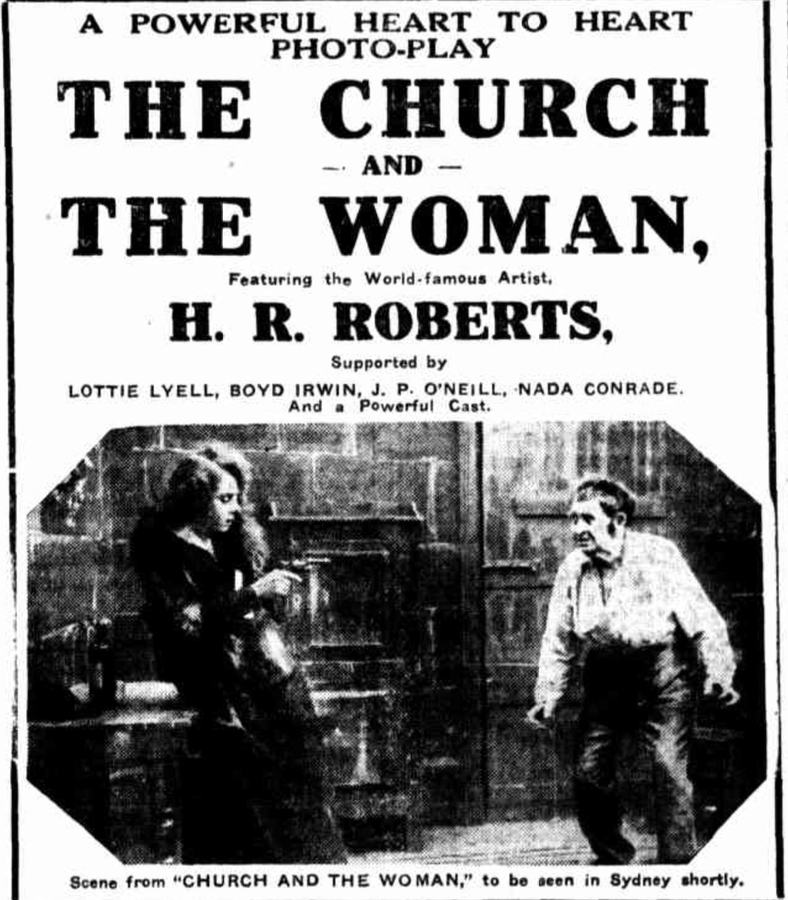
Raymond Longford’s 1917 one-reel marvel detonates its drama inside the hush of a confessional box, that cedar cubicle where the soul’s sewage meets divine silence. Nora O’Donnell—embodied by Nada Conrade with the porcelain vulnerability of a Pre-Raphaelite mourner—slides the lattice, breathes the wax-and-myrrh air, and unloads a family secret hefty enough to tilt the continent. Outside, kookaburras rip the dawn, unaware that canon law is about to square off against human craving.
The film lands in an Australia still wearing Victorian stays beneath its khaki work-shirt. Mixed marriage is not merely imprudent; it is a laceration in the social fabric, an upheaval ranked alongside cattle rustling and union agitation. Longford, ever the cultural cartographer, maps this tension with painterly economy: Protestant Eric’s theodolite glints against Catholic Nora’s rosary, metallic metaphors clashing in the same frame. Their beachside courtship—waves frothing like wet lace around their boots—feels illicit, almost concupiscent, because the camera frames them inside an irreligious vastness, the sky domed and indifferent.
George K. Chesterton Bonar plays Father Callaghan as a man whose cheekbones could slice parchment; every blink looks like a decade of prayer. He embodies the sacramental paradox: bound to absolve yet forbidden to act. Longford refuses the cheap halo; instead he gives us a cleric whose fingers twitch toward the candle snuffer, yearning to extinguish the problem literally and metaphysically. The close-up—rare in 1917 Australia—lingers on Bonar’s pupils, twin black holes swallowing the cosmos of his obligation.
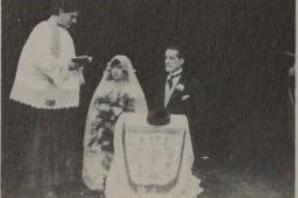
As Nora’s watchful aunt, Lottie Lyell utters no dialogue (the film is silent, save for the live musical accompaniment that originally toured with it), yet her micro-expressions sketch a treatise on complicity. Notice how she folds the altar linen: each crease a reprimand, each corner a verdict. Lyell, Longford’s long-time creative consigliere, weaponizes stillness; the woman could make a teacup clink like a cathedral bell.
Cinematographer For France veteran J. C. Macgregor lights the nave with shards of kaleidoscopic stained-glass, so that when the bishop pronounces interdict, the very floor glows bruise-purple. Outside, the Australian sun is a Protestant deity—harsh, unfiltered, exposing. Nora and Eric’s final sprint to the steamer pier is shot against a white-hot noon, their silhouettes dissolving into nitrate grain, as if the country itself wants to erase them.
Place this 22-minute provocation beside The Innocence of Ruth and you’ll notice both traffic in female virtue as contested terrain. Yet whereas Ruth’s salvation hinges on male gallantry, Nora’s agency slices through clerical armor like a switchblade through silk. Stack it against Money Madness and the difference is doctrinal: Mammon versus Mortal Sin, both equally suspenseful engines.

Contemporary newspapers speak of fainting women in Pitt Street theatres, though historians suspect the publicity agent’s lurid flourish. Still, Catholic and Protestant mutual-aid societies issued rival pamphlets the following week, proving the film detonated discourse. In Adelaide, a screening was halted mid-reel when a Jesuit scholastic leapt onstage denouncing “Protestant propaganda.” Longford reportedly wired back: “Art neither kneels nor genuflects; it simply sees.”
The sole surviving print, rescued from a Tasmanian barn in 1978, was baked by mildew and time. The National Film Archive’s restorers coaxed images from emulsion that resembled cracked porcelain; they colour-timed the stained-glass glimmers to match the original tinting notes discovered in Longford’s diary. The new 4K scan reveals Boyd Irwin’s dimples—previously lost in murk—now winking like commas in a runaway sentence.
Watch the film today and feel the shiver of post-Snowden relevance: when does professional secrecy become moral cowardice? Replace confessional with encrypted hard-drive and you have a thriller as urgent as Rule G or Anton the Terrible. The Church and the Woman merely swaps data-mining for soul-mining.
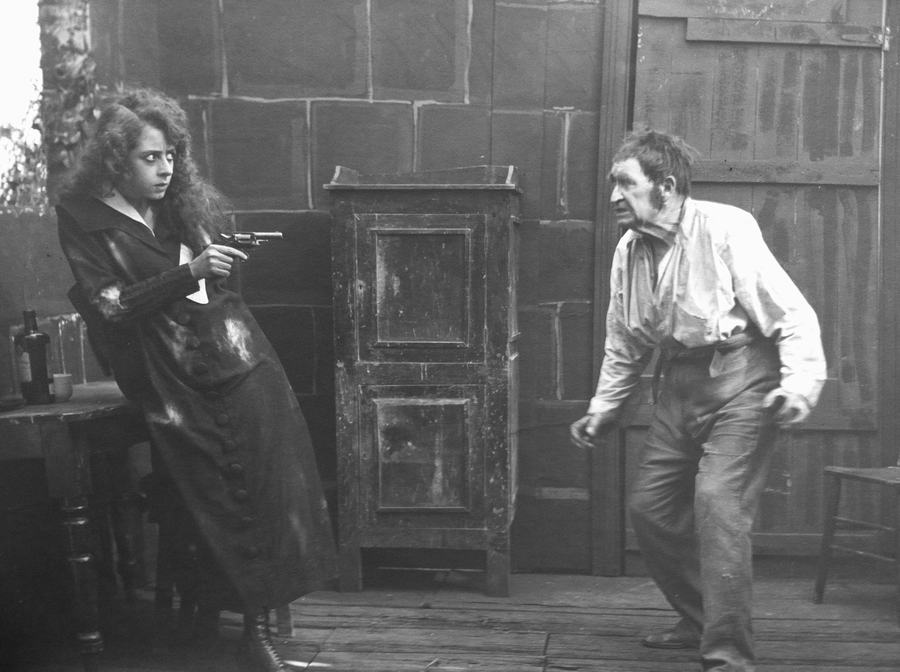
Nada Conrade’s Nora ripples between defiance and dread without the aid of intertitles; her quivering chin during the anathema scene should be archived as a masterclass in pre-method minimalism. Boyd Irwin’s Eric channels the laconic swagger of an Anzac on leave, voicelessly convincing us that love can be both compass and bayonet. And Bonar—oh, Bonar—lets guilt leak through the cracks of his stoicism, a slow-motion martyrdom.
Longford, often eclipsed overseas by his contemporary Atop of the World in Motion directors, marshals extras, livestock, and oceanic weather like a general with a poet’s heart. He could stretch a £50 budget until it sang like a cathedral organ. Compare his use of natural light to Under the Gaslight’s studio-bound histrionics and you’ll see why historians hail him as the antipodean sunlight realist.
Astoundingly, no. Longford declines to crown either dogma or desire. The closing shot—a vacant confessional door swaying in the wind—suggests institutional hollowness, yet the lovers’ escape is hardly triumphant; they sail toward an uncertain horizon, faith and future both unmoored. The film’s true heresy is ambiguity, a commodity rarer than papal indulgences in 1917.
Modern curators commission scores ranging from string-quartet minimalism to industrial electronica. The most haunting iteration premiered at Sydney Festival: a lone soprano weaving Gaelic lament with Lutheran chorale, her voice looped until it became a Möbius strip of ecumenical ache. Bring tissues; the polyphony will kneecap you.
Because in an era where algorithmic feeds decide whom we marry, vote for, or cancel, a 107-year-old silent flick about the sanctity—and scourge—of secrets feels like a cold blade against the throat of complacency. It clocks under half an hour, costs less than a barista coffee, and leaves you arguing with yourself long after the credits fade. Forget doom-scrolling; try doom-projecting this cellulite of celluloid onto your lounge-room wall.
The Church and the Woman is a pocket-sized powder-keg: a film that fits in the palm yet weighs like a missal inked in lead. It is not merely a relic for antiquarians; it is a mirror held up to every privacy policy we click, every NDA we sign, every whispered secret we trade for love or survival. Longford asks: when the soul is on the line, who among us keeps the seal—and who shatters it? As the empty confessional door keeps swaying, the question swivels toward you, viewer, and refuses to close.
IMDb 6.7
1936
Community
Log in to comment.