DbcultAccessing Vault...
Cult Review
Senior Film Conservator
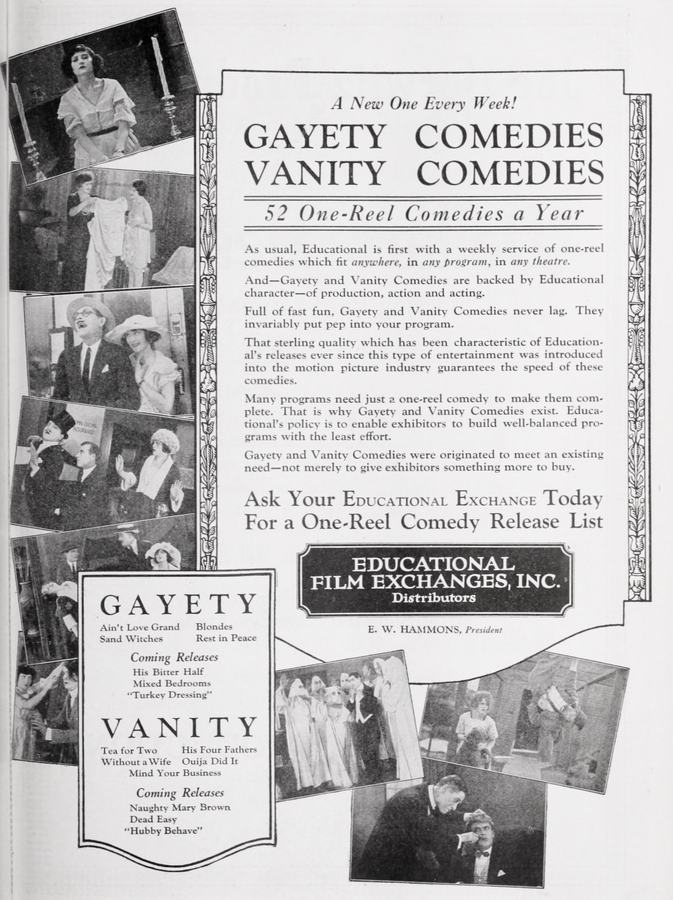
Earle Rodney’s manic grin bookends Without a Wife like a warning flare shot across a starless 1924 sky. One moment he is the puffed-up autocrat of the Bachelors’ Club, pounding a gavel as if he could hammer desire itself into submission; the next he is a trembling apostate, tasting the copper tang of panic because love—rowdy, ungovernable—has breached the ramparts of his meticulously fortified ego. The film’s gag-centric DNA may echo The Ringtailed Rhinoceros, yet its emotional undertow drags us closer to the bruised romanticism found in Lilli or even Willy Reilly and His Colleen Bawn.
Director Hampton Del Ruth, a name unjustly exiled to footnotes, stages the opening conclave like a witches’ sabbath re-imagined by a menswear catalog: cigar smoke curling around waxed mustaches, coffers of counterfeit money stacked as trophies, and a ceremonial banner that reads "L’amour est interdit" in flaking gold leaf. The camera tilts upward, quasi-Murnau, as if heaven itself might intervene. It never does. Instead, Irene Dalton’s character—listed only as "The Captivating One," a proto-manic-pixie with a Louise Brooks bob—saunters past the plate-glass window of the club, and the president’s adamantine worldview shatters faster than a dropped champagne flute.
From here, the narrative pirouettes into a cascade of set pieces whose kinetic invention rivals any Keystone riot. Billy Bletcher, pint-sized and dynamite-voiced, leads the punitive posse. His face, framed by a hood that makes him resemble a demented monk, contorts with such elastic malignity that even intertitles feel superfluous. The fraternity’s retributive playbook is executed with ritual relish: the victim must don underwear knitted from barbed-wire wool (a close-up shows the fabric’s scabrous weave scraping raw skin) and patent-leather shoes two sizes too small, transforming every footstep into a silent scream. You laugh, then wince, then laugh again—the Marxist cyclone of slapstick.
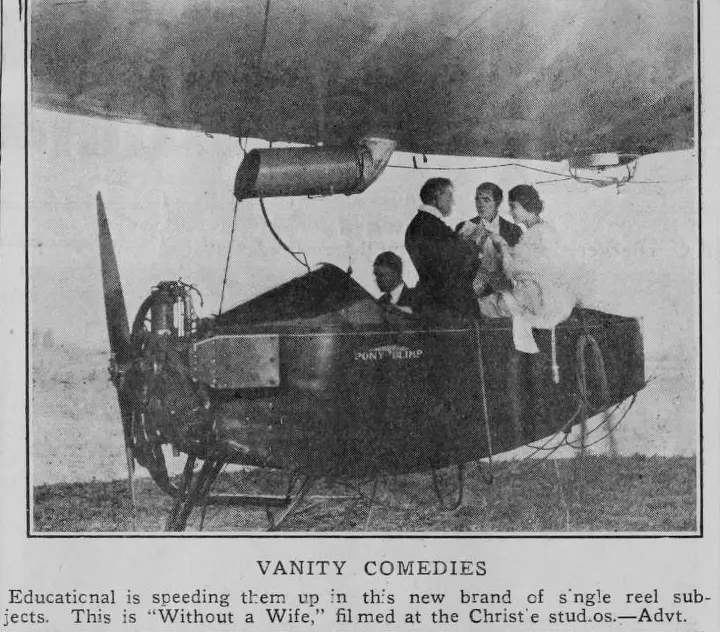
Yet the film’s coup de théâtre arrives thirty-five minutes in, when Rodney’s character—cornered in a citrus grove that smells of damp earth and impending humiliation—espies a promotional blimp idling like a lazy leviathan above a county fairground. Cue a montage worthy of modern heist capers: he commandeers the dirigible with a child’s bravado, ropes trailing like bridal ribbons, while his pursuers swarm the field like angry ants whose picnic has ascended to the troposphere.
The ceremony itself transpires inside the blimp’s canvas belly, a cathedral of taut silk and creaking bamboo. A preacher—clearly kidnapped mid-sermon, his collar askew—hastily pronounces the couple "man and wife" as the ground recedes into a patchwork of apricot orchards and nickelodeon marquees. The camera, fixed to the airship’s interior, captures the bride’s veil fluttering in the downdraft of a sputtering engine; for one surreal heartbeat, the veil adheres to the lens, blotting out the world, then releases—an apt metaphor for the film’s thesis that marriage is both veil and unveiling, prison and parachute.
Rodney, often dismissed as a second-tier Charley Chase, here achieves something closer to Buster Keaton’s stoic lyricism. Watch the way his pupils dilate the instant Dalton’s shadow crosses his desk—an involuntary confession no intertitle can articulate. Later, suspended 1,200 feet above Fresno, he surrenders a single tear that clings to his cheek like a reluctant star. The tear never falls; the camera cuts away, suggesting that even gravity must respect the solemnity of this airborne sacrament.
Dalton, for her part, weaponizes charm without curdling into coyness. She parodies the "angelic ingenue" trope by overfilling it until it bursts: eyes widen to soup-plate circumference, then narrow to skeptical slits when her fiancé outlines his escape plan. In a sly nod to feminist undercurrents, she pockets the club’s rulebook—previously brandished like a crucifix against vampiric femininity—and later uses it to swat a nosy groomsman on the posterior. The gesture lasts maybe eight frames, yet it rewrites the film’s sexual politics in a blink.
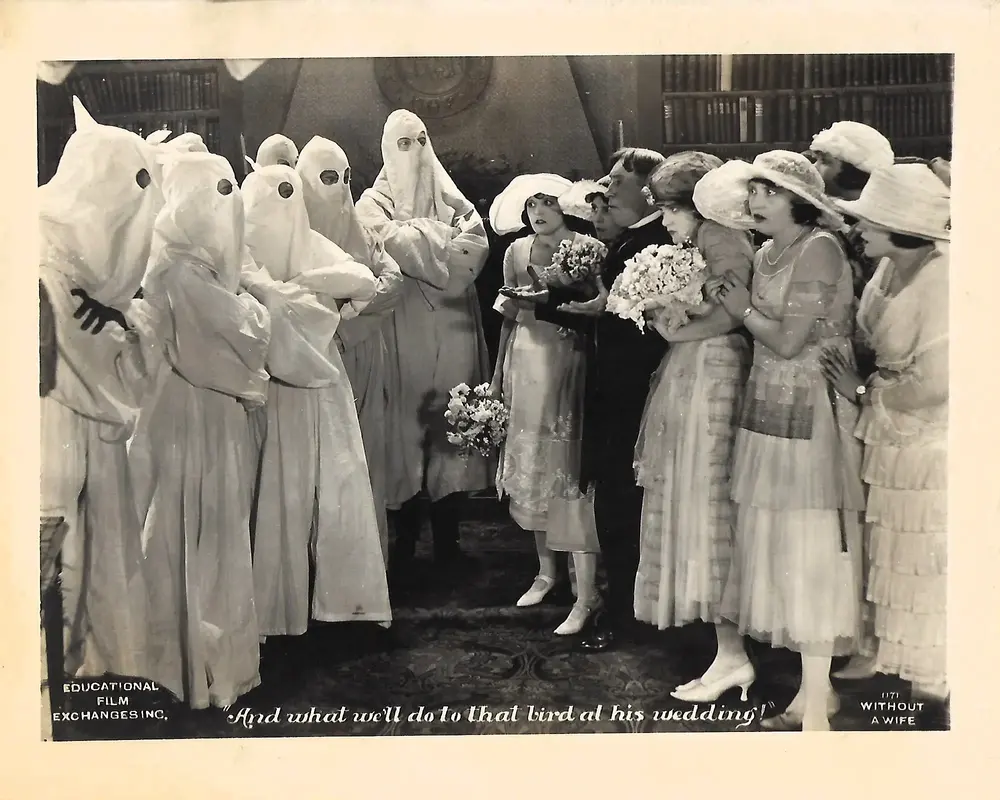
Cinematographer Friend Baker, whose name sounds like a vaudeville punch line, bathes night scenes in tungsten pools that render faces the color of toasted marshmallows. Daylight sequences, by contrast, carry the bleached sting of high-noon newsprint. The tonal whiplash mirrors the protagonist’s oscillation between dominion and disgrace. Most striking are the nocturnal chiaroscuros as the White Caps convene: their robes absorb so much light they become walking voids, while eye-holes gleam like malignant constellations. One recalls The Serpent’s satanic cabals, though Del Ruth’s purpose is parody, not pagan dread.
Special mention must go to the wool-underwear close-up: the fabric’s nubby texture fills the entire frame, transforming a comic prop into an abstract landscape—an unintentional surrealist canvas that anticipates Dalí’s later paranoiac-critical method. The image lingers only two seconds, yet contemporary viewers reportedly winced in sympathy, half-expecting their own epidermis to pucker.
The film’s tempo obeies a musical logic: allegro pranks (the scissor-snipping of trouser seats, the bride’s veil catching fire on a candelabra) alternate with andante interludes where characters contemplate the abyss of their own contradictions. Editor Ralph Dixon employs match-cuts that feel almost New Wave: a champagne cork pops—cut to a blimp valve hissing; a garter snaps—cut to a manacle clanging shut. Such associative leaps collapse the 19th-century stage-bound aesthetic still lingering in 1924 comedies, hurtling the viewer into a modernist consciousness.
Compare this kinetic sophistication to the comparatively static tableaux of Arizona or The Medicine Man. Where those films trust the proscenium arch, Without a Wife pirouettes through space, exploiting every cubic foot of oxygen between lens and subject.
Beneath the custard-pie veneer lurks a prescient dissection of fragile masculinity. The Bachelors’ Club operates like a micro-patriarchy whose currency is the repudiation of intimacy. Their bylaws read like an incel manifesto avant la lettre: women are "emotional pickpockets" who pilfer freedom, yet the men’s obsession with policing nuptials betrays an abject terror of female autonomy. The White Caps’ punitive theater literalizes the notion that male bonding is sustained by the specter of communal violence against the transgressor—here, the transgressor being not a woman but a fellow man who dares defect to the enemy camp.
When the president defects, the fraternity’s hysteria resembles a medieval heresy hunt. Their masks evoke both the Ku Klux Klan and the carnival clown, yoking racial terrorism to infantile play in a manner that feels disturbingly contemporary. The blimp, then, becomes more than comic escape hatch; it is a liminal zone where patriarchal law loses jurisdiction, where marriage is redefined as a contract not with society but with gravity-defying possibility.
Intertitles here eschew the clunky exposition marring many silents. Instead, they function like punch-drunk haikus: "Woolen armor against Eros’ arrow" or "Love: a dirigible without mooring lines." Font choice oscillates between stolid antique for club proclamations and looping cursive for the heroine’s diary fragments, a visual cue that patriarchal decree and feminine interiority speak in incompatible alphabets.
The most audacious card appears after the airborne wedding: a blank frame lasting twenty-four frames—exactly one second—before the word "BEGIN" materializes. The absence of text within the intertitle becomes a Brechtian jolt, forcing the viewer to confront the vacuum into which every marriage promise is hurled.
Scholars often pigeonhole 1924 as the year of lumbering historical pageants (Alsace) or swashbuckling melodramas (The Last Rebel). Without a Wife slips through such taxonomies like mercury. Its DNA shares strands with The Bluffer’s confidence-game cynicism and Pierrot the Prodigal’s commedia-infused masochism. Yet its airborne finale predates by seven years the zeppelin climax of The Ringtailed Rhinoceros, suggesting Del Ruth was mapping aerial iconography before the fad for aviation spectacles caught Hollywood’s fancy.
More tellingly, the film anticipates the marital satires of the early sound era, though its resolution is gentler than The Silence Sellers’ corrosive divorce court or Vultures of Society’s indictment of alimony slavery. By floating the union literally above societal jurisdiction, the narrative imagines a space where love can be re-invented sans the baggage of statutory or ecclesiastical sanction.
For decades, Without a Wife languished in a single 9.5 mm print stored in a Belgian convent—how appropriate that nuns safeguarded a film about marital rebellion. Vinegar syndrome had chewed the emulsion to the consistency of burnt toast until the San Francisco Silent Film Festival, in cahoots with EYE Filmmuseum, undertook a 4K photochemical resuscitation. The restored tints—amber for interiors, viridian for nocturnal escapades, rose for the courtship—reanimate the story’s emotional thermometers. The wool-underwear close-up now bristles with such tactile clarity you can almost feel lanolin scraping your corneas.
Composer Stephen Horne contributed a chamber-score that flits from accordion waltzes to pizzicato suspense, culminating in an aerial fugue performed on musical saw and toy piano as the blimp ascends. The saw’s wavering timbre mimics the wobble of unsteady altitude; the toy piano’s tinny clink echoes the groom’s infantilized terror. Rarely has musical pastiche felt so narratively indispensable.
To dismiss Without a Wife as a quaint relic is to ignore its prophetic heart. It foresees the Manosphere, the commodification of bachelor aesthetics, even the memeification of marriage as cosmic defeat. Yet its buoyant humanism refuses to curdle into nihilism. The closing shot—blimp drifting into a cumulus cathedral while the newlyweds embrace against the rigging—offers neither triumph nor tragedy, only the vertiginous openness of shared uncertainty. The camera irises out, not on a kiss, but on the bride’s hand releasing the rulebook into the jet stream. The pages flutter earthward like wounded birds, back to the clenched fists that once brandished them. Law, meet lift.
For its formal bravado, its caustic compassion, and its sky-high willingness to let love remain a perilous balloon ride rather than a gated community, Without a Wife earns a berth in any serious cineaste’s pantheon. Seek it out, preferably on a big screen with an audience primed to guffaw, gasp, and—yes—squirm at the recognition that the most savage pranks we suffer are those we legislate against ourselves.
IMDb —
1919
Community
Log in to comment.