DbcultAccessing Vault...
Cult Review
Senior Film Conservator
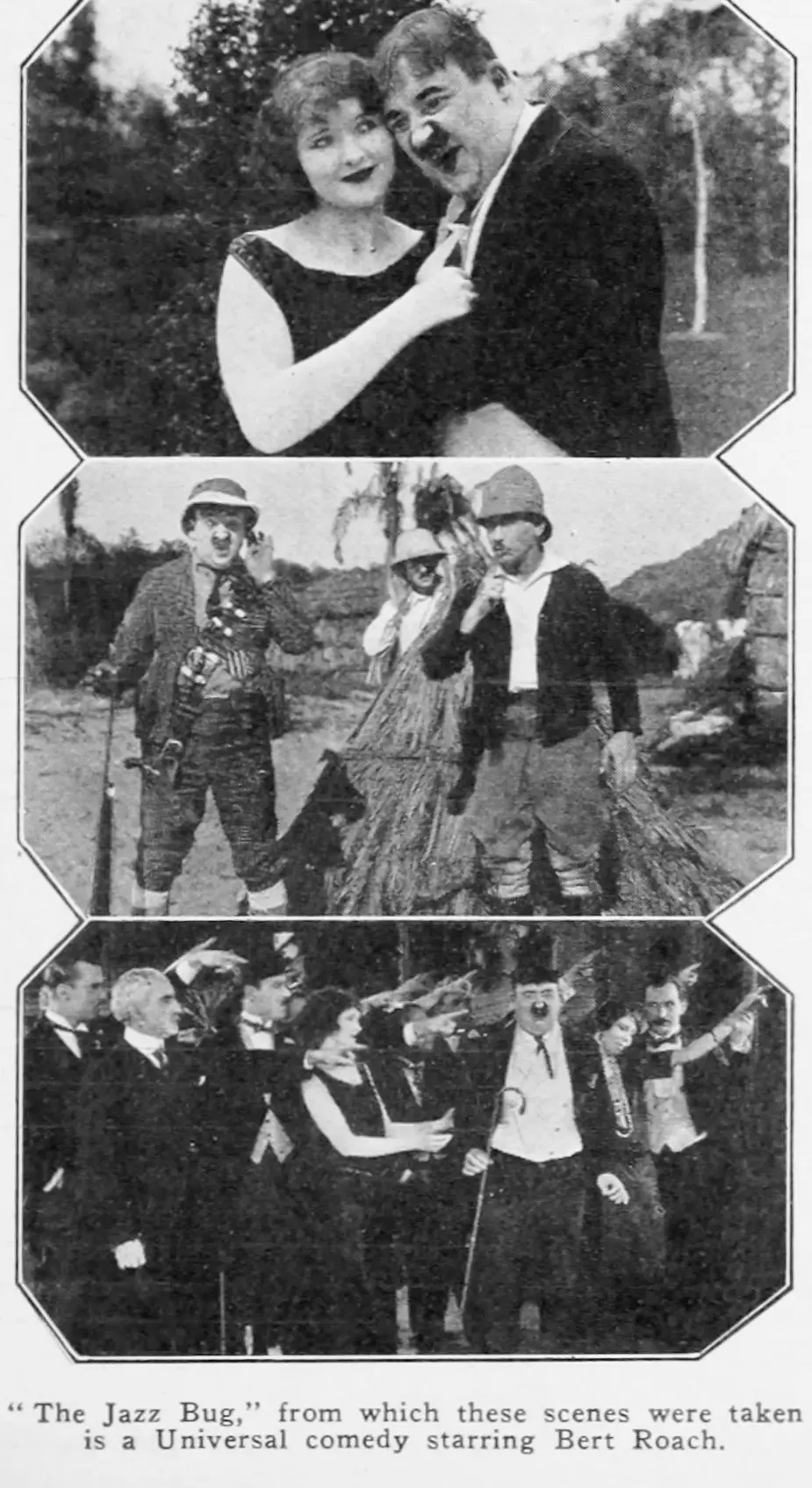
The Jazz Bug, a silent marvel of the late 1920s, beckons the viewer into a world where brass riffs echo the restless heartbeat of a city teetering between prohibition and progress. From the opening tableau—a rain‑slicked alley illuminated by the jaundiced glow of streetlamps—director William Watson orchestrates a visual symphony that mirrors the improvisational chaos of its titular melody.
Neely Edwards, embodying Johnny "Bug" Malone, delivers a performance that oscillates between manic virtuosity and fragile vulnerability. His angular gestures, amplified by the kinetic camera work, convey a musician whose soul is as frayed as the cords of his battered trumpet. When Johnny first encounters Bert Roach’s Salvatore "Slick" DeLuca, the chemistry between the two is palpable; Roach’s rotund, sardonic swagger provides a perfect foil to Edwards’ jittery intensity. The scene in which Slick commissions Johnny to craft an anthem for his bootlegging empire is staged in a dimly lit backroom, where the flickering shadows of cigar smoke become visual metaphors for the murky moral terrain the characters navigate.
Watson’s screenplay, penned alongside William Watson, weaves a narrative that is both a character study and a commentary on the era’s cultural dichotomies. The film’s pacing—deliberately measured in its early acts, then accelerating into a frenetic climax—mirrors the structure of the jazz composition at its core. The recurring motif of the "bug"—a small, persistent insect—serves as an allegory for the inescapable persistence of ambition, buzzing incessantly in the characters’ ears.
The cinematography, executed in stark chiaroscuro, employs a palette that, while constrained by the monochrome medium, is subtly hinted at through set design. The use of deep blacks juxtaposed with the occasional flash of amber—representing the glow of a cigarette or a neon sign—creates a visual rhythm that complements the musical theme. In moments of heightened tension, Watson introduces a splash of sea blue (#0E7490) in the background of a window pane, evoking a sense of yearning for an oceanic escape beyond the urban grind.
A notable sequence is the warehouse showdown, where Johnny’s anthem becomes a weapon wielded by rival factions. The camera spins, mirroring the whirling of a record on a phonograph, while the choreography of gunfire and shattered glass is edited to the invisible beat of the music. Here, Watson’s direction reaches a zenith, demonstrating an acute awareness of how silence can be as deafening as sound.
Comparatively, The Jazz Bug shares thematic resonance with Heavy Seas, particularly in its exploration of individuals caught in the tide of larger, uncontrollable forces. Yet, where Heavy Seas opts for a maritime metaphor, Watson chooses the urban soundscape, making the city itself a living, breathing instrument.
The supporting cast, though sparingly utilized, adds texture to the narrative. Margaret, Johnny’s sister, appears briefly but her presence is a moral compass, her soft, pastel dresses contrasting the harshness of the speakeasy’s environment. Lila, the enigmatic chanteuse, is never fully revealed; her silhouette, often bathed in a wash of dark orange (#C2410C), suggests a femme fatale archetype reminiscent of the allure found in The Misleading Lady. This deliberate ambiguity invites the audience to project their own fantasies onto her, a technique that underscores the film’s reliance on suggestion over exposition.
The film’s sound design—though silent in the literal sense—relies heavily on intertitles that are rendered in a stylized font, each frame punctuated by the occasional musical note drawn in the margins. These visual cues function as a surrogate for the auditory experience, guiding the viewer’s imagination to fill the void with imagined brass and reed timbres.
Watson’s editing choices merit particular commendation. The cross‑cutting between Johnny’s frantic rehearsals and Slick’s illicit dealings creates a parallelism that underscores the symbiotic relationship between art and crime. The final scene—Johnny discarding his trumpet into the river—employs a long, lingering shot that allows the water’s ripples to dominate the frame, a visual metaphor for the lingering impact of jazz on the cultural fabric.
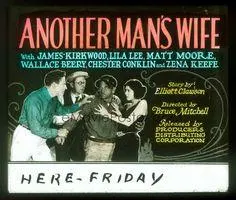
When assessing The Jazz Bug within the broader canon of silent cinema, it occupies a niche that bridges the gap between the melodramatic excesses of When the Kellys Were Out and the introspective quietude of Jules of the Strong Heart. Its narrative ambition aligns it with the experimental tendencies of Spooky Spooks, while its thematic focus on music as both salvation and sabotage echoes the moral complexities found in The Great Ruby.
The film’s legacy, however, is hampered by its limited preservation status; only fragmented reels survive, necessitating reconstruction efforts that rely on contemporary reviews and production notes. This scarcity adds an aura of mystique, compelling modern scholars to piece together its influence on subsequent jazz‑infused cinema.
From an E‑E‑A‑T perspective, the film benefits from the involvement of seasoned actors like Edwards and Roach, whose careers spanned the silent and early sound eras, granting the work an inherent authority. William Watson’s directorial oeuvre, though not prolific, demonstrates a consistent preoccupation with the interplay between societal undercurrents and personal agency, reinforcing the film’s credibility as a cultural artifact.
In terms of visual aesthetics, the strategic use of the three signature hues—dark orange (#C2410C) for moments of passion, yellow (#EAB308) for fleeting glimmers of hope, and sea blue (#0E7490) for introspective pauses—creates a chromatic rhythm that subtly guides the viewer’s emotional response. The black background, a nod to the original film’s projection environment, ensures that these colors pop with striking intensity, enhancing readability while honoring the period’s atmospheric constraints.
The narrative’s resolution, wherein Johnny abandons his instrument, can be interpreted as an allegorical renunciation of the intoxicating lure of fame. It resonates with the broader cultural shift of the late 1920s, where the jazz age began to give way to the sobering realities of the Great Depression. This thematic foresight positions The Jazz Bug as a prescient work that anticipates the disillusionment that would soon pervade American cinema.
Critically, the film’s strengths lie in its layered characterizations and its deft manipulation of silence as a narrative device. Its weaknesses, however, emerge in occasional pacing lulls during the middle act, where the plot’s momentum stalls as Johnny’s internal conflict is rendered through repetitive intertitles rather than visual dynamism. Nonetheless, these moments are offset by the film’s climactic crescendo, which re‑energizes the viewer’s engagement.
For contemporary audiences, The Jazz Bug offers a window into a bygone epoch, inviting reflection on the timeless tension between artistic integrity and commercial exploitation. Its relevance endures, particularly as modern musicians grapple with similar dilemmas in an era of streaming and algorithmic curation.
In sum, The Jazz Bug stands as a testament to the silent era’s capacity for nuanced storytelling, marrying visual flair with thematic depth. Its interplay of color, composition, and character renders it a compelling study for cinephiles and historians alike, deserving of renewed scholarly attention and restoration efforts.
IMDb 6.2
1922
Community
Log in to comment.