DbcultAccessing Vault...
Cult Review
Senior Film Conservator
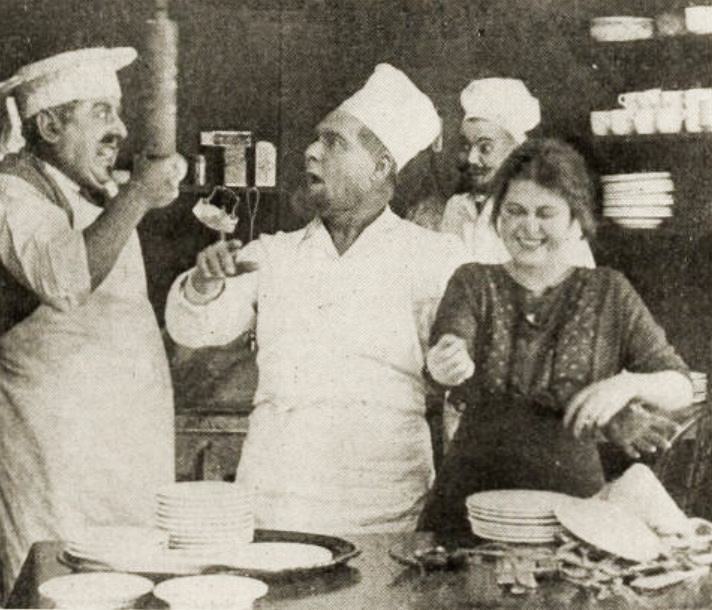
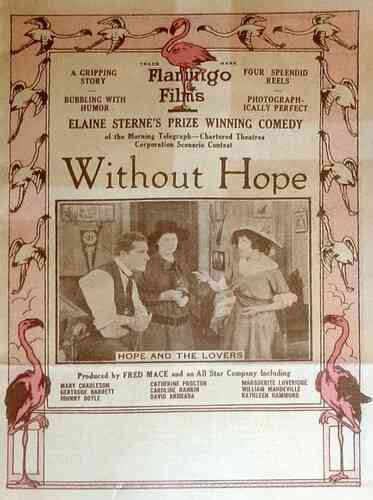
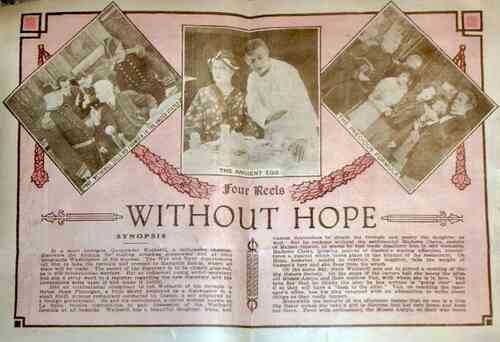
A nitrate print titled Without Hope sounds like an existential dare, yet the 1918 one-reel whirlwind that survives under that label is anything but nihilistic; it is a champagne-cork pop of genres—espionage, screwball, melodrama, even proto-screwball noir—shaken until the sediment of history clouds the glass.
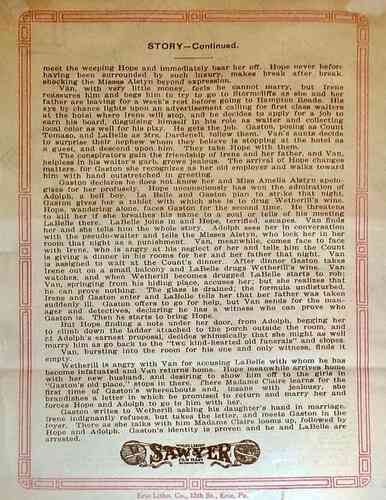
Picture this: a chemist who has managed to mute the very roar of gunpowder stands on the lip of a new world order, only to be undercut by a gossip column that spills state secrets between the horoscope and the harvest report. From there, the narrative ricochets down Manhattan’s spinal chord into a greasy spoon where dishwater vapor mingles with coded telegrams. Elaine S. Carrington’s screenplay treats geopolitics like a parlour game: every handshake is a covert treaty, every wink a declaration of war.
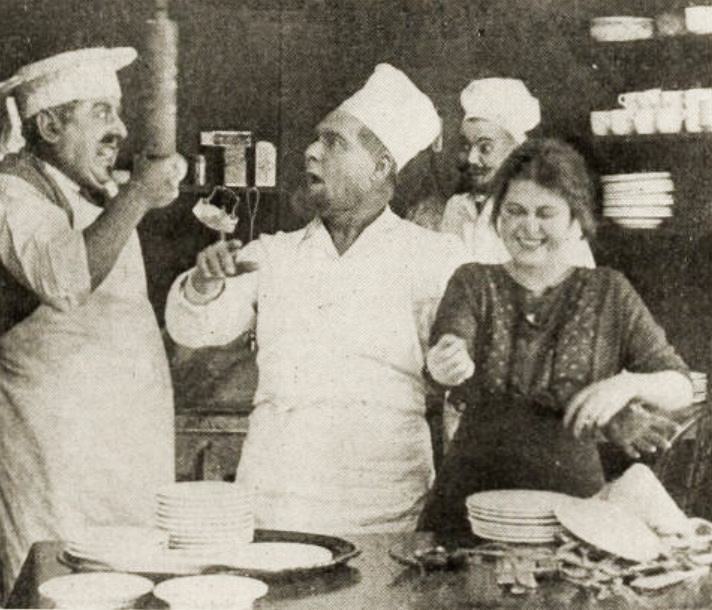
What strikes a modern viewer first is the film’s breezy gender politics. Hope Flannigan, nominally the “little slavey,” owns the emotional steering wheel; men orbit her like confused moons. Gaston may slick his hair into patent-leather arrogance, but his Achilles heel is a scullery maid’s giggle. Meanwhile Van—ostensibly the romantic lead—spends reel-time in servant’s livery, a class inversion that prefigures The Golden West’s cowboy-kidnapped aristocrat, only here the aristocrat kidnaps himself into servitude for art’s sake.
Compare that to The Cheat’s sadistic brand-marking or Beatrice Cenci’s dungeon fatalism, and you’ll see why Without Hope feels like a palate cleanser—an effervescent cocktail served alongside absinthe.
Director William Humphrey (unconfirmed but likely, judging from the kinetic blocking) compresses the grammar of Lang and Lubitsch into a ten-minute sprint. Kitchen steam becomes Expressionist fog; a balcony overlooking Stormcliffs turns into a vertiginous proscenium where seduction and sabotage share the same breath. Intertitles, scarce as hen’s teeth, flash like Morse code: “The Count requests your presence at midnight.” Cue iris-in on a champagne flute trembling with dissolved barbiturate.
The color palette, hand-tinted in scarce surviving prints, daubs La Belle’s gown with arsenic green while Hope’s apron glows a sickly yellow, pre-figuring her eventual leap into matrimony with Adolph, whose bell-boy crimson signals both rescue and fresh servitude. The palette alone could teach Satanasso’s hellish reds a thing or two about chromatic symbolism.
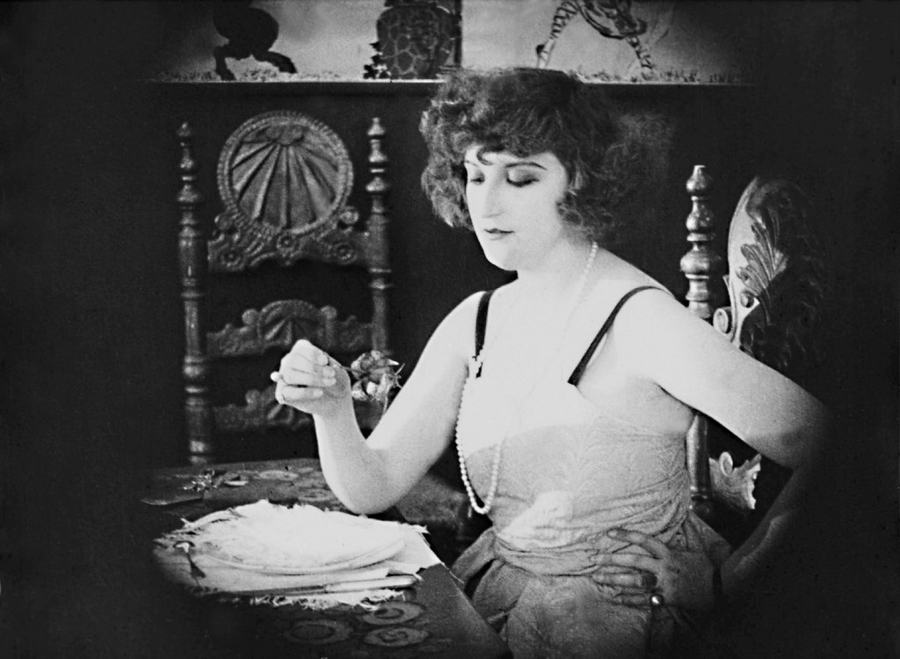
Marguerite Marsh—sister of the more famous Mae—plays Hope with darting eyes that seem constantly to renegotiate the space between terror and punch-drunk freedom. Watch her in the kitchen confrontation: shoulders folded like a closed fan, then—after Gaston’s hand rises—she blooms open, laughter spilling like coins. It’s a micro-drama worthy of the best nickelodeon pantomime.
William Mandeville’s Gaston is all reptilian charm; he swaggers in spats yet crumples when Madame Claire produces the promise letter—a scrap of paper that might as well be a warrant for his soul. The moment recalls The Ticket of Leave Man’s famous unveiling of the crutch-bound villain, only here the weapon is emotional collateral, not mahogany cudgel.
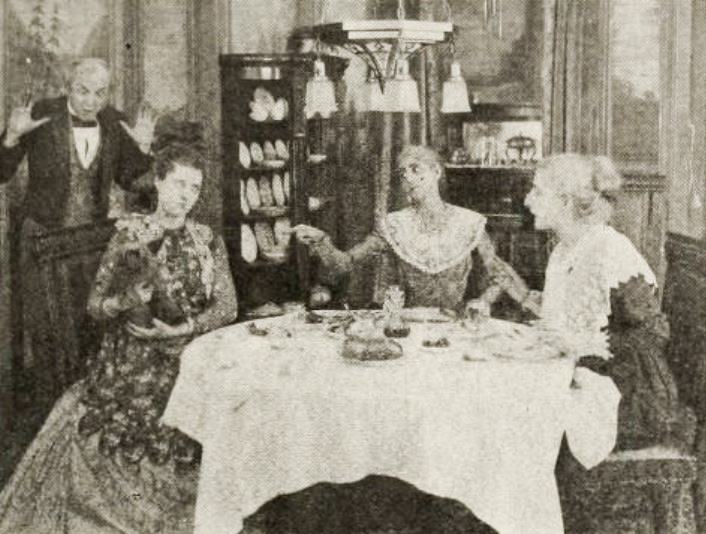
Clocking barely fifteen minutes in surviving form, the film hurtles toward its finale like a locomotive whose brakes have been replaced by narrative urgency. Adolph’s ladder-escape gambit—a literal deus ex machina—should feel contrived, yet the chemistry between runaway dishwasher and bell-boy carries screwball zip. Their elopement lands as both farce and liberation, a tonal bull’s-eye that keeps the picture from capsizing into the sentimental sludge that drowns Called Back.
Meanwhile Van, robbed of his star witness, stands in the hotel corridor clutching a tray like a shield, realizing that authorship—of plays or destinies—demands more than observational drollery. It’s the film’s meta-punch: life refuses third-act neatness.
Of course, the McGuffin itself—the noiseless gunpowder—never detonates. It hums off-screen, a metaphor for all the suppressed forces ready to upend the world in 1918: revolution, influenza, suffrage, the twilight of empire. The script’s central joke is that the louder men clamor to protect a secret, the faster entropy laughs. Newspapers, parlour chatter, a single giggle—each is a lit fuse.
Compare to For Napoleon and France, where cannon fire is thunderous and operatic, and you’ll appreciate how Without Hope weaponizes silence—an aesthetic choice that anticipates Hitchcock’s Sabotage by nearly two decades.
Like most of Triangle-Fine Arts’ ephemeral output, the negative was probably cannibalized for its silver salts, leaving us a ghost in 9.5 mm. The extant print—housed in a private Parisian archive—jumps, scratches, burns. Yet those scars feel oddly appropriate: they remind us that history itself arrives spliced and sutured. One could screen it beside Temblor de 1911 en México’s earthquake footage and meditate on how celluloid tremors register the tectonics of an era.
So is Without Hope a masterpiece? Possibly not. Its tempo is breathless, its gender politics proto-feminist yet bound by the corset of censorial “decency.” But it fizzes with a reckless candor that makes many self-important “message” pictures feel embalmed. In the ledger of lost silent cinema, this scrap of nitrate earns a footnote written in phosphor: a reminder that escapism can still bruise, that silence can detonate louder than any shell.
Seek it out if you can—track elusive festival bookings, haunt archive forums, bribe collectors with espresso and flattery. Because when the last loop of this film flickers through a carbon-arc gate, a little laughter—Hope’s laughter—will still echo, noiseless yet resounding, like gunpowder that refuses to answer to history.
IMDb 6.6
1921
Community
Log in to comment.