DbcultAccessing Vault...
Cult Review
Senior Film Conservator
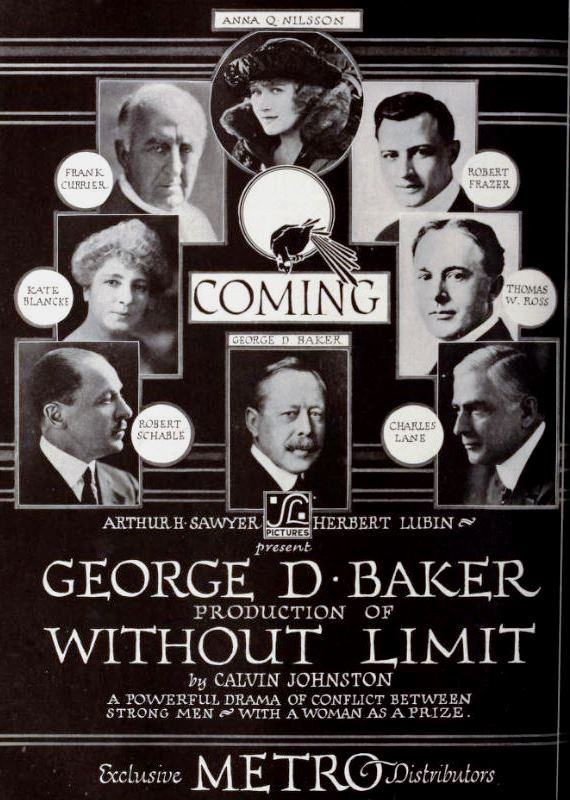
*Without Limit* is a film that thrums with the raw, unfiltered pulse of early 20th-century melodrama, its edges frayed by the urgency of its moral inquiry. At its core lies a gambler’s unraveling, a narrative thread pulled taut by George D. Baker and Calvin Johnston’s script, which leans into the era’s penchant for stark dichotomies—light and shadow, sin and salvation. The film’s protagonist, a man whose name is less a character trait than a self-fulfilling prophecy, becomes a cipher for the American obsession with self-destruction and reinvention. Frank Currier, in his most physically expressive role, embodies this duality with a performance that oscillates between manic desperation and hollow resignation.
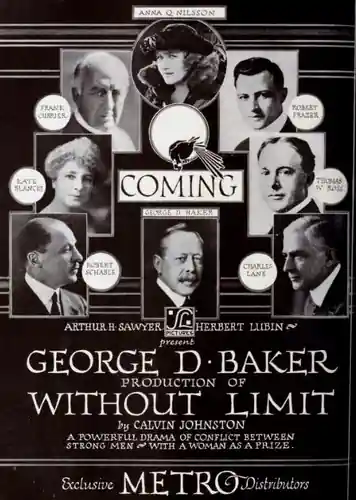
The gambler’s descent is not merely financial but existential. His losses are not just of coin but of self, as he trades integrity for the fleeting thrill of the stake. The film’s opening acts are a masterclass in building tension through restraint, with long, unbroken takes lingering on the protagonist’s twitching hands, the clink of dice, the smoky haze of gambling parlors. These moments are punctuated by Kate Blancke’s presence—a luminous counterpoint to the darkness. Her character, a new bride whose grace is neither angelic nor passive, becomes the narrative’s moral anchor. In one of the film’s most striking sequences, she confronts her husband not with condemnation but with a mirror, literally and metaphorically, forcing him to confront the man he’s becoming.
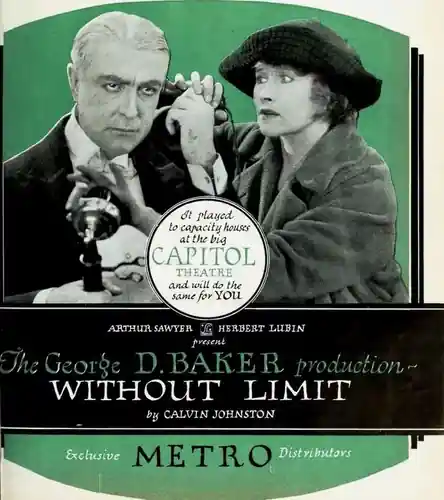
Visually, *Without Limit* is a study in contrasts. Cinematographer Calvin Johnston (yes, the writer also helmed the camera) employs shadows not as mere aesthetic choices but as narrative tools. The protagonist is often framed in half-light, his face split between clarity and obscurity, symbolizing his fractured psyche. The use of mirrors and reflective surfaces—glass windows, polished gambling tables—creates a sense of inescapability, as though the man is trapped within a hall of distorted self-images. These techniques echo the work of contemporaries like *Her One Mistake*, which similarly weaponizes visual metaphor to dissect moral compromise.
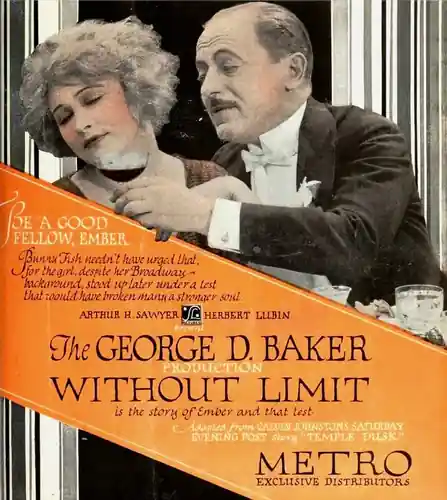
The film’s second act pivots on a single, devastating decision: the gambler’s betrayal of a friend, a transaction that buys him temporary reprieve but seals his emotional exile. This moment is rendered with brutal efficiency—a close-up of a hand passing over a stack of money, the friend’s reaction a mere flicker of betrayal across his face. It’s here that the film’s themes crystallize: the impossibility of escaping one’s past, the weight of complicity. The supporting cast, particularly Nellie Anderson as a jaded gambler’s wife and Thomas W. Ross as the betrayed friend, deliver performances that are both precise and haunting. Anderson’s scenes, in particular, serve as a Greek chorus, a reminder of the paths not taken.
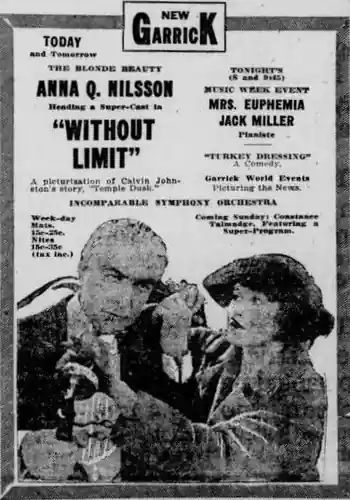
The resolution, when it comes, is neither tidy nor cynical. The gambler’s redemption is hard-won, facilitated not by divine intervention but by the relentless patience of Blancke’s character. Her final monologue—a quiet, aching plea for forgiveness—is delivered in a single, unbroken take that lingers on the micro-expressions of her face. This is a departure from the overwrought melodrama typical of the era, a choice that elevates the film from cautionary tale to something more human. It’s a technique later echoed in *Polly with a Past*, where similarly restrained emotional peaks redefine the genre’s boundaries.
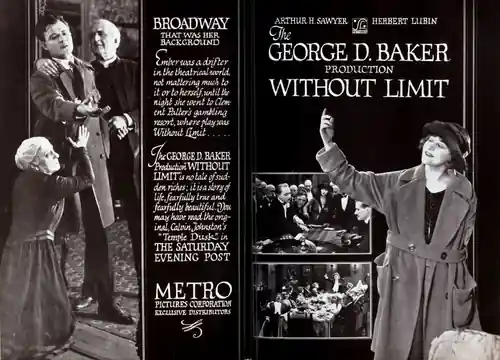
Technically, *Without Limit* is a product of its time—a film that wears its limitations like a badge of honor. The dialogue, while occasionally stilted, is saved by the actors’ commitment to physicality. Currier’s performance is a masterclass in economy: a clenched jaw, averted eyes, the way he avoids touching his wife after the betrayal. These details are what separate the film from lesser contemporaries like *Unknown Switzerland*, which often prioritizes plot over emotional resonance. The score, a sparse blend of piano and strings, amplifies the tension without overwhelming the scenes—a rarity in an era where music often overexplained the visuals.
What elevates *Without Limit* beyond its genre constraints is its willingness to interrogate the myth of the self-made man. The gambler’s journey is not a parable of triumph but a meditation on the cost of ambition. His redemption is not earned through grand gestures but through small, sustained acts of humility. This thematic depth is mirrored in the film’s structure, which rejects the three-act simplicity of later Hollywood narratives. Instead, it lingers in the in-between spaces—the quiet moments of regret, the awkward silences after betrayals, the tentative steps toward forgiveness.
Comparisons to *Inspiration* are inevitable, both films grappling with moral redemption through the lens of personal failure. Yet where *Inspiration* leans into divine intervention, *Without Limit* grounds its resolution in human agency. This makes it a more daring project, one that acknowledges the ambiguity of forgiveness. The final scenes, set in a dimly lit room where the gambler and his wife sit in exhausted silence, eschew traditional resolution. There is no triumphant music, no tearful embraces—only the quiet understanding that redemption is not a destination but a daily choice.
In the pantheon of early 20th-century cinema, *Without Limit* stands as a testament to the era’s capacity for emotional complexity. It is a film that does not moralize but dissects, that does not judge but questions. Its legacy lies in its unflinching examination of human frailty, a quality that resonates with startling immediacy over a century later. For modern viewers, it serves as both a historical artifact and a mirror—reflecting the same struggles of ambition, guilt, and the search for absolution that define us still.
The technical elements—costuming, set design, and the haunting use of urban landscapes—further cement its place in cinematic history. The gambling dens, with their garish lights and smoke-choked interiors, are rendered with a painter’s eye for texture. The contrast between these spaces and the protagonist’s home, a stark, minimalistic setting, underscores the internal dissonance of a man torn between worlds. These choices, while deliberate, never overshadow the story, a balance that eluded earlier works like *The Penalty*, where spectacle often drowned the narrative.
Ultimately, *Without Limit* is a film that demands patience. Its pacing is deliberate, its themes heavy, but these qualities are precisely what make it endure. It is not a film for those seeking escapism but for those willing to sit with the uncomfortable truths it unveils. In an age where cinematic narratives often favor quick fixes and tidy endings, *Without Limit* remains a rare, unflinching portrait of the human condition—one where redemption is possible, but never easy.
IMDb —
1918
Community
Log in to comment.