DbcultAccessing Vault...
6/10
Senior Film Conservator
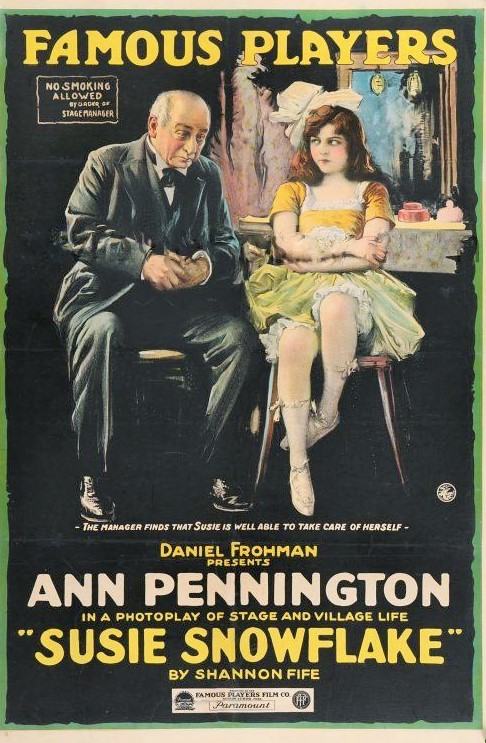
A definitive 6/10 rating for a film that redefined the boundaries of cult cinema. Susie Snowflake remains a cornerstone of transgressive art.
Step into the shimmering, sepia-toned world of early cinema, and you’ll occasionally unearth a gem that, despite its age, still pulsates with a vibrant, almost audacious energy. Such is the case with Susie Snowflake, a film that, even a century after its debut, manages to charm, provoke, and perhaps even inspire. It’s a narrative built on the oldest of dramatic foundations: the clash of two diametrically opposed worlds, ignited by the arrival of an outsider. Yet, under the deft hand of its creators, this familiar premise blossoms into a surprisingly nuanced exploration of conformity, individuality, and the often-unforeseen power of a single, effervescent personality to shatter convention.
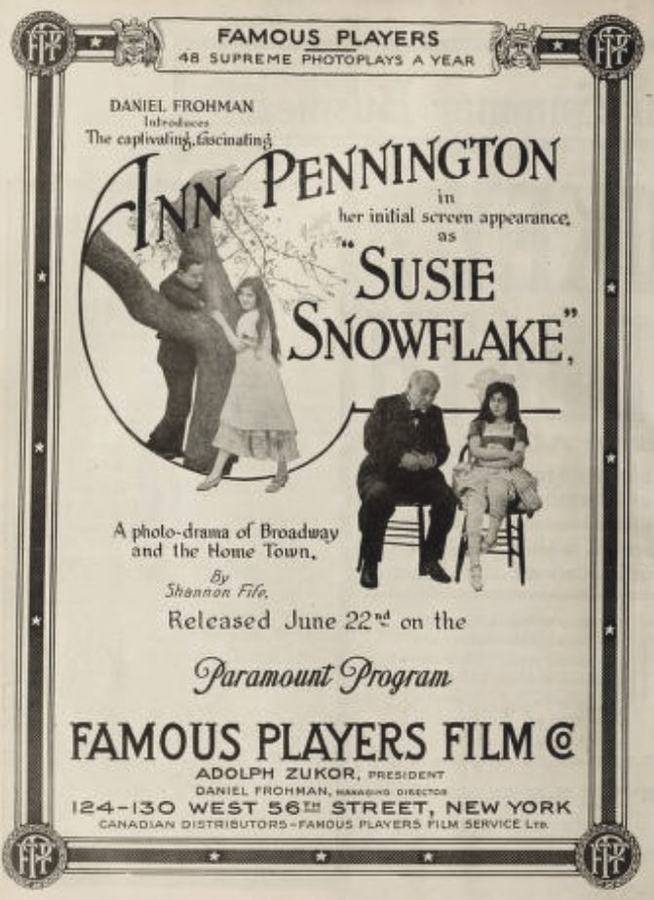
The film introduces us to Susie, portrayed with an irresistible verve by the incomparable Ann Pennington, a woman whose entire existence has been steeped in the footlights and applause of the music hall. Her world is one of theatricality, spontaneity, and a certain bohemian freedom. Suddenly, by circumstances that are almost secondary to the ensuing cultural earthquake, she is thrust into the staid, unyielding embrace of a New England town. This isn't just a geographical relocation; it's a transplanting of a wildflower into a meticulously pruned garden, a splash of vibrant crimson onto a canvas of muted grays. The initial friction is palpable, the discomfort almost comedic, yet beneath the surface, a profound societal recalibration begins to stir.
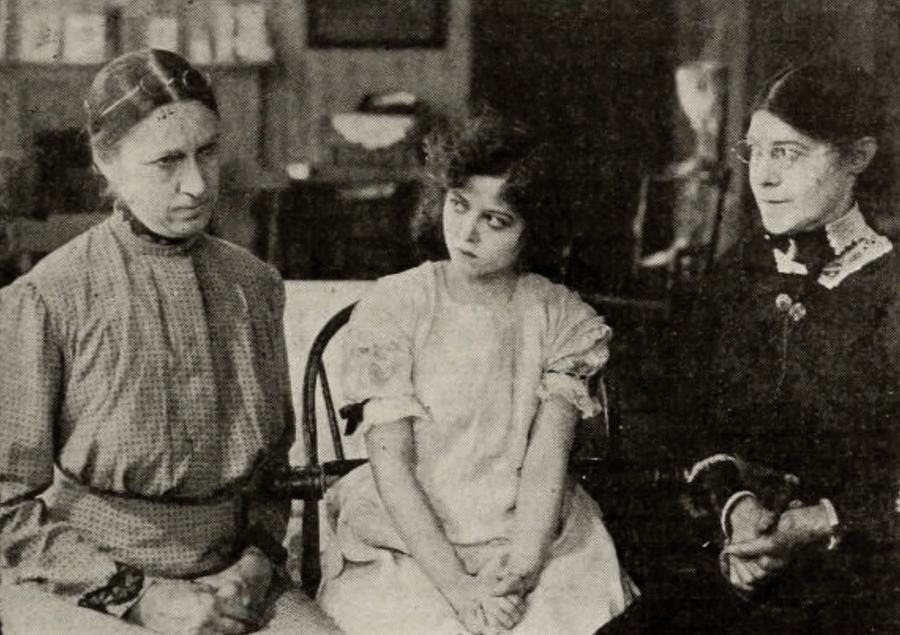
Ann Pennington, as Susie, is nothing short of mesmerizing. Her performance transcends the typical silent film histrionics, imbuing Susie with a genuine, infectious spirit. She doesn't just act; she radiates. From her initial bewilderment at the town's rigid customs to her playful, yet determined, efforts to inject some much-needed color into its monochrome existence, Pennington captures the essence of a free spirit unwilling to be caged. Her movements are fluid, her expressions convey a spectrum of emotions from mischievous glee to genuine empathy, making her character instantly relatable and undeniably magnetic. It's a testament to her skill that Susie never comes across as merely rebellious, but as a force of nature, an embodiment of life's inherent joy.
The town itself, a character in its own right, is a masterclass in depicting collective rigidity. Its inhabitants, initially horrified by Susie's perceived impropriety, represent the entrenched values of a bygone era. William Courtleigh Jr., often cast in roles that require a certain gravitas, embodies the initial skepticism and eventual thawing of a prominent town figure. His transformation, subtle at first, then increasingly evident, mirrors the broader shift within the community. Marcia Harris, Billie Wilson, Leo Delaney, and William J. Butler, among others, fill out the ensemble with convincing portrayals of townsfolk ranging from the overtly judgmental to the secretly intrigued. Each actor contributes to building a believable tableau of a society on the cusp of an unexpected, yet ultimately beneficial, awakening. The beauty lies in the gradual nature of their acceptance, demonstrating that true change isn't instant, but a slow, often uncomfortable, process of re-evaluation.
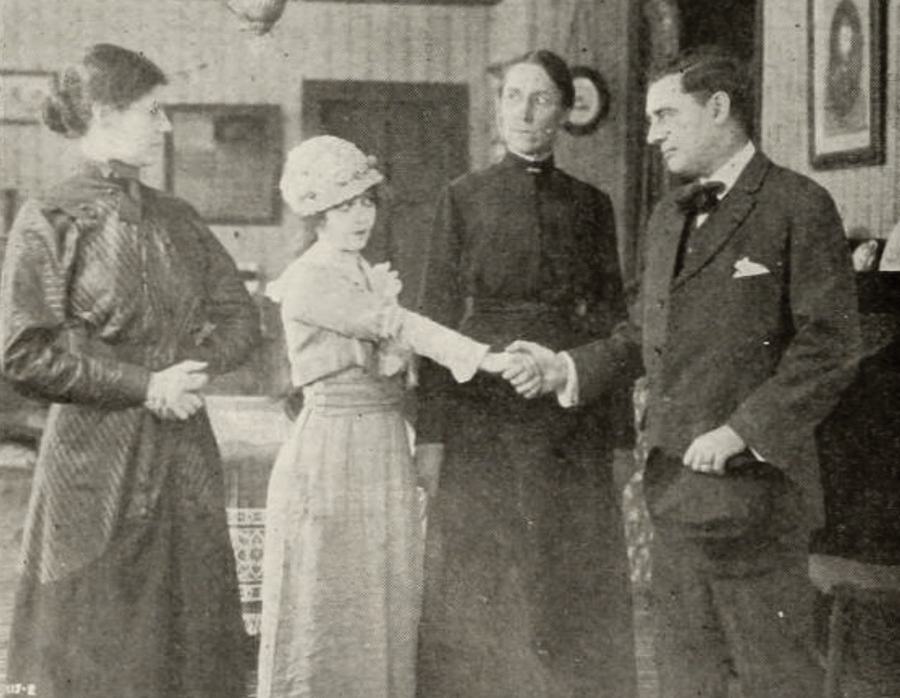
The narrative, meticulously crafted by writer Shannon Fife, avoids simplistic good-versus-evil dichotomies. Instead, it posits a more complex tension between different ways of life. Fife understands that Susie isn't necessarily 'better' than the town, but simply 'different,' and it is in this difference that the potential for growth resides. The plot unfolds with a natural progression, from initial hostility and misunderstanding to tentative curiosity, and finally, to a grudging, then wholehearted, appreciation of Susie's unique charm. The conflicts are not manufactured; they arise organically from the clash of sensibilities, making the eventual resolutions feel earned rather than forced. Fife’s script, conveyed through intertitles and visual storytelling, is remarkably efficient in establishing character motivations and emotional arcs, a hallmark of well-executed silent era screenwriting.
One might draw a thematic parallel to films like The Woman Who Dared, which similarly explores female agency and defiance against societal expectations, though Susie's rebellion is often more an act of innate being than conscious protest. Her daring comes from her very existence, a living embodiment of an alternative way of approaching life. This isn't a story of a woman intentionally overturning norms, but one whose mere presence, whose unadulterated self, forces others to question theirs. It’s a subtle but significant distinction that elevates Susie Snowflake beyond mere social commentary into a character study.
Visually, the film is a delight. The contrast between Susie's vibrant, often ornate costumes and the somber, practical attire of the townsfolk is stark and effective. The cinematography, while adhering to the conventions of the era, skillfully captures both the quaint charm of the New England setting and the dynamic energy that Susie injects. The pacing is deliberate, allowing the audience to truly witness the incremental shifts in the town's collective consciousness. There are moments of genuine humor, derived from Susie’s innocent misinterpretations of local customs, and moments of poignant reflection as the townsfolk grapple with their own prejudices. The directorial choices ensure that the story maintains its emotional core, never sacrificing character development for spectacle, even when Susie’s music hall past is briefly glimpsed.
The film’s portrayal of entertainment as a transformative force is particularly compelling. Susie doesn't preach; she performs. Her innate talent for song and dance, initially seen as scandalous, slowly becomes the very tool through which she connects with and ultimately wins over the community. It speaks to the universal power of art to bridge divides and foster understanding. This theme resonates with other films of the period that explored the human need for expression and connection, even if through less overtly dramatic means than say, the grand adventures depicted in The Beloved Adventurer. Susie's adventure is internal, a journey of cultural navigation and quiet revolution.
Susie Snowflake, at its heart, is a charming fable about the beauty of embracing difference. It's a gentle reminder that sometimes, the most profound changes aren't wrought by grand gestures or political upheaval, but by the quiet, persistent influence of an individual daring to be themselves. The film implicitly argues for a more open-minded society, one that can appreciate the diverse tapestry of human experience. It’s a message that, arguably, remains as pertinent today as it was in the silent era, in an age often grappling with similar tensions between tradition and modernity, insularity and global connectivity.
While it may not possess the sprawling scope of epics like The Valley of the Moon, which explored broader societal shifts through personal journeys, Susie Snowflake finds its strength in its focused, intimate portrayal of a small community's awakening. The film’s lasting appeal lies in its optimistic outlook and its belief in the inherent goodness of people, even those initially resistant to change. It's a delightful cinematic confection, impeccably acted and thoughtfully constructed, leaving the viewer with a sense of warmth and a renewed appreciation for the transformative power of a single, radiant personality. For those seeking a glimpse into the social dynamics of early 20th-century America, filtered through a lens of endearing humanism and subtle humor, Susie Snowflake remains an absolutely essential watch.

IMDb 7.8
1931
Community
Log in to comment.