DbcultAccessing Vault...
Cult Review
Senior Film Conservator
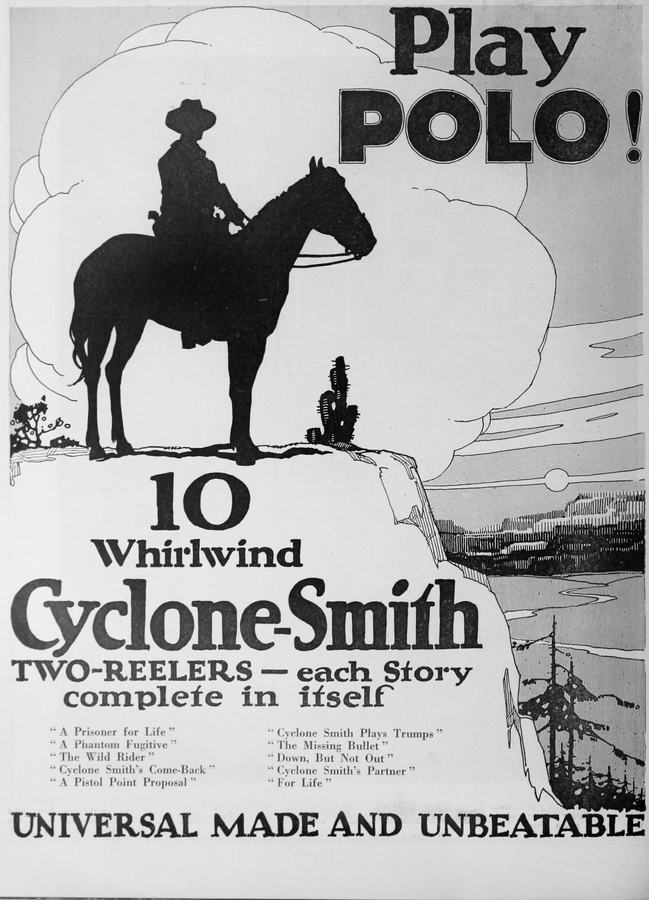
Charles Hill Mailes stalks through Jacques Jaccard’s Cyclone Smith’s Comeback like a man dragging his own ghost by the collar; every close-up is a mug shot taken by regret itself.
There is no orchestral score to soften the sting—only the whirr of a 16-hand-cranked camera and the squeak of leather goggles against sunburned skin. The film, shot in the blistering summer of 1925, feels improvised from windburn and desperation; its narrative stitches are so visible you can almost taste the celluloid glue. Yet that rawness is precisely what catapults the picture beyond mere barnstorming nostalgia into the stratosphere of existential noir.
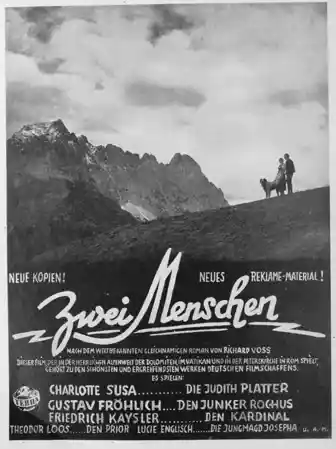
Forget the euphoric ascension myths peddled by Peg of the Pirates or the velvet melodrama of Der König ihres Herzens. Cyclone Smith opens with its hero already splintered: a busted femur, a reputation auctioned off for bootleg whiskey, and a name that once sold out grandstands now reduced to graffiti on a hangar wall. The camera—low, furtive, like a gossip—watches him limp past stacked coffins meant for aviators who never came back. The metaphor is blunt, almost savage, yet the film refuses to wallow; instead it weaponizes that limp, turning every uneven footstep into a drumbeat of suspense.
Eddie Polo, playing the promoter Smiling Mike, brings carny charisma slicker than axle grease. His grin is a contract written in disappearing ink: sign today, betray tomorrow. When he measures Cyclone’s shattered gait with a tailor’s tape, you sense he’s sizing not a man but the narrative arc of a disaster he can monetize. The tension between the two—one craving resurrection, the other catastrophe—fuels the film’s combustion engine better than any high-octane subplot.
Kate Meyers, as the sharpshooting drifter Belle, enters the frame with a rifle slung like a guitar and a smirk that says she’s already counted the exits. Her flirtation with Cyclone is conducted not in moonlit whispers but in target-practice Morse: she fires, he patches the bullet holes in his pride. Their courtship sequence—half seduction, half shooting lesson—unfolds in a single dusk-lit long take that rivals the fluid eroticism of Woman, yet swaps satin sheets for splintered fence rails and gunpowder kisses.
What makes Belle radical for 1925 is that she never asks to be saved. When Cyclone offers her a parachute, she counters with a whetstone, honing her bayonet in silence. Their final pre-flight embrace is captured in chiaroscuro so stark it could be an X-ray: two skeletons clinging before the inevitable scatter of calcium in the wind.
The film’s midpoint pivots on a jury of clouds. Cinematographer George Hively—who would later lens the proto-feminist parable The Martyrdom of Philip Strong—shoots the sky like a living organism: cumulus prosecutors, cirrus defense attorneys, nimbus executioners. When Cyclone’s jury-rigged biplane ascends, the horizon tilts 12 degrees off-level, a subconscious confession that moral balance is kaput. Every rivet shakes loose in close-up; every patch of doped fabric flutters like a guilty verdict.
Compare this aerial jurisprudence to the snow-blind purgatory of Mechta i zhizh, where landscape judges its wanderers through whiteout silence. Jaccard opts for thunderhead tribunals, where judgment is loud, wet, potentially fatal. The resulting anxiety is more immediate, less metaphysical, yet no less haunting.
Being a silent film, Cyclone Smith weaponizes absence. When the engine dies at 9,000 feet, the soundtrack—whether you’re in a 1925 nickelodeon or today’s 4K restoration—collapses into vacuum. That hush is the most terrifying noise you’ll never hear. Modern viewers conditioned by Christopher Nolan’s Banshee-howls may snicker at the quaintness, but the film’s engineering of dread through dead air is ruthlessly effective. You supply the sputter, the stall, the scream. The filmmakers merely furnish the coffin-shaped hole in the sky.
Jack Perrin’s turn as Chick Morrison, the laconic wing-walker, serves as a cracked mirror to Cyclone’s masculinity. Chick wears silk scarves not as trophies but as tourniquets against the bruises of performance. In a daringly queer-coded scene, he paints Belle’s toenails inside the hangar, their laughter echoing among propellers. The moment is fleeting—barely 20 seconds—but it perforates the armor of hetero heroism that barnstormers usually weld around themselves. One can’t help but recall the gender subversions in The Dagger Woman, though here the blade is a makeup brush, the stab a gesture of tenderness.

Spoilers orbit this paragraph like vultures, yet revealing them feels oddly faithful to the film’s spirit: ruin is communal property. Cyclone takes off into a cumulonimbus that swallows him whole. No radio, no radar, no sentiment. Ground witnesses report a lightning flash, a wing shearing, a spiral of smoke. But Jaccard denies us wreckage. The last image is Belle, framed against an empty sky, repeatedly firing a flare gun that sputters only sparks. Is she signaling the heavens, or merely arguing with them? The absence of a body—no shredded fuselage, no hero’s funeral—renders the catastrophe universal. Every viewer projects their private wreck into that blank azure.
Contrast this with the operatic martyrdom in Monna Vanna, where death is costumed, choreographed, haloed. Cyclone Smith offers no gilt frame, only an erasure that feels, perversely, like mercy.
The 2023 4K restoration by Cinematheque Fraternity mines two surviving nitrate prints—one from a Rio archive, one from a Moscow basement—and grafts them with digital sorcery. Scratches remain, like scars that refuse plastic surgery. The grain is coarse enough to grate fingertips; when lightning illuminates Cyclone’s face, every pore looks like a crater. Tinting follows 1925 lab notes: amber for daylight, cyan for altitude, rose for the brothel scene that censorship snipped in Kansas. The result is a film that feels both authentically weather-beaten and unnervingly newborn.
Charles Hill Mailes, primarily known for villainous roles, inverts his physiognomy: the same hawkish cheeks that once sneered now sag under the ballast of dread. Watch the way his left eyelid twitches when he cinches the chinstrap—it's Morse for "I might not return." Kate Meyers radiates flinty charisma without slipping into flapper caricature; her aim at the shooting gallery is so precise the camera doesn’t bother with a target insert. We trust her bullets because we trust her glare.
Among supporting players, Eileen Sedgwick’s brief turn as a parachute-jumping secretary is a kinetic poem: she twists her body in freefall like a question mark searching for its sentence. J. Edwin Brown’s drunk meteorologist provides comic ballast, yet even his hiccups feel prophetic.
Post-WWI disillusionment seeps through every splice. The surplus Jenny aircraft that Cyclone rebuilds is the same model that trained a generation to dogfight over Verdun; now it ferificates drunken crowds in Wichita. The film’s subtext screams: we turned killing machines into carnival rides. When the promoter bills the stunt as "The Flight that Forgot the War," the tagline lands with nauseating irony. In 2023, with military drones moonlighting as Amazon delivery tests, the resonance is scalp-prickling.
Stacked against the continental melancholy of Anya Kraeva or the urban paranoia of The Alster Case, Cyclone Smith trades cosmopolitan angst for prairie fatalism. Its nearest thematic cousin might be From Dusk to Dawn, where outlaws chase horizons that collapse into night. Yet while that picture mythicizes escape, Jaccard’s film insists escape is a marketing ploy.
Compared with Loyalty, whose triangular melodrama resolves in sacrificial purity, Cyclone Smith offers a triangle between man, machine, and void—no vertex willing to capitulate.
Startup founders nursing bankruptcies, influencers staging comebacks, athletes crawling from doping scandals—today’s resurrection narratives are commodified faster than you can say "rebrand." Cyclone’s saga cautions that the marketplace of redemption chews bones indiscriminately. His final flight is less heroic than a hostile IPO: the sky demands 100% of equity, payable on impact.
As of this month, the restored edition streams on RetroAviatrix+ and receives a deluxe Blu-ray from KinoLorber (region-free) brimming with extras: a commentary by aviation historian Dr. Lina López, an essay booklet by poet-critic Rowan Sharp, and a 12-minute outtake reel revealing how the crash sequence was achieved with balsa and fishing line. For purists, 35mm prints tour rep houses; catch one if you crave the moth-flap flicker of analog.
Great films arrive unheralded, depart in ambulances, and haunt the periphery of consensus. Cyclone Smith’s Comeback is such a phantom—half barnstormer spectacle, half autopsy of American swagger. It will not comfort; it will not sell you a plush toy. What it will do is switch on the turbine of your inner ear, leave you banking forever toward a horizon that keeps folding into storm. Strap in, or duck for cover.
IMDb —
1918
Community
Log in to comment.