DbcultAccessing Vault...
6.6/10
Senior Film Conservator
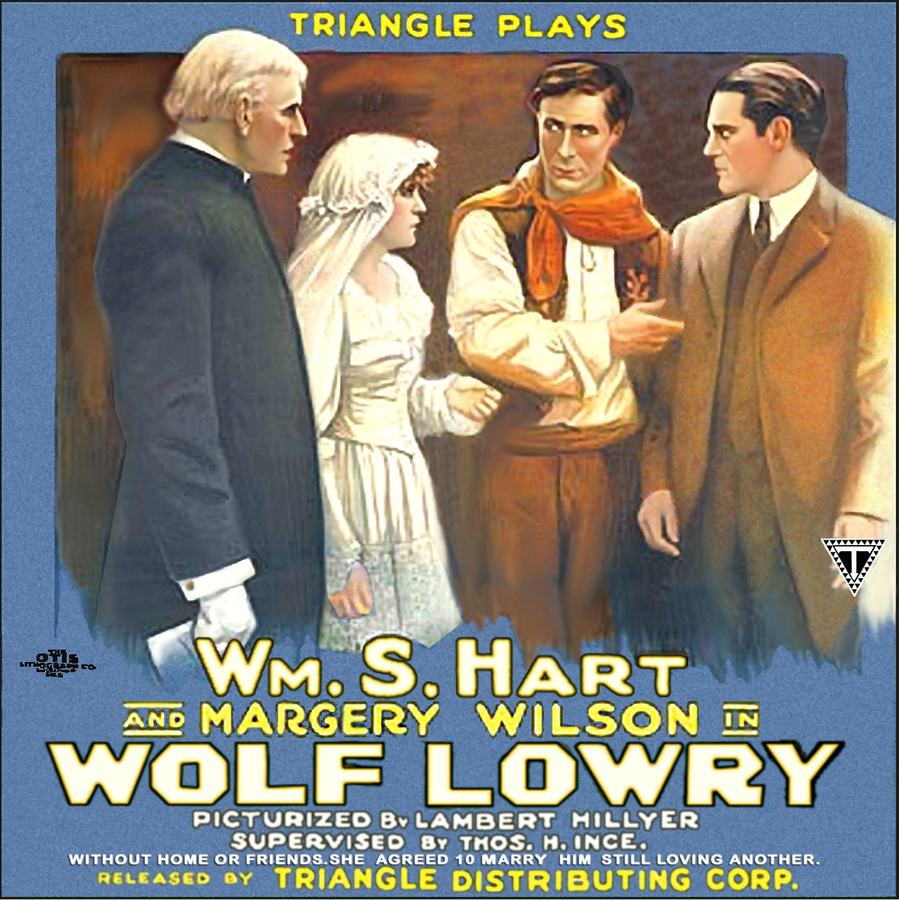
A definitive 6.6/10 rating for a film that redefined the boundaries of cult cinema. Wolf Lowry remains a cornerstone of transgressive art.
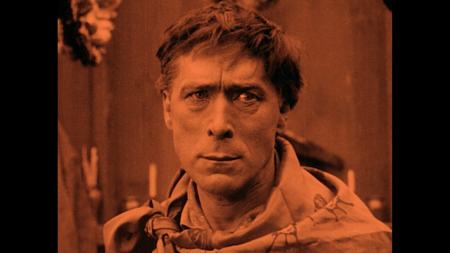
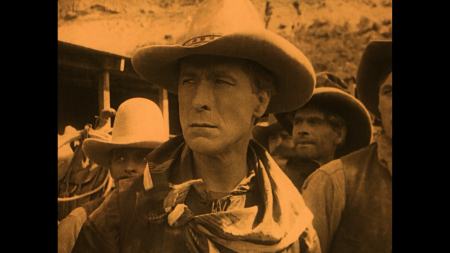
The first time we see Tom “Wolf” Lowry he is a silhouette devouring the horizon, a Stetson eclipsing the sun like an omen. William S. Hart—face chiseled from petrified grief, eyes two spent cartridges—lets the camera gorge on that visage until the silence becomes oppressive. It is 1919; the Great War has ended but the west is still a wound. Hart, who had been minting the gunslinger as a Puritan avenger since 1914, now dares to unmythologize him. The result, Wolf Lowry, is less a western than a nocturne scored for hoofbeats and remorse.
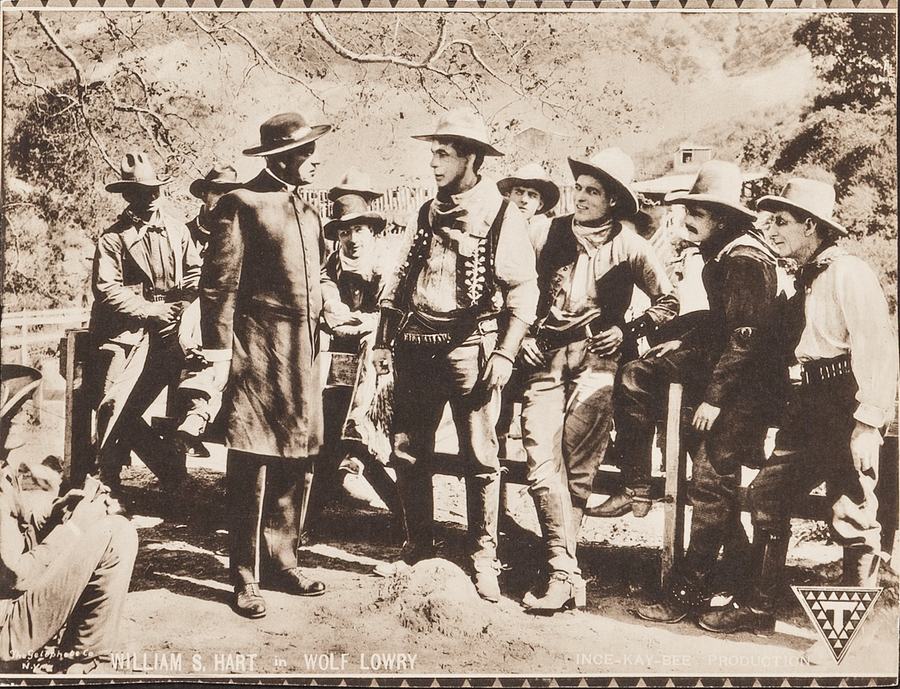
Lambert Hillyer, directing from Charles T. Dazey’s scenario, shoots the Bar Z ranch as if it were a cathedral erected in defiance of heaven: corrals stretch like grasping fingers, the bunkhouse windows glow like vigil candles. There is no score on the surviving 16 mm print—only the dry rasp of the projector—yet the images thrum with a metaphysical hum. When Lowry learns that sod-busters have staked claims along the creek, he snarls, “They’ll water their stock in hell first,” and the intertitle card trembles onscreen as though ashamed of its own ferocity.
Enter Mary Davis—Margery Wilson’s face a porcelain cameo trembling with resolve—dragging a carpet-bag and a creased photograph of Owen Thorpe, the fiancé who vanished into the sage. Wilson, who would later become a pioneering editor, plays Mary not as a damsel but as an archivist of lost futures; every glance at the photograph is an act of necromancy. The moment Lowry spies her through the heat-warped air, the film performs its first act of violence: it cuts his heart out without spilling a drop of blood.
What follows is a triptych of salvation and betrayal. Buck Fanning—the serpentine real-estate agent who embodies Manifest Destiny’s id—attempts to collect on Mary’s “contract” with predatory ardor. Lowry, intercepting the assault, is shot in the shoulder, and the film lingers on the crimson seeping through denim as though the west itself were bleeding out. Mary tears her petticoat into bandages; the fabric, once a symbol of Victorian propriety, becomes a tourniquet against moral gangrene. During convalescence Hart performs a miracle of micro-acting: his pupils dilate whenever Mary nears, his calloused fingers flutter like wounded birds, and the ghost of a smile—a foreigner in his own face—flickers and retreats.
The courtship is staged with Puritan austerity. Hillyer eschews moonlit sonatas; instead he gives us the creak of leather, the hiss of a kerosene lamp, the hush of snow starting to fall like forgiven sins. When Lowry proposes, he does so while staring at his own reflection in a cracked mirror—an acknowledgment that the man he sees is unworthy of the woman who stands behind him. Mary, exhausted by hope, consents, and the engagement ring is a silver lariat tightening around two necks.
Then the narrative pivots on a coincidence so breathtaking it feels predestined: Lowry discovers Owen Thorpe—half-starved, feral, but alive—in an abandoned line-camp. Owen, played by William Fairbanks with the frantic eyes of a man who has been chewing on solitude, re-enters Mary’s orbit like a meteor. Their reunion, staged in the ranch’s sun-blanched yard, is a masterclass in silent choreography: Mary’s knees buckle, Owen’s hands hover without touching, and Lowry—relegated to shadow—watches his future evaporate.
Here the film risks melodrama yet achieves tragedy. Lowry demands Mary honor her promise, not out of carnal greed but from a terror that if he relinquishes this one tether he will drift into the abyss that has always yawned inside him. On the wedding morning he dons a black coat that seems cut from the sky of a dead planet; Mary wears a dress the color of old bone. They ride to the mission in a buckboard weighed down by silence. At the altar Lowry’s face convulses—Hart lets us watch a man drown on dry land—then he pivots, shoves Mary and Owen toward the minister, and growls, “Marry them—free of charge.” The intertitle dissolves into the frame like a death certificate signed by conscience.
Exile follows. Lowry departs for Alaska, leaving behind a letter whose ink bleeds into the parchment like tear-salted snow. Five years later Mary and Owen, now custodians of a toddling boy named Tom, receive a missive postmarked from the Arctic. Inside: a single pressed forget-me-not and the laconic benediction, “I kept my promise to make you happy.—W.” It is the most devastating curtain in silent westerns; Hart lets the shot linger until the flower becomes a star imploding in the far dark.
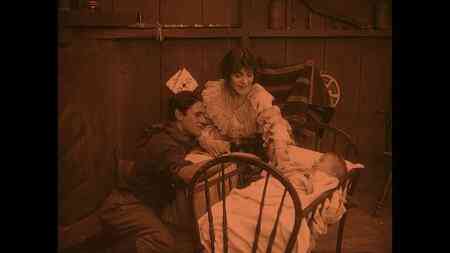
Visual Lyricism: Hillyer and cinematographer Joseph H. August carve chiaroscuro landscapes where every mesa is a Stations of the Cross. Note the sequence where Lowry, feverish, hallucinates Mary as a mirage shimmering in heat-waves; the image superimposes her face over a creek until water and woman merge—baptism as erotic transfiguration. The final Alaska montage—dogsleds dissolving into aurora—was shot on a tabletop with table salt and a carbon arc, yet it evokes the cosmic loneliness of a Caspar David Friedrich.
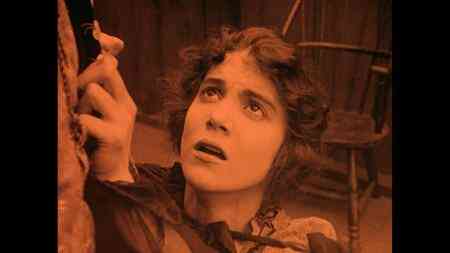
Performances: Hart, famously Methodist, never allows redemption to look pretty. His body carries the memory of every villain he ever played; when he renounces Mary, his shoulders sag as if Atlas had shrugged off the planet. Margery Wilson, only twenty-three, plays thirty-year-old grief with the stoic clarity of a pioneer Madonna. In the scene where she burns Owen’s photograph, the flame illuminates her pupils and we watch hope turn to smoke.
Comparative echoes reverberate across the decade: Samson likewise wagers love against moral obligation, while Ben Blair explores the tension between civilization and wilderness. Yet where The Conqueror trumpets Manifest Destiny, Wolf Lowry mourns it. The film belongs in the same penitential lineage as Bristede Strenge and Rags, works that stare into the American mirror and see a skull winking back.
Contemporary viewers, marinated in revisionist westerns, may scoff at the tidy coincidence of Owen’s resurrection. Yet the film’s true radicalism lies in its refusal to punish the woman for choosing autonomy. Mary is never shamed; Lowry’s self-sacrifice absolves her of guilt, transforming the climax into a secular Annunciation where the angel departs bleeding.
Restoration and Availability: The surviving 58-minute print, preserved by EYE Filmmuseum, circulates in 2K DCP with optional Dutch intertitles. A new 4K scan, funded by the Hart legacy foundation, premiered at Bologna’s Il Cinema Ritrovato, revealing texture in Hart’s weather-beaten dungarees hitherto lost to photochemical dusk. Streaming platforms have yet to license it; cinephiles must haunt archival Blu-rays or illicit torrents seeded by monks of celluloid devotion.
Final Verdict: Wolf Lowry is not a western; it is a penitent psalm set against the myth of rugged individualism. It whispers that the greatest act of courage is not to draw first but to walk away unarmed. In an era when algorithms sell us curated loneliness, Hart’s parting gift—a flower frozen in ice—feels like a telegram from the soul. Watch it alone, late, with the lights off and the heating vent rattling like distant hoofbeats. When the fade-out comes, you will taste snow on your tongue and discover that the wolf has been inside you all along, howling for the absolution it will never quite believe it deserves.
IMDb —
1916
Community
Log in to comment.