DbcultAccessing Vault...
7/10
Senior Film Conservator
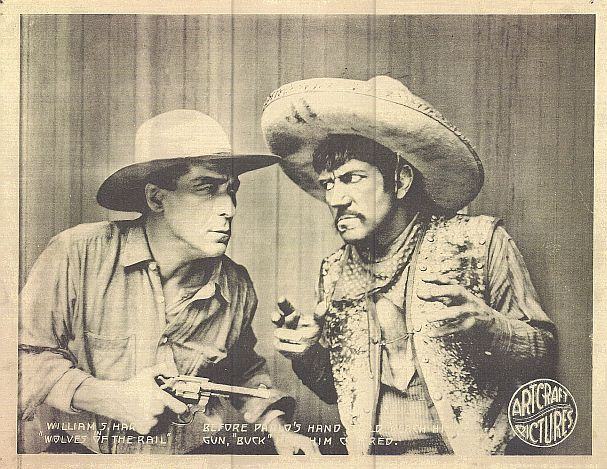
A definitive 7/10 rating for a film that redefined the boundaries of cult cinema. Wolves of the Rail remains a cornerstone of transgressive art.
The celluloid year of 1919 coughed up a swarm of westerns, most of them two-reel oaters churned out like barbed wire for a ravenous market. Yet amid the glut, Wolves of the Rail detonates its own myth with a moral shrapnel seldom dared by the era’s shoot-’em-ups. Denison Clift’s script—laconic as a rattlesnake yet swollen with biblical undertow—hands William S. Hart the role he was born to exhale: a desperado whose soul itches beneath his hide like a burr under a saddle.
Forget the cardboard cowpoke who rescues schoolmarms from mustache-twirling land barons. Hart’s Wolf prowls a liminal borderland between Cain and Pilgrim, between the man he was and the phantom he hopes to become. The film’s first movement is a chiaroscuro feast: locomotive headlights rake the prairie mist, turning steam into silver ectoplasm while the gang pries open a mail safe with the reverence of priests violating a tabernacle. Director/actor Hart blocks the heist like a liturgy—slow, deliberate, almost sacramental—until the stray bullet ricochets off child tinware and the spell fractures.
That single clang is the narrative fulcrum. It reverberates through the next reels like a tolling iron bell. Hart’s face—grizzled granite capable of glint or gloom—registers the moment with a micro-twitch: the eyes widen a millimeter, the jaw slackens, then re-sets harder than obsidian. No intertitle is needed; the silence itself condemns him.
From here the film shape-shifts into an inverted Odyssey. Instead of returning home, the protagonist attempts to un-burn the bridges he once torched. He buys a tin star whose edges are already flaking rust—an emblem of law more corroded than the outlawry it seeks to quell. The marshal who sells it to him, Melbourne MacDowell in a cameo soaked with grain-alcohol pathos, wheezes: “Badge won’t stop bullets, son. Only scares the ones who still believe.” The line, delivered in a single subtitle card, drips with enough gnostic cynicism to rival any post-war noir of the ’40s.
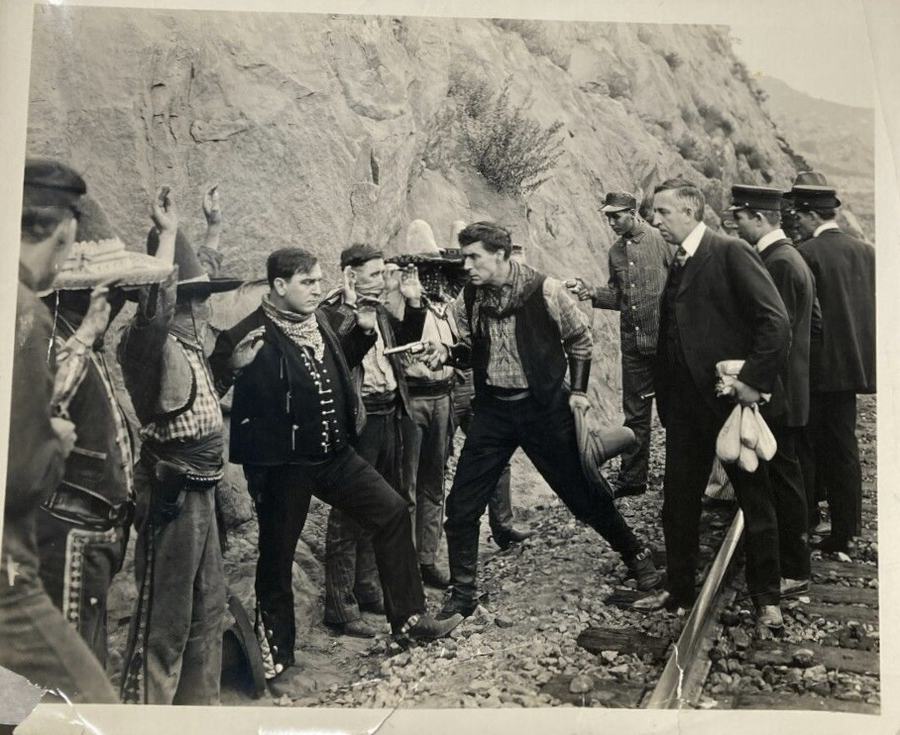
Clift’s screenplay excels at embedding ethical landmines. Hart’s first act as detective is to warn the railroad superintendent—yet the warning must pass through the same switch-tower operator who once accepted gang bribes. The operator’s dilemma blooms into a miniature thriller inside the larger arc: loyalty to the reformed Wolf or complicity with the new terror? The subplot lasts barely four minutes, but it prefigures the bureaucratic complicity thrillers of the ’70s.
Cinematographer Joseph H. August (who would later lens Eye for Eye for Hart) renders the rail yards as Stygian labyrinths. Lanterns swing, casting amber parabolas across steel rails that resemble prison bars. In one bravura setup, the camera mounts to a handcar, tracking Hart as he races beneath semaphore signals blinking like mechanical Morse code. The world itself appears to conspire in semaphore, warning of treachery, yet the messages remain untranslatable to mortal ears.
Sound, though absent, is implied through visual onomatopoeia: steam valves hiss open, couplers clank in rhythmic gavotte, and the Wolf’s spurs spark against iron gratings. The montage is so visceral that modern viewers swear they heard the locomotive’s Doppler howl. It’s a masterclass in synesthetic montage, predating the expressionist railways of Manden med Staalnerverne by several Nordic winters.
Central to the moral crucible is the gang’s new chieftain, Blackie Burke, essayed by Hammond with patent-leather menace. Burke never twirls a mustache; instead he polishes his nails with a railroad spike, a gesture so offhand it feels more sinister than any grimace. His philosophy erupts in a subtitle: “A man can’t eat conscience.” The line is hurled at Hart during a moonlit round-up inside a boxcar converted into a mobile saloon. Surrounding them are acolytes who laugh on cue, yet the camera catches one youth—barely sixteen—whose grin trembles. That flicker forecasts the next generation’s doubt, seeding the film’s social critique beneath its genre skin.
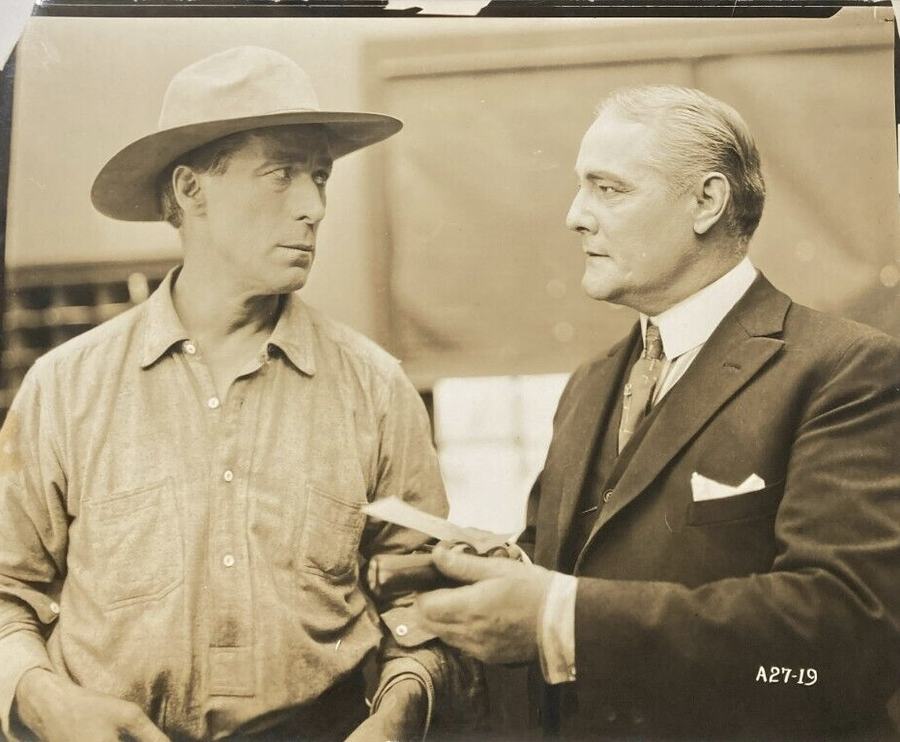
Hart’s counter-argument is never verbalized; rather he embodies it. In a later sequence, he shields the kid from a bullet meant as witness silencer. Blood seeps through the detective’s shirt cuff, forming a crimson cufflink. The image—Christic, wordless—converts the boy, who will later sabotage Burke’s dynamite fuse, paying the redemption forward. Thus the narrative coils upon itself: yesterday’s predator redeems tomorrow’s prey, who in turn redeems another. It’s a proto-pay-it-forward ethos baked into a six-reel western.
Gender politics, though constrained by 1919 strictures, refuse to calcify into mere window-dressing. Vola Vale’s saloon songstress, Lola Winton, owns the only phonograph in the territory; she spins Enrico Caruso discs that drift like angelic counterpoint over the masculine brutality. Her character traffics information—she knows every boozy brakeman’s weakness—yet she barters it not for gold but for passage out of the wasteland. Her final scene, clutching a rail ticket to San Francisco while the Wolf watches from the platform, evokes Ariadne abandoning Theseus after the Minotaur’s death. She departs not in triumph but in sober recognition that some men’s labyrinths are self-wrought and inescapable.
Fanny Midgley’s Mrs. O’Malley, a telegraphist widowed by an earlier holdup, provides maternal ballast. In a poignant insert, she teaches orphaned children to tap out their names in Morse, transforming grief into language. When Burke’s gang cuts the wires, the silence that descends upon her office feels like aphasia made palpable. Her subsequent defiance—climbing the pole to splice the line under sniper moonlight—becomes the film’s quietest heroism, the kind history textbooks never tattoo onto pages.
Yet the film’s true coup de cinéma arrives aboard the governor’s gold special, a hurtling iron Leviathan racing toward the sabotaged bridge. Hart, having commandeered the cab, thrusts the throttle wide open while grappling Burke atop the boiler. August’s camera alternates between full-scale locomotive plates and quarter-scale miniatures blended through double-exposure so deft that the seams evade even 4K restoration. Sparks shower like comet tails; nitrate smoke coils around the actors, creating a visual fugue of steam, starlight, and sin. The bridge trestle, pre-weakened by Burke’s sappers, sways like a drunkard’s faith. Intercut shots of children praying in the caboose, of telegraphist Mrs. O’Malley pounding out a futile warning, of Lola on the outbound train clutching her ticket—all braid into a temporal mosaic that accelerates breath.
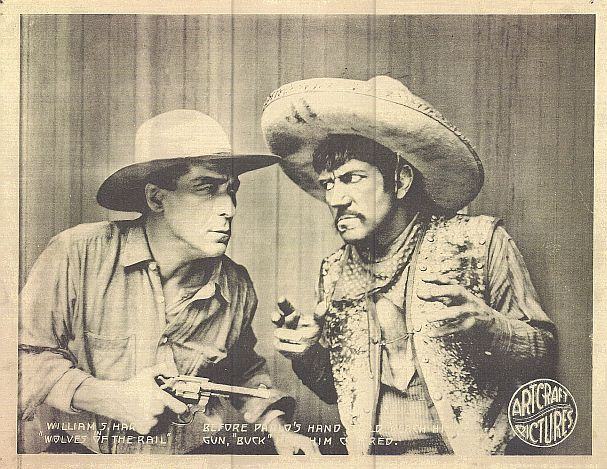
At the clinch, Hart boots Burke off the cowcatcher; the villain’s coat snags on a brake rigging, dragging him beneath the wheels. The camera refuses to flinch. A single wheel spins, dripping something darker than oil. Yet the triumph feels septic: the Wolf has saved the gold, spared innocents, but the act of killing his former blood-brother corrodes whatever baptism he sought. The final shot—Hart limping into the horizon while the rescued children wave—freezes on a medium-long silhouette. No iris-in, no triumphant title card. Just the wind across sagebrush, the whistle dopplering into silence, and a man smaller than the myth he outran.
Compare this to Hart’s earlier The White Scar where morality wore simpler buckskin. Or to the European fatalism of la cattiva stella, where destiny crushes the protagonist without reprieve. Wolves of the Rail occupies a twilight ridge: it believes redemption possible yet costly, attainable yet asymptotic—an existential rodeo that prefigures the psychological westerns of Anthony Mann and the revisionist aches of Peckinpah.
Contemporary critics of 1919 missed the nuance. Moving Picture World praised the “thrilling rail-mounted combat” yet dismissed the plot as “customary good-badman reversal.” A century’s distance reveals the opposite: the combat thrills because the moral reversal aches. Hart’s Wolf does not ride into civic parade; he limps into an exile of his own conscience, a self-constructed penitentiary whose bars gleam only when he closes his eyes.
Restoration-wise, the 2022 4K photochemical rescue by the San Francisco Silent Film Museum flenses decades of emulsion scarring. The night-for-night photography now seethes with tungsten blues and tobacco ambers; you can almost taste creosote in the rail ties. The tinting schema follows 1919 lab notes: amber interiors, viridian night exteriors, roseate hearth-side moments, and a single cyan flash for the climactic boiler explosion—a color avalanche that punches adrenaline through the screen. The newly commissioned score by Guatemalan composer Enrique Ubieta employs prepared piano, harmonica, and bowed rail spikes—yes, actual metal—creating a percussive language that translates the industrial sublime into music. During the bridge sequence, the orchestra crescendos with a 7/4 ostinato mimicking locomotive wheels; the effect is so kinesthetic that festival audiences grip their armrests as though bracing for derailment.
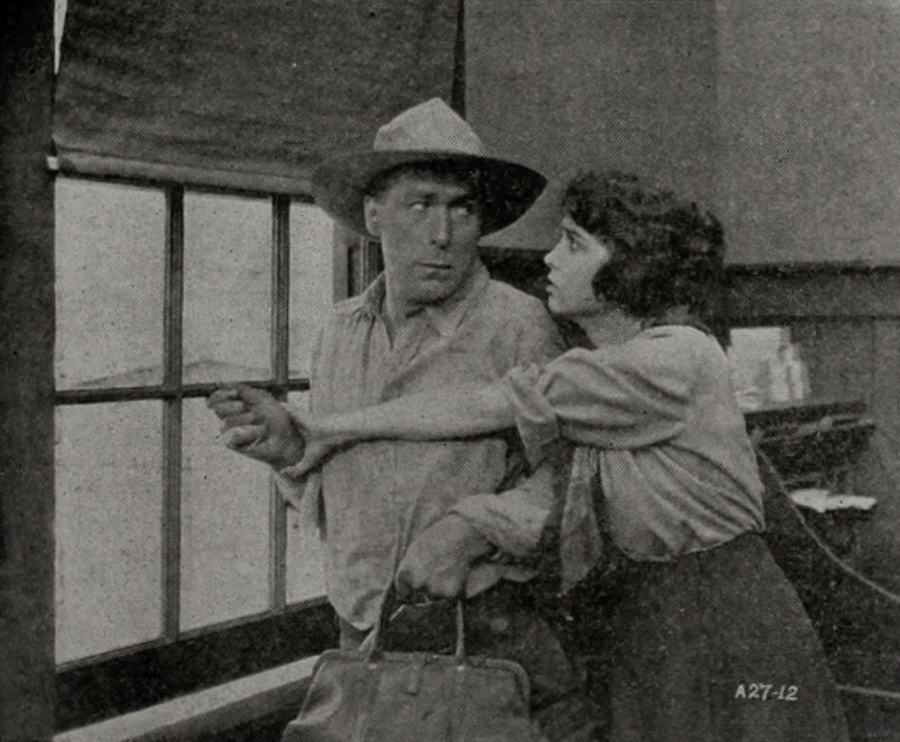
The film also invites transmedia archaeology. Denison Clift’s original continuity script, archived at UCLA, reveals deleted scenes: a flashback where young Burke and Wolf share a stolen apple inside a boxcar, their laughter echoing like prelapsarian innocence. Hart cut it fearing sentiment, yet its absence haunts the finished film—an excised ghost that hovers between frames, hinting that today’s monsters were yesterday’s hungry children.
Interpretive veins run rich. Marxist critics can map the railroad as colonial artery, the gold as surplus value, and Hart’s conversion as petite-bourgeois anxiety over proletarian unrest. A psychoanalytic reading might position the tracks as libidinal corridors, the tunnel as birth canal, the repeated entering/exiting of boxcars as compulsive rehearsal of trauma. Ecocritics could exalt the landscape itself—magnificent buttes and salt-crusted flats—as the sole moral constant, indifferent to human schemes of sin and salvation.
Yet perhaps the most searing takeaway is purely personal: the recognition that each of us, at some stray bullet moment, hears the clang that splits life into before and after. Whether we answer that summons with self-mythologizing denial or with Hart-esque self-scourging determines the contour of our remaining miles. Wolves of the Rail offers no Eucharistic pardon; it grants only the grueling right to keep walking the ties, mile after mile, beneath stars that neither accuse nor absolve.
If you emerge from this 104-year-old whirlwind thinking you merely watched a dusty antique, inspect your pulse. The rails still clang, the whistle still howls, and somewhere inside your chest a steam valve may have cracked open. That hiss you hear? It’s the sound of your own conscience pressurizing. Welcome to the gang—now get walking.
IMDb 4.3
1936
Community
Log in to comment.