DbcultAccessing Vault...
Cult Review
Senior Film Conservator
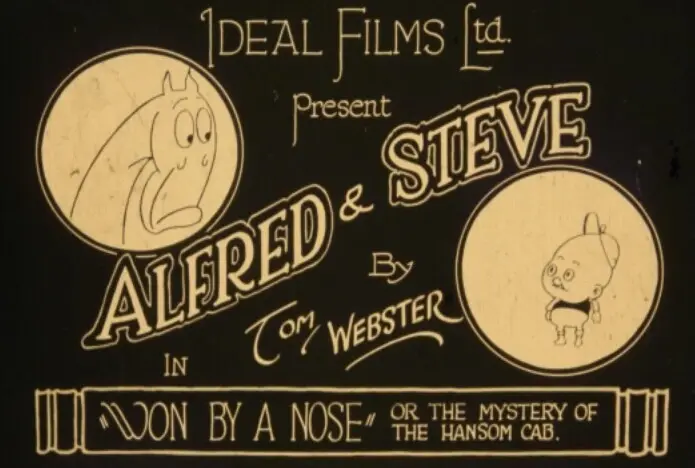
Is Won by a Nose a vital piece of cinematic history or a dusty relic? Short answer: No, unless you are a dedicated historian of early British sports media or a fan of Tom Webster’s specific brand of caricatured storytelling. For the modern viewer, the film lacks the narrative complexity found in contemporary works like The Isle of Lost Ships.
This film is specifically for those who appreciate the intersection of newspaper cartooning and early narrative shorts. It is absolutely not for anyone seeking a character-driven drama or high-octane modern sports thrills. It is a slow-burn artifact that requires a lot of contextual heavy lifting from the audience.
1) This film works because it captures the specific, frantic rhythm of a 1920s racetrack with a sense of urgency that was ahead of its time.
2) This film fails because it treats its human characters as flat, two-dimensional sketches rather than living, breathing participants in the drama.
3) You should watch it if you want to see how early filmmakers attempted to visualize the internal anxiety of a gambler through editing and pacing.
Tom Webster was a giant of the sports cartoon world, and his transition to film in Won by a Nose is fascinating, if not entirely successful. In his drawings, Webster could elongate a horse's neck or exaggerate a jockey's desperation with a single stroke of a pen. On film, he is constrained by the reality of the camera. However, you can see him fighting against those constraints. The way he frames the crowd—a sea of distorted, anxious faces—feels like one of his Sunday strips come to life.
There is a specific moment during the betting sequence where the camera lingers on the trembling hands of the protagonist. It’s a small, punchy detail. It works. But it’s flawed. The transition from the static nature of his cartoons to the fluid needs of cinema often feels jerky. Unlike the more polished narrative flow of A Girl at Bay, this film feels like a series of vignettes stitched together by a common theme rather than a cohesive story.
The pacing of Won by a Nose is its most debatable quality. Some might call it atmospheric; I call it repetitive. The film spends an inordinate amount of time establishing the atmosphere of the paddock. While this builds a sense of place, it stalls the narrative momentum. We see the horses, the hats, the binoculars, and the mud. We see them again. And then once more for good measure.
However, once the race begins, the editing shifts gears. The cuts become shorter. The camera seems to lean into the wind. This is where the film finds its pulse. Compared to the experimental newsreel style of Kino Pravda No. 16, Webster’s work is much more traditional, yet it manages to find a similar kind of 'mechanical truth' in the movement of the animals.
The cinematography in Won by a Nose is surprisingly gritty. There is no attempt to glamorize the racetrack. The ground looks damp, the air looks heavy, and the horses look like beasts of burden rather than majestic icons. This realism is a double-edged sword. It provides a grounded feel that is often missing from silent-era romances like Wild Primrose, but it also makes the film feel somewhat bleak.
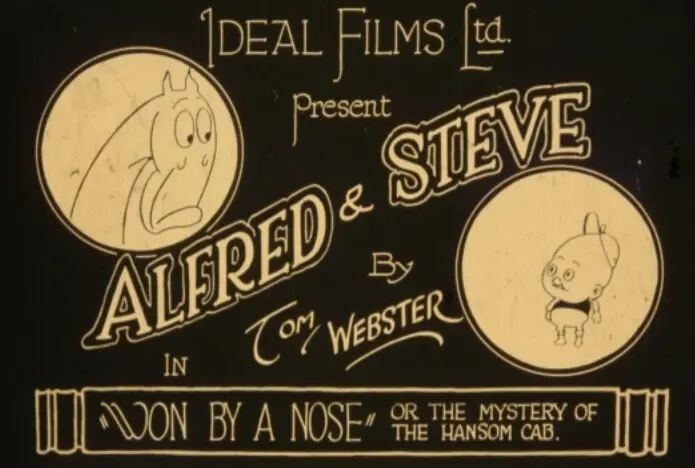
One particular shot stands out: a low-angle view of the horses thundering toward the finish line. The camera is placed dangerously close to the track, allowing the viewer to feel the weight of the hooves hitting the dirt. It is a visceral moment that justifies the film’s existence. But these moments are few and far between, separated by long stretches of static dialogue titles and uninspired wide shots of the grandstands.
Let’s be honest: the horse is a better actor than the lead. The human performances in Won by a Nose are stuck in the worst habits of early silent cinema. There is a lot of clutching of lapels and wide-eyed staring into the middle distance. The protagonist’s desperation is signaled by him wiping his brow every thirty seconds. It’s subtle as a sledgehammer.
When you compare this to the nuanced social commentary found in Hypocrites, the limitations of Webster’s directorial vision become clear. He is interested in the event, not the person. The characters are merely conduits for the tension of the race. They are props. This isn't necessarily a dealbreaker for a short film, but at this length, it becomes exhausting. You find yourself rooting for the horse simply because the horse isn't overacting.
If you are looking for a deep emotional experience, look elsewhere. If you are looking for a masterclass in early 20th-century sports culture, this is a fascinating find. The film functions as a time capsule. It shows us what people wore, how they gambled, and what they considered 'exciting' before the advent of synchronized sound and color. It is a technical curiosity that serves as a bridge between the world of print media and the world of motion pictures.
Pros:
Cons:
When placed alongside other films of the era, Won by a Nose feels like a middle-of-the-road effort. It lacks the mystery of The Carter Case and the social weight of Discontented Husbands. It is a film of 'moments.' It succeeds when it stays on the track and fails when it tries to go home with the characters. There is a reason why Tom Webster is remembered as a cartoonist first and a filmmaker second. His eye for the 'big moment' is impeccable, but his ability to weave those moments into a tapestry of human experience is limited.
Think of it as the 1920s equivalent of a high-budget commercial. It’s designed to sell a feeling—the feeling of the 'big win'—rather than to tell a story. In that specific, narrow goal, it succeeds. But as a piece of cinema, it’s a bit of a one-trick pony.
Won by a Nose is a fascinating failure. It is a film that dares to try and capture the lightning-fast world of sports through a lens that was still learning how to move. While the human elements are forgettable and the pacing is uneven, the sheer visceral energy of the racing sequences provides enough of a spark to keep it from being entirely dismissed. It’s not a winner, but it doesn't finish last either. It’s a respectable middle-of-the-pack finisher that reminds us how far the genre of sports cinema has come. Watch it for the history, skip it for the drama.
IMDb 4.9
1922
Community
Log in to comment.