DbcultAccessing Vault...
6.2/10
Senior Film Conservator
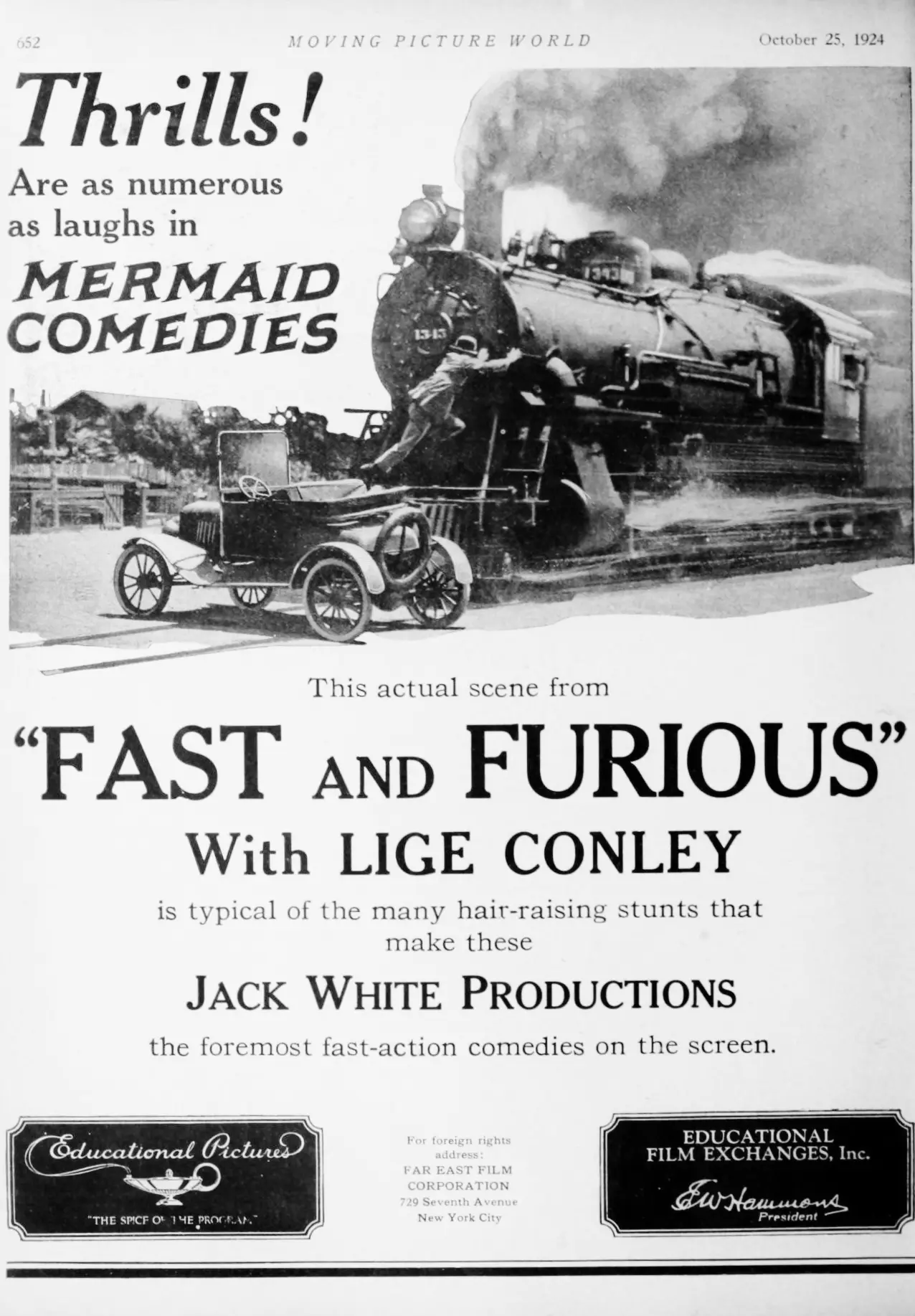
A definitive 6.2/10 rating for a film that redefined the boundaries of cult cinema. Fast and Furious remains a cornerstone of transgressive art.
The year 1924 occupies a peculiar, almost liminal space in the annals of cinematic history. It was a period where the primitive flickers of the nickelodeon had fully matured into a sophisticated language of light and shadow, yet remained unburdened by the looming shadow of the Vitaphone. In this fertile soil, the short-form comedy flourished, and Fast and Furious emerges as a quintessential specimen of this high-velocity era. Unlike the grand, sweeping narratives of Drifting, which sought to transport audiences to distant, exotic locales, this Lige Conley vehicle finds its magic in the grit and gears of the everyday. It is a film that understands the inherent comedy of physics, the way a human body in motion can become both a weapon and a punchline.
At its core, Fast and Furious is a study of momentum. The plot is stripped of all superfluous ornamentation: a theft occurs, and a pursuit ensues. This minimalism is not a sign of creative bankruptcy but rather a testament to the purity of the medium. While films like Dangerous Paths relied on the winding complexities of melodrama to sustain interest, director Jack White (under the Educational Pictures banner) utilizes the chase as a rhythmic pulse. The shop employee, played with a frantic, wide-eyed intensity by Lige Conley, is not merely chasing thieves; he is chasing the very concept of order in a world that has suddenly descended into chaos.
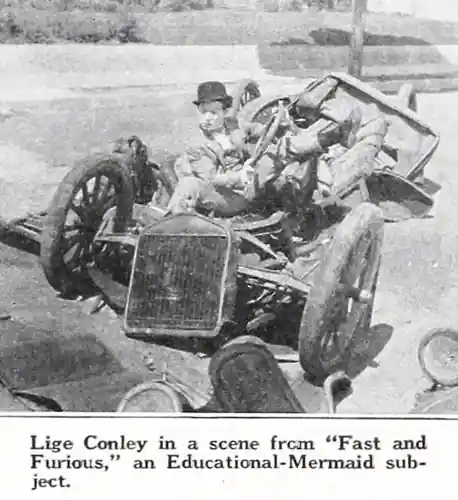
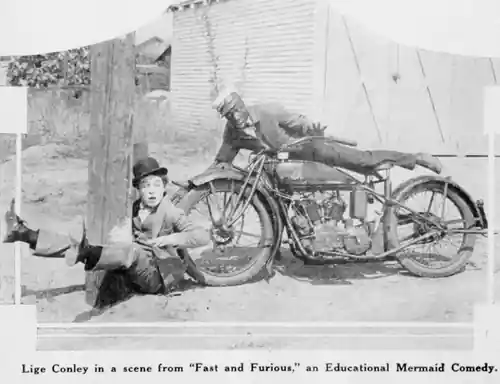
The choreography of the pursuit is nothing short of balletic. Conley’s movements are sharp, jagged, and unpredictable. He navigates the urban landscape with a desperate grace that mirrors the frantic energy of a society on the cusp of a technological revolution. We see the influence of the 'Mermaid Comedies' style here—a relentless pacing that leaves the viewer breathless. The film manages to turn a simple flight-and-pursuit mechanic into a complex tapestry of visual gags, many of which require a level of physical precision that puts modern CGI-laden action sequences to shame. It shares a certain spiritual kinship with the maritime frenzy seen in Queen of the Sea, though it trades the vastness of the ocean for the claustrophobia of city alleys and shop floors.
Lige Conley remains one of the most unjustly overlooked figures of the silent era. Often overshadowed by the 'Big Three'—Keaton, Chaplin, and Lloyd—Conley possessed a unique, rubbery physicality that was perfectly suited for the short-subject format. In Fast and Furious, he embodies the anxieties of the 1920s working class. His character is a man defined by his duty; the loss of the shop’s takings is not just a financial disaster, but a personal failure of his social contract. This adds a layer of pathos to the comedy that is often absent in the more surrealist shorts of the time, such as the German expressionist-adjacent Maulwürfe.
Conley’s performance is supported by a robust ensemble. Otto Fries and John Rand provide the necessary antagonistic weight, their villainy portrayed with just enough menace to make the stakes feel real, yet enough exaggeration to keep the tone firmly in the realm of the comedic. Spencer Bell, a frequent collaborator in these shorts, brings his own specific brand of timing to the mix. While modern audiences might find some of the era's casting choices and character archetypes problematic, viewing the film through a historical lens reveals a group of performers who were masters of non-verbal communication. They had to convey greed, fear, and determination without a single spoken word, a feat that requires a level of facial and bodily control that is increasingly rare in the age of the 'talking head' drama like If Women Only Knew.
Technically, Fast and Furious is a marvel of its time. The cinematography, though restricted by the heavy cameras of the early 20s, manages to feel dynamic. The use of under-cranking—filming at a slower frame rate so that the action appears faster when projected—is used here with surgical precision. This technique creates a hyper-reality, a world where the laws of physics are slightly skewed, allowing for the impossible leaps and narrow escapes that define the genre. It is a far cry from the somber, static frames of Shattered, which used the camera to trap its characters in their own misery. Here, the camera is a participant in the escape.
The editing is equally crucial. The cuts are quick, driving the narrative forward with an almost percussive force. Every shot serves a purpose, either to set up a gag or to escalate the tension of the chase. This economy of storytelling is something that many modern directors could stand to learn from. In a mere twenty minutes, Fast and Furious manages to establish a world, create a crisis, and resolve it with a satisfying, if exhausted, flourish. It possesses more narrative drive than many feature-length films of the period, such as the somewhat meandering The Fakers.
While it would be easy to dismiss Fast and Furious as mere popcorn entertainment for the jazz age, there is a subtle undercurrent of social commentary running through its celluloid veins. The shop, the site of the original sin (the theft), represents the burgeoning consumer culture of the 1920s. The employee’s frantic attempt to recover the money is a desperate act of preservation in a world where one's value was increasingly tied to one's economic output. In this sense, the film shares a thematic resonance with Two Kinds of Love, though it expresses these ideas through sweat and stumbles rather than sentimental dialogue.
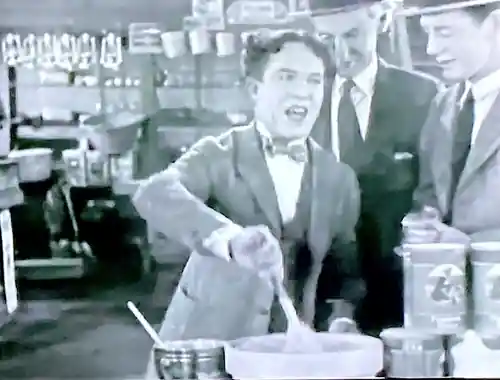
The crooks themselves are not depicted as criminal masterminds, but as opportunistic scavengers, perhaps a reflection of the post-war disillusionment that was beginning to seep into the collective consciousness, even in America. This grit distinguishes the film from the more romanticized versions of heroism found in Don Juan Manuel or the royal fantasies of A Yankee Princess. Conley’s hero is a man of the pavement, a man who gets his hands dirty and his suit torn in the pursuit of a meager day's pay.
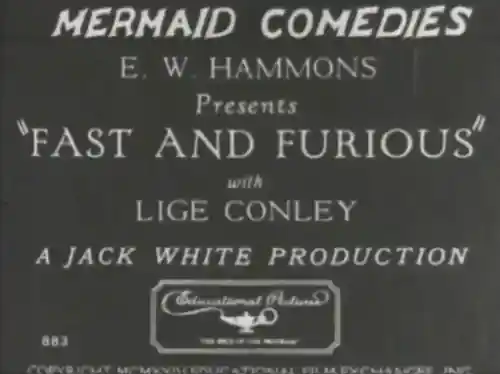
One cannot discuss Fast and Furious without acknowledging the powerhouse that was Educational Pictures. Their slogan, "The Spice of the Program," was no idle boast. They specialized in these short, sharp bursts of entertainment that were designed to complement a main feature, but often ended up being the highlight of the evening. The production values were surprisingly high, and the creative freedom given to directors like Jack White allowed for a level of experimentation that was often stifled in the major studios. This film feels like a laboratory for action cinema, testing the limits of what an audience could track visually. It paved the way for the complex stunts of the later silent era and the high-speed chases of the sound era, from the western thrills of The Trigger Trail to the sophisticated capers of the 1930s.
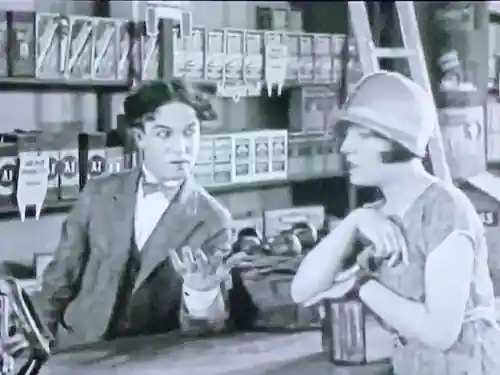
The film also stands as a fascinating counterpoint to the international cinema of 1924. While the Italians were exploring gritty realism in 'Nfama! and the Hungarians were delving into familial drama with A senki fia, the American comedy was perfecting the language of the 'gag.' Fast and Furious is a prime example of this specialization. It doesn't try to be a philosophical treatise or a political manifesto; it tries to be a perfectly tuned machine of mirth and movement.
Watching Fast and Furious today is a revelatory experience. In an era where action sequences are often chopped into incomprehensible fragments in the editing room, there is something deeply satisfying about watching Lige Conley perform a genuine, unbroken stunt. The stakes feel higher because the physical danger is palpable. When he scales a wall or narrowly avoids a collision, we are seeing a man actually interacting with his environment, not a digital avatar against a green screen. It is this tactile quality that gives the film its enduring power.
Is it a deep film? Perhaps not in the way we usually define depth. It doesn't grapple with the heavy existentialism of The Unbeliever or the dark vengeance of Venganza de bestia. But in its dedication to the craft of comedy, in its celebration of the resilient human spirit (and body), it achieves a different kind of profundity. It is a snapshot of a moment in time when cinema was young, wild, and—as the title suggests—fast and furious. It reminds us that at its heart, the cinematic experience is about the joy of watching something happen, the thrill of the chase, and the catharsis of a well-timed fall. For anyone interested in the roots of action cinema or the brilliance of silent comedy, this 1924 short is not just a historical curiosity; it is an essential piece of the puzzle.
Ultimately, Fast and Furious serves as a vibrant reminder that storytelling doesn't always require complex dialogue or intricate plots. Sometimes, all you need is a hero, a villain, and a very fast pair of shoes. It is a masterclass in visual storytelling that continues to resonate, a century after its first flickering projection on a silver screen. As we look back at the giants of the era, let us not forget the agile, frantic brilliance of Lige Conley and the kinetic masterpieces that defined the 'spice' of early cinema.
IMDb 6.3
1932
Community
Log in to comment.