DbcultAccessing Vault...
Cult Review
Senior Film Conservator
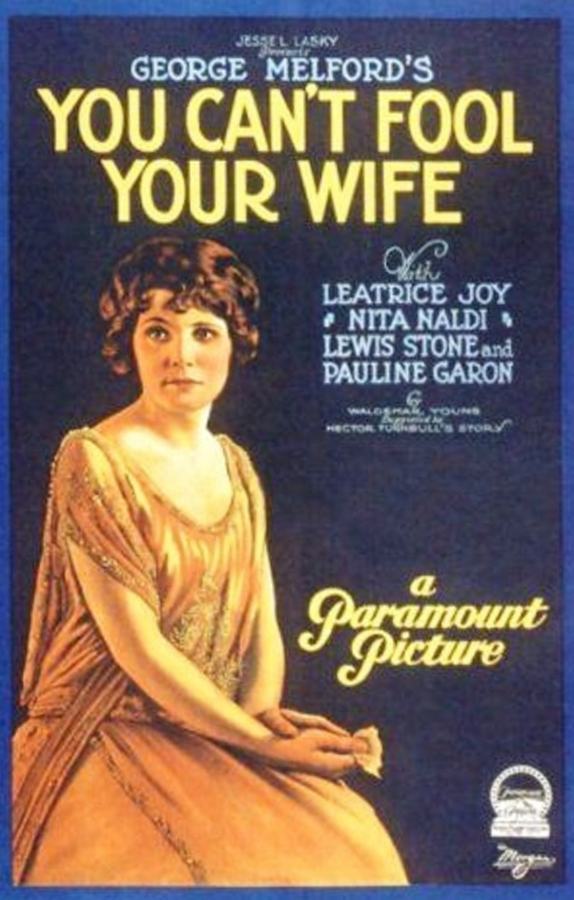
The year 1923 stands as a pivotal monolith in the silent era, a period where the grammar of cinema was being written in real-time by pioneers who understood that the absence of sound required an abundance of soul. You Can't Fool Your Wife, directed by George Melford and penned by the prolific Waldemar Young, is a fascinating artifact of this epoch. It is a film that ostensibly markets itself as a domestic cautionary tale, yet beneath its surface lies a labyrinthine exploration of the fragile architecture of the American marriage. To watch it today is to witness a collision of archetypes: the steadfast husband, the intuitive wife, and the exoticized 'other' who threatens to derail the sanctity of the home.
At the heart of this production is the chemistry—or perhaps more accurately, the calculated distance—between Lewis Stone and Leatrice Joy. Stone, who would later become the personification of paternal wisdom in the Andy Hardy series, here possesses a rigid, almost tectonic presence. His Gareth is a man of his time: silent, impenetrable, and seemingly oblivious to the emotional ripples his actions cause. Opposite him, Leatrice Joy delivers a performance that transcends the melodramatic tropes of the era. Her Edith is not merely a victim of circumstance but an active investigator of her own unhappiness. Joy’s ability to convey a shifting internal landscape through a mere flicker of the eyes is a testament to why she was one of the most bankable stars of the 1920s.
The inclusion of Nita Naldi adds a layer of intoxicating danger. Naldi, the quintessential 'vamp,' serves as the antithesis to Joy’s domesticity. In the cinematic landscape of 1923, Naldi represented the external world—the illicit, the urban, and the untamable. Her presence in You Can't Fool Your Wife creates a tension that is almost palatably thick, a sharp contrast to the more grounded stakes found in contemporary films like The Serpent's Tooth or the moralistic weight of The Natural Law.
Waldemar Young’s screenplay is a masterclass in the economy of information. In an era where intertitles could often become bloated and intrusive, You Can't Fool Your Wife relies heavily on visual storytelling. The camera, handled with a steady hand by Melford’s crew, lingers on objects as much as people—a misplaced glove, a lingering glance at a closed door, the specific way a letter is folded. These are the instruments of Edith’s investigation. The film understands that in a marriage, the smallest details are often the loudest witnesses. This focus on the minutiae of domestic life recalls the intimacy of The Dear Departed, though Melford’s work here is infused with a much higher degree of stylistic polish.
"The visual palette of the film uses shadow not just for aesthetic depth, but as a literal representation of the secrets held between partners."
The production design is equally noteworthy. The interiors are opulent, reflecting the post-war boom and the burgeoning consumerism of the twenties. Yet, these grand rooms often feel like gilded cages. The cinematography captures the vastness of these spaces, emphasizing the emotional distance between Edith and Gareth even when they share the same frame. It is a technique that mirrors the psychological isolation found in The Hidden Spring, where the environment itself becomes a character in the unfolding tragedy.
The central thesis of the film—that a wife’s intuition is an infallible radar—is handled with a surprising amount of nuance. While the title suggests a lighthearted romp or a simple moral victory, the actual narrative is far more ambivalent. Edith’s quest to 'prove' her husband’s infidelity is portrayed as an exhausting, soul-eroding endeavor. The film asks: what is the cost of being right? In this regard, it shares a thematic DNA with Testimony, another work that grapples with the burden of proof in personal relationships.
The supporting cast, including Pauline Garon and Julia Swayne Gordon, provide a social backdrop that reinforces the pressures Edith faces. They represent the 'chorus' of society, always watching, always judging. Their presence ensures that the stakes of the film are not just personal, but social. If Edith fails to 'fool' her husband—or rather, if she fails to uncover the truth—she risks becoming a pariah or a laughingstock. This societal pressure is a common thread in the dramas of this period, seen in varying degrees in Die Maske and the more avant-garde Kinky.
When placed alongside other releases of the time, You Can't Fool Your Wife distinguishes itself through its psychological realism. While films like The Frozen North leaned into the burgeoning language of slapstick and parody, and Rosita offered a more stylized, historical romance, Melford’s film is firmly rooted in the contemporary. It deals with 'modern' problems: the changing role of women, the allure of the city, and the fragility of the nuclear family. It lacks the whimsicality of Mary's Ankle, opting instead for a tonal consistency that borders on the somber.
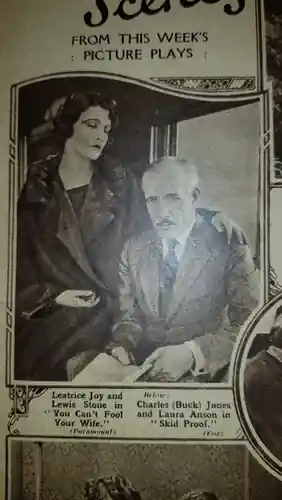
Furthermore, the film’s treatment of the husband-wife dynamic is far more sophisticated than the broad strokes found in Western Pep or the overtly theatrical The Duke's Talisman. There is a sense that the characters in You Can't Fool Your Wife are truly suffering, caught in a cycle of suspicion that they cannot easily break. This emotional resonance is what allows the film to survive its nearly century-old status. It doesn't just tell a story; it captures a feeling—the cold, hollow sensation of doubting the person you share a bed with.
Nita Naldi’s performance deserves a deeper interrogation. By 1923, the 'vamp' was a well-established trope, but Naldi brought a specific, European-inflected sophistication to the role that felt more dangerous than her predecessors. In You Can't Fool Your Wife, she isn't just a plot device; she is a mirror. She reflects back to Edith everything she fears she is not: adventurous, unburdened, and sexually liberated. This dichotomy between the 'wife' and the 'vamp' is a recurring motif in silent cinema, yet here it feels less like a moral judgment and more like a tragic inevitability. The film suggests that these two versions of femininity are destined to be at odds, a theme also explored in Den sidste dans.
In many ways, the film is a precursor to the film noir of the 1940s. The shadows are long, the motives are murky, and the protagonist is a detective of sorts, even if her 'crime scene' is her own living room. The structural integrity of the plot, which builds toward a climactic confrontation that is as much about emotional revelation as it is about plot resolution, shows a sophisticated understanding of pacing. It lacks the comedic relief often found in Love's Labor Lost, maintaining a tension that is almost claustrophobic.
From a technical standpoint, the film is a showcase of the Paramount 'look' of the early 20s. High production values, crisp cinematography, and a focus on glamorous costuming characterize every frame. The lighting, specifically in the scenes featuring Nita Naldi, uses a high-contrast style that would later be refined in German Expressionism. This visual flair is what separates a major studio production like this from the more modest efforts like The Rip-Tide.
The score (in modern restorations) plays a crucial role in bridging the gap for contemporary audiences. It underscores the psychological tension, providing a rhythmic heartbeat to Edith’s growing paranoia. Without the benefit of voice, the orchestration must carry the weight of the characters' unsaid thoughts. In You Can't Fool Your Wife, the music often acts as a counterpoint, sometimes offering a sweeping romanticism that mocks the bitterness of the actual events on screen.
Ultimately, You Can't Fool Your Wife is more than a mere curiosity for film historians. It is a vibrant, breathing drama that captures a specific moment in the evolution of human relationships. It navigates the transition from the Victorian ideals of the 19th century to the unbridled, often chaotic freedom of the 20th. Edith’s journey is one of painful awakening. She discovers that while you may not be able to 'fool' a wife, the knowledge gained from that insight often carries a heavy price. The film doesn't offer easy answers or a saccharine happy ending. Instead, it leaves the viewer with a sense of the profound complexity of the human heart.
For those who appreciate the nuances of silent acting and the development of the domestic thriller, this film is essential viewing. It stands as a testament to the power of visual storytelling and the enduring talent of its lead performers. In the grand tapestry of 1920s cinema, it is a thread of dark, rich silk—elegant, strong, and slightly dangerous. It remains a compelling study of the masks we wear for those we love, and the inevitable moment when those masks must fall.
Director: George Melford | Screenplay: Waldemar Young
Starring: Leatrice Joy, Lewis Stone, Nita Naldi
Release Year: 1923 | Studio: Paramount Pictures
IMDb —
1922
Community
Log in to comment.