DbcultAccessing Vault...
Cult Review
Senior Film Conservator
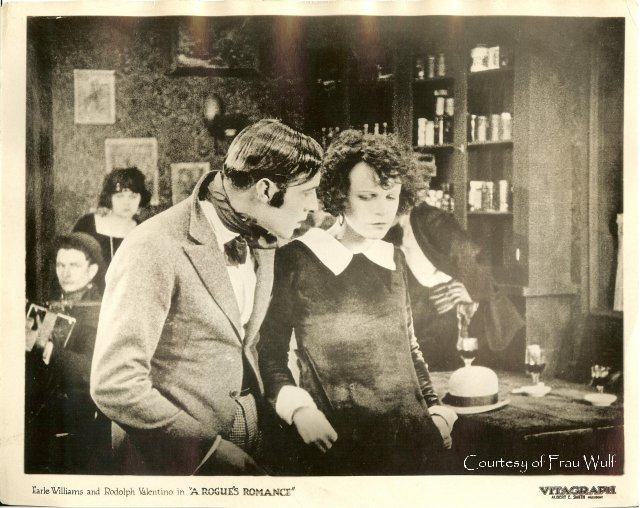
In the pantheon of silent-era narratives that grapple with the precarious balance between societal obligation and individualistic rebellion, A Rogue's Romance stands as a luminous, albeit often overlooked, testament to the transformative power of the 'gentleman thief' archetype. Directed by James Young, the film serves as a sophisticated vessel for Earle Williams, whose portrayal of Monsieur Picard navigates the treacherous waters of Parisian high society and the subterranean grit of the criminal underworld with a fluid, almost ethereal grace. Unlike the blunt protagonists found in contemporary crime dramas like A Law Unto Himself, Picard is a creature of nuance, a war hero whose trauma and talent have coalesced into a lifestyle of elegant subversion.
The film opens with a juxtaposition that defines its thematic core: the glittering medals of a patriot set against the shadowy tools of a burglar. This is not merely a plot device; it is a profound commentary on the post-war European psyche. Picard is not stealing out of malice, but perhaps out of a refined boredom or a rejection of a society that rewards violence on the battlefield but punishes ingenuity in the parlor. When he is seen watching the 'Apache dance'—that violent, expressive street performance synonymous with early 20th-century Paris—we see a man who understands the visceral reality of the struggle, a trait he shares with characters in more grounded dramas like The Spindle of Life.
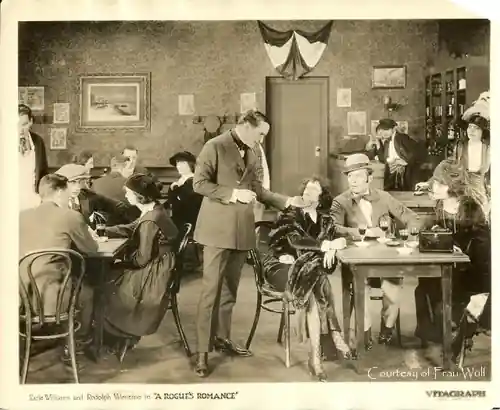
The emotional pivot occurs when Picard’s domestic life—a secret sanctuary where he cares for three adopted children—is threatened by illness. This domesticity humanizes the rogue, grounding his exploits in a sense of altruistic necessity. It is here that the film diverges from the cold efficiency of a standard heist movie. Picard’s theft is no longer a game; it is a means to sustain a fragile, makeshift family. This vulnerability is what eventually leads him to Helen Deprenay, played with a stoic yet empathetic reserve by Kathryn Adams. Their initial encounter, born of a broken car and a polite carjacking, establishes a dynamic of mutual respect that transcends their disparate social standings.
The second act of the film shifts into a masterclass of suspense and disguise. As Picard assumes the identity of Armand DuBois, a Scotland Yard agent, the narrative adopts a layered complexity. We are treated to a performance within a performance; Earle Williams must portray Picard portraying DuBois, all while navigating the watchful eyes of the Parisian police and the burgeoning suspicions of the Deprenay household. This level of meta-theatricality was quite advanced for 1919, providing a psychological depth that rivals the moral quandaries presented in The Winning of Sally Temple.
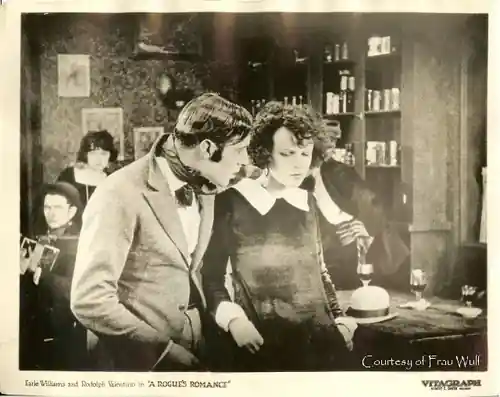
What makes this segment particularly compelling is the way James Young utilizes the camera to capture the claustrophobia of the Deprenay estate. The framing often places Picard in the center of a tightening circle of scrutiny, yet his composure remains unshakable. The theft of the necklace serves as the catalyst for the final confrontation, but the true stakes are revealed to be much higher than mere jewelry. Picard discovers a stock market scheme designed to defraud the entire community—a white-collar crime that far outweighs his own 'gentlemanly' thefts in its capacity for devastation. This realization serves as his ultimate moment of clarity: to save the woman he loves and the society he once defended, he must use his criminal intellect for the collective good.
For modern cinephiles, a significant draw of A Rogue's Romance is the presence of a young Rudolph Valentino in a supporting role. While his screen time is limited, the magnetism that would soon make him a global icon is already palpable. His presence adds a layer of historical intrigue to the film, marking a point in time before the 'Latin Lover' persona dominated his career. The ensemble cast, including Harry von Meter and Mathilde Comont, provides a robust support system, creating a vibrant, lived-in world that feels far more expansive than the typical silent film set.
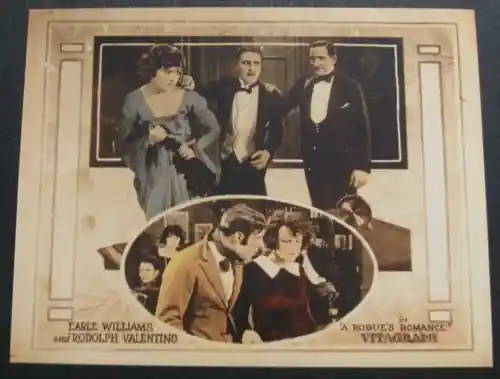
Visually, the film is a feast of shadows and textures. The cinematography captures the transition from the opulent, brightly lit salons of the aristocracy to the murky, high-contrast environments of the Parisian underworld. This visual dichotomy mirrors Picard’s internal struggle. The use of light in the scene where Picard leaves his Croix De Guerre as security is particularly poignant; the medal catches the light, serving as a beacon of his latent morality amidst the darkness of his current actions. This level of visual storytelling is reminiscent of the stylistic ambitions seen in Christus, though applied here to a secular, noir-inflected romance.
Beyond the romance and the thievery, A Rogue's Romance offers a surprisingly sharp critique of the financial volatility of the era. The stock market swindle subplot elevates the film from a simple 'cops and robbers' tale to a narrative about the ethics of wealth. By positioning a thief as the only person capable of identifying and stopping a 'legitimate' financial crime, the writers James Young and H.H. Van Loan suggest that the lines between legality and morality are often blurred. Picard’s decision to inform the police that 'Picard no longer exists' is a symbolic suicide of his criminal ego, allowing him to emerge as a man of 'worth to society,' as Helen demanded.
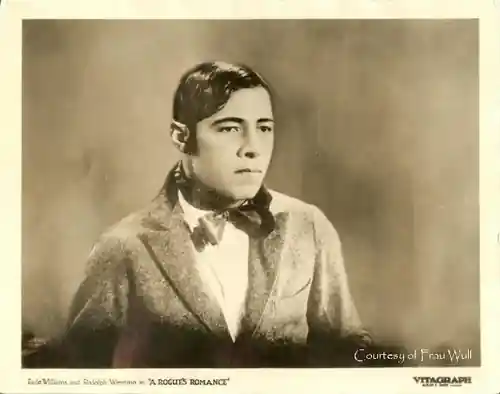
This theme of rebirth is a recurring motif in silent cinema, often used to provide a moralistic 'out' for charismatic anti-heroes. However, in this film, the redemption feels earned. It isn't a sudden religious conversion, like those often found in the works of the era, but a logical conclusion to a man’s search for a purpose greater than his own survival. The escape with Helen to a 'new life' is not just a romantic ending; it is a strategic retreat from a world that would always define him by his past mistakes, a sentiment echoed in the tragic undertones of The Blindness of Divorce.
In conclusion, A Rogue's Romance is a sophisticated, multi-layered drama that defies the simplistic labels of its time. It manages to be a heist thriller, a social commentary, and a deeply felt romance all at once. The lexical diversity of its visual language—the way it speaks through costume, gesture, and shadow—compensates for the lack of spoken dialogue, creating an immersive experience that feels remarkably modern. While it may not have the epic scale of some of its contemporaries, its intimacy and psychological depth make it a crucial piece of silent film history.
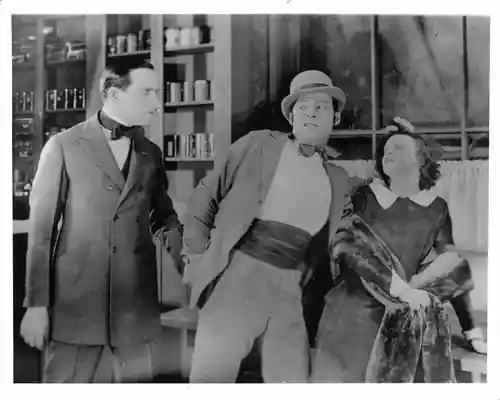
The film serves as a reminder that even in the early days of cinema, storytellers were grappling with the complexities of identity and the possibility of change. Whether you are drawn to it for the early glimpse of Valentino, the charismatic performance of Earle Williams, or the intricate plot of Parisian intrigue, A Rogue's Romance is a journey worth taking. It stands tall alongside other explorations of human nature such as The Way of the World and Fire and Sword, proving that the 'rogue' with a heart of gold is a timeless figure in our collective imagination.
The pacing remains tight throughout its runtime, avoiding the sluggishness that sometimes plagues early features. The resolution, while satisfyingly romantic, leaves the viewer with a lingering thought about the nature of masks—the ones we wear to protect ourselves and the ones we wear to save others. In the end, Picard’s greatest theft was not a necklace or a car, but a second chance at a life of integrity, stolen from the very jaws of a cynical world.
IMDb 6
1935
Community
Log in to comment.