DbcultAccessing Vault...
7.3/10
Senior Film Conservator
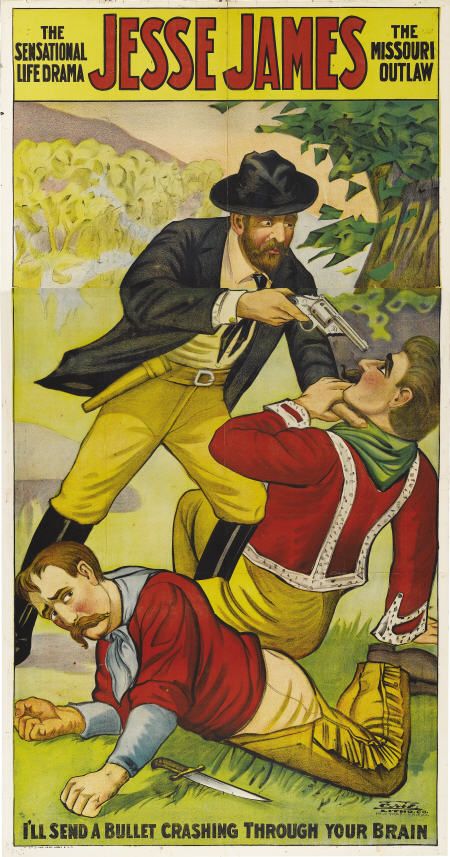
A definitive 7.3/10 rating for a film that redefined the boundaries of cult cinema. Jesse James Under the Black Flag remains a cornerstone of transgressive art.
The 1921 production of Jesse James Under the Black Flag stands as a fascinating artifact of early American hagiography, a period when the cinematic medium was still grappling with its power to shape historical memory. Directed with a rugged, almost documentary-like austerity, the film ventures into the murky waters of the Missouri-Kansas border conflicts, providing a lens into the radicalization of one of the West’s most enduring icons. Unlike the more sanitized Westerns that would follow in the mid-century, this silent epic possesses a raw, unvarnished quality that mirrors the jagged edges of the post-Civil War psyche.
The film’s opening movements are dedicated to the harrowing atmosphere of the border wars. We witness Jesse James, portrayed with a stoic intensity by F.G. McCabe, as he is swept into the orbit of William Quantrill. The depiction of these guerrilla forces is not one of romanticized chivalry but of desperate, ideological survival. The 'Black Flag' of the title serves as a potent visual motif, a dark harbinger of the uncompromising violence that would define James’s early years. The cinematography captures the kinetic energy of horse-mounted combat with a surprising degree of fluidity for the era, emphasizing the chaotic nature of irregular warfare.
In comparing this to other period pieces like The Life and Death of King Richard III, one notes a similar preoccupation with the corrupting influence of power and conflict. However, while Richard III is a study in calculated ambition, McCabe’s James is presented as a man reacting to a world that has already collapsed. The film argues that the outlaw was not born, but forged in the fires of the burning Missouri homesteads.
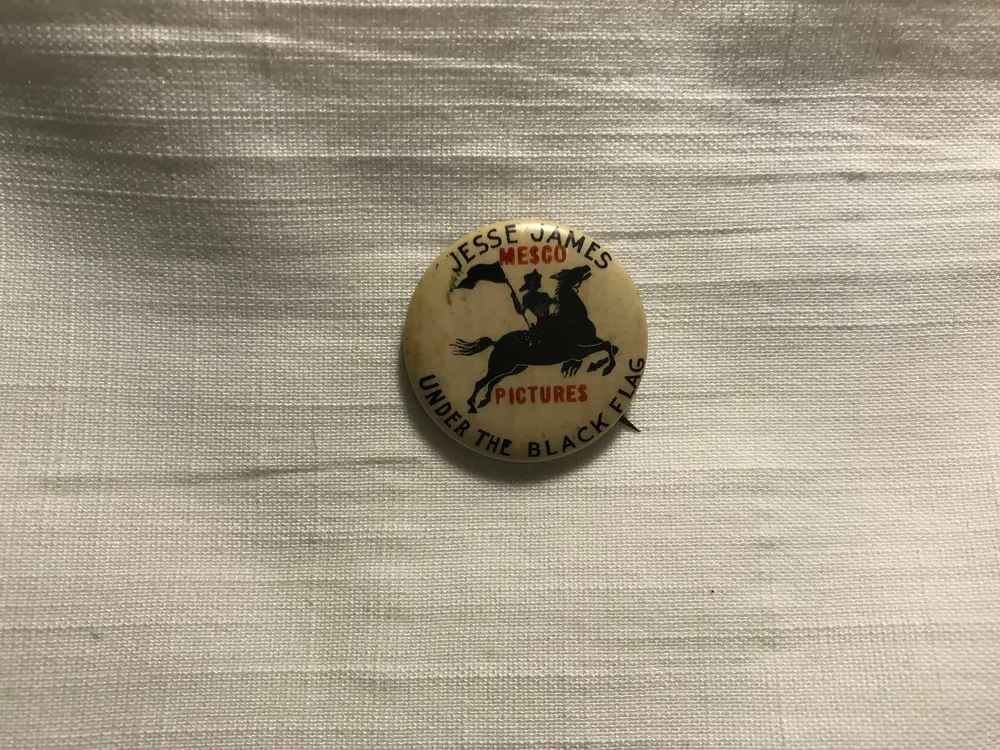
One of the more intriguing narrative choices in Franklin B. Coates’s script is the inclusion of the sympathetic judge. In a sequence that feels almost surreal given the character’s later notoriety, James receives a form of legal absolution for his wartime conduct. This creates a fascinating tension; the film suggests that society, or at least a significant portion of it, was willing to overlook the bloodshed of the 'Black Flag' era in favor of a fragile peace. This thematic exploration of societal complicity is far more sophisticated than the binary 'good vs. evil' tropes found in contemporary works like The Hornet's Nest.
The introduction of Zee, played with a delicate yet resilient grace by Marguerite Hungerford, shifts the film’s register from the martial to the melancholic. Their courtship is framed through a series of pastoral vignettes that stand in stark contrast to the smoke-filled skirmishes of the first act. It is here that the film attempts its most difficult feat: humanizing a man whose name had become synonymous with terror. The yearning for a 'peaceful life' is portrayed not as a ruse, but as a genuine, albeit tragic, impossibility. This domestic thread echoes the emotional stakes seen in The Cost of Hatred, where the scars of the past inevitably poison the potential of the future.
"The Black Flag was not merely a banner of war, but a shroud for the innocent man Jesse James might have become had the Union remained intact."
F.G. McCabe’s performance is a masterclass in silent-era restraint. While many of his contemporaries relied on exaggerated pantomime, McCabe utilizes a stillness that suggests a deep-seated interiority. His Jesse James is a man of few gestures, letting the weight of his experiences manifest in his steady, often haunted gaze. The supporting cast, including Ralph Johnson and Jack Neil, provides a solid ensemble that grounds the film in a believable, albeit heightened, reality.
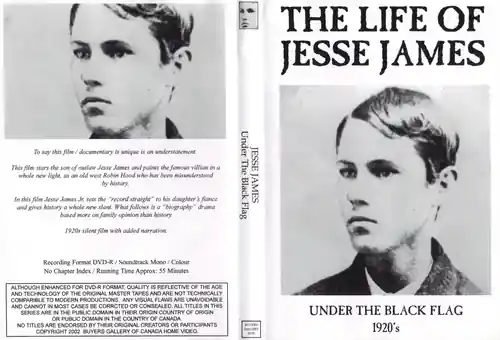
Technically, the film utilizes natural lighting to great effect, particularly in the outdoor sequences. The vastness of the landscape serves to emphasize the isolation of the characters, a visual technique that would later become a staple of the Western genre. When compared to the more claustrophobic staging of The Traitress, Jesse James Under the Black Flag feels expansive and atmospheric. The editing, while rudimentary by modern standards, effectively builds tension during the raid sequences, utilizing rhythmic cuts that mirror the galloping of hooves.
To watch this film today is to engage with the very act of myth-making. In 1921, the events of the Civil War were still within living memory for some, and the figure of Jesse James remained a polarized icon. The film leans heavily into the 'Lost Cause' sentimentality that was prevalent in early 20th-century cinema, positioning James as a victim of circumstance rather than a cold-blooded opportunist. This perspective offers a fascinating counterpoint to films like O Crime dos Banhados, which explores criminality through a much more clinical, almost sociological lens.
The narrative’s focus on the 'kind treatment' from the judge is particularly revealing. It suggests a cultural desire for reconciliation, a need to integrate these violent figures back into the social fabric. However, the film cannot escape the inherent irony of its subject matter. Even as Jesse and Zee plan their idyllic future, the shadow of the Black Flag looms large. The audience knows what the characters do not: that the peace they seek is an illusion, and the violence Jesse embraced will eventually demand its final payment.
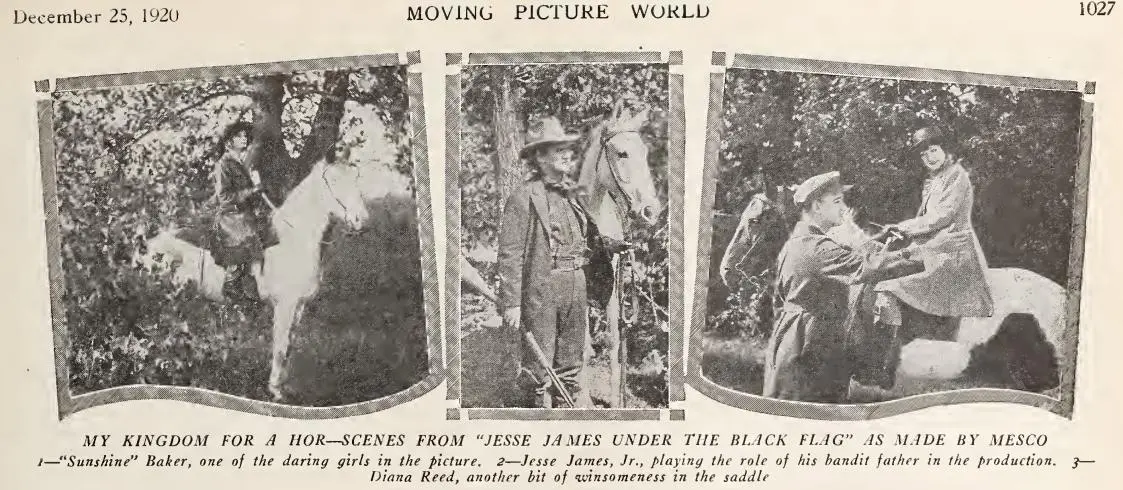
In the broader context of silent cinema, Jesse James Under the Black Flag holds a unique position. It lacks the whimsicality of The Sleepyhead or the exoticism of Deck Sports in the Celebes Sea. Instead, it shares a certain grit with The Line Runners, focusing on individuals who operate on the fringes of legality and morality. It is a film about the consequences of choice and the indelible nature of one's past.
The writing by Franklin B. Coates avoids the pitfalls of melodrama, opting instead for a narrative structure that feels episodic yet cohesive. Each vignette contributes to the overarching theme of the 'reformed' man struggling against his own legend. The film’s refusal to provide a simple, triumphant ending—focusing instead on the quiet, desperate hope for domesticity—elevates it above the standard fare of the time. It is a precursor to the revisionist Westerns of the 1970s, albeit one trapped within the technical and social constraints of the 1920s.
Ultimately, Jesse James Under the Black Flag is a haunting meditation on the impossibility of escape. Whether it is the escape from a war-torn past or the escape from a reputation built on blood, the film suggests that some flags, once raised, can never truly be lowered. The performances are earnest, the direction is purposeful, and the historical subtext is rich enough to satisfy any scholar of the American West. It is a vital piece of cinematic history that deserves to be viewed not just as a Western, but as a complex character study of a man lost in the transition between two eras of American life.
Reviewer's Note: For those interested in the evolution of the silent thriller, comparing this film's pacing to The Lion's Claws reveals the distinct stylistic choices made by Coates to emphasize character over spectacle. Similarly, the romantic elements here find a strange, mirrored echo in the social dynamics of The Shuttle or the tragic undercurrents of The Raggedy Queen.
IMDb 6.6
1920
Community
Log in to comment.