DbcultAccessing Vault...
Cult Review
Senior Film Conservator
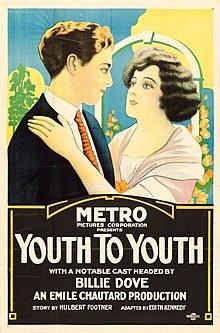
Broadway’s klieg lights once licked Esther Ralston’s cheekbones like gilt paint on porcelain; in Youth to Youth they also scorch.
The picture opens on a whistle-stop platform so rural the air itself smells of churned butter. A lone girl—boot-button eyes, hat brimsized for a scarecrow—clutches a pasteboard ticket to Manhattan. One splice later she’s swanning under a marquee whose bulbs blink Morse code for make me a star. The montage is merciless: rehearsal rooms where pianos gasp out Sousa, costumers who stitch ambition into every sequin, producers swirling brandy while they bargain for flesh. By reel two she’s top-lining a revue whose title we never quite read; the camera cares less for the play than for the phosphorescence she sheds.
Then comes the rumor: a bed-sheeted transaction with the show’s moneyed angel. The film never confirms the slander; it doesn’t need to. The mere waft of innuendo is enough to ignite her exit—a self-exile both heroic and histrionic, like a saint strolling into the desert to prove the mirage of virtue.
Cut to a ramshackle touring troupe barnstorming through corn-belt hamlets. Here the film trades chrome for copper: kerosene footlights, calico backdrops, an audience that applauds with the enthusiasm of people who’ve paid in eggs. Ralston’s character—now calling herself Ruth Vale—plays ingénues for farmers who think Ibsen is a seed drill. Enter Page Brookins, till-bred, sun-branded, hands roughened to the texture of tree bark. He watches her die as Juliet night after night and decides resurrection looks like marriage. Their courtship is a haiku of hayrides and hymn-singing, filmed in two-strip tones that make even sweat look lyrical.
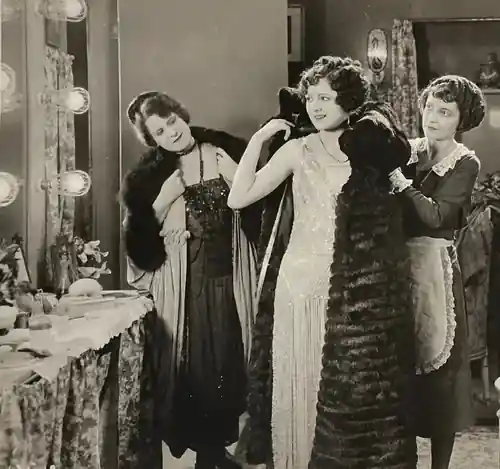
Meanwhile back in Manhattan the patron—never named beyond Mr. Hendricks—opens his paper to engagement notices. His face, framed by a mahogany desk vast enough to land a biplane, curdles with possession. He dispatches detectives, then scandal, then his own massive presence, like a locomotive of velvet and cash intent on rerouting one small life.
The final act is a triptych of chases: a midnight flight across stubble fields, a railway station where steam smears the lens, a cathedral nave where vows tremble between yes and never. When the curtain falls, the girl stands between two illuminations—electric and astral—her choice no simpler than picking which moon to howl at.
Esther Ralston, often pigeonholed as the American Venus, here earns a stranger halo: that of a woman learning the cost of luminescence. Watch her eyes in the stock-company scenes—how they dim from marquee wattage to lantern glow, the lashes weighted by the knowledge that every encore is borrowed time. She never overplays the hayseed naïf; instead she lets sophistication leak in around the pupils, so when she finally declares I was never just anybody’s country cousin, the line slices like a sickle through wheat.
As the farmer, Cullen Landis is all stillness—a human bale of wheat waiting to be shocked. His love scenes are photographed at calf-height, as though the camera itself were kneeling in the dirt. When he learns the woman he adores is a star, the knowledge lands not as triumph but as bereavement: the sky has claimed back its meteor.
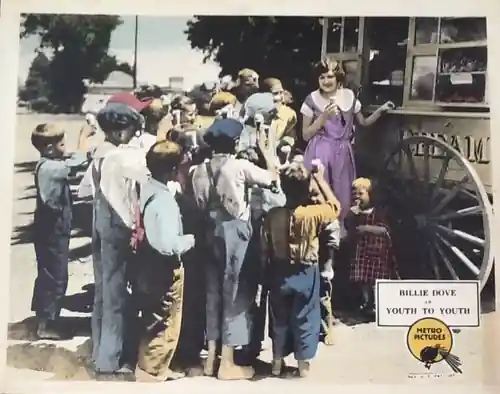
Zasu Pitts, fifth-billed, smuggles in comic oxygen every time she appears as the troupe’s stitch-mad wardrobe mistress. Her hands flutter like agitated sparrows, yet the eyes are ancient—two unblinking moons that have seen every chorus girl’s dream unravel into fringe.
Director Hardee Kirkland came from one-reel westerns; here he trades sagebrush for greasepaint and finds poetry in both. Note the repeated motif of feet: close-ups of Ralston’s satin pumps descending from a Pullman, then mud-caked brogues traipsing across loam, finally barefoot lovers on a moonlit pier. The montage argues, wordlessly, that every stage is merely a plank over some abyss.
The cinematographer, Jackson Rose, bathes Broadway sequences in a nitrate glow so hot it threatens to blister the frame. By contrast, farm scenes are steeped in cyanotype blue, as though the world itself has been soaked in milk. The transition between palettes is achieved with a slow iris shot that closes on Ralston’s tear-streaked cheek, then opens on a sunrise that seems to apologize for mankind.
Crime-scribe turned scenarist Hulbert Footner imports penny-dreadled menace into what might have been a standard back-to-the-soil yarn. Dialogue titles crackle with cynicism: Fame is a perfume; scandal drinks it neat. Yet the film refuses to punish its heroine for ambition; the transgressive act is not her rise but the patriarchal reflex to brand her fall. In 1921, such even-handedness was practically seditious.
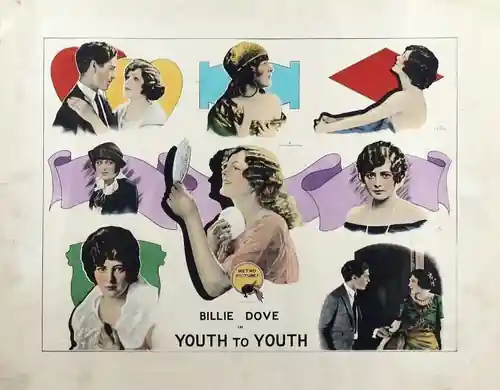
Compare it to Up in Mary’s Attic, where small-town virtue is rewarded with a husband and a hymnal. Youth to Youth offers no such moral coupon; its closing shot withholds catharsis, leaving the lovers clasped but glancing over each other’s shoulders at horizons that may yet devour them.
Surviving prints carry only the cue sheet—Hearts Are Trumps for the overture, Moonlight on the Hudson for the clinches. Yet the absence of synchronized score is a perverse gift: you supply your own rustle of wheat, your own far-off whistle of the 20th-Century Limited. The silence pools so thickly that when a train actually roars across the frame it feels like someone tore the filmstrip.
Released in October 1921, the picture recouped four times its $86,000 outlay, buoyed by Ralston’s pin-up currency. Critics praised its unvarnished sincerity, though Variety carped that the third reel wallows in molasses. Today it circulates only in 9.5 mm condensation prints, flecked like aged parchment. Yet even in truncated form, the movie throbs with a question we still can’t answer: is autonomy possible when the spotlight pays the bills?
If you revere Hypocrites for its braised symbolism or Lili for its puppet-stung pathos, you’ll find kin here. Youth to Youth is both antique and unquiet, a film that suspects every dream is mortgaged to someone awake. Seek it in the twilight of an archival screening, when the projector’s chatter becomes the train you yourself once missed. Bring a handkerchief; the dust you wipe from your eyes may be the same stardust that once clung to Esther Ralston’s lashes as she pondered which moon to call home.
IMDb 4.8
1913
Community
Log in to comment.