DbcultAccessing Vault...
Cult Review
Senior Film Conservator
Is it worth watching this today? Only if you actually like the history of silent film and don't mind squinting at grainy footage.
If you need fast cars or people talking, you are going to absolutely hate this one. It is slow and it feels heavy.
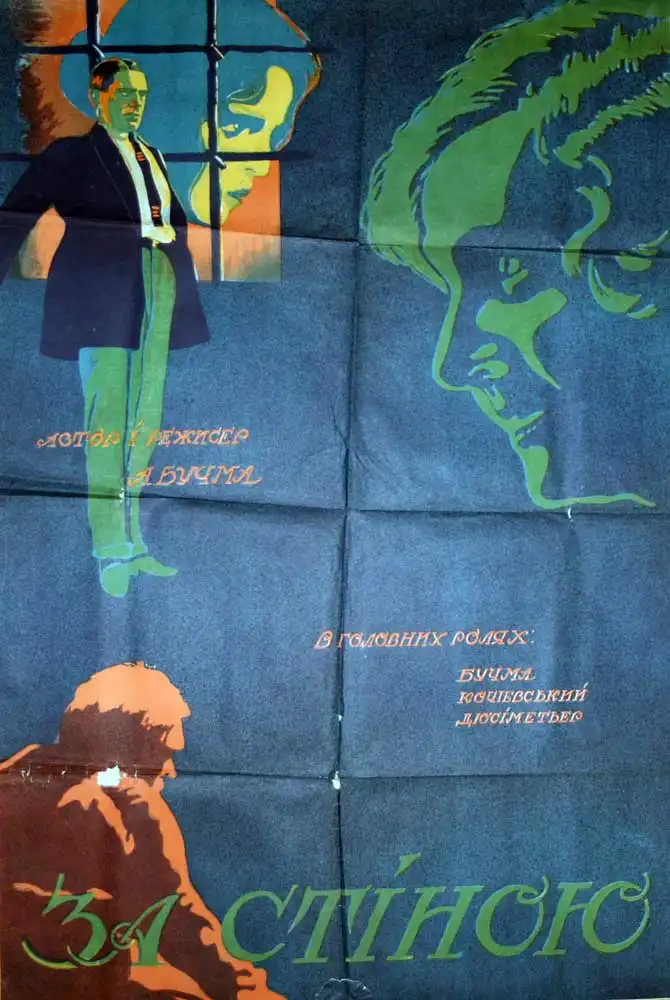
I sat down with Za stenoj (Behind the Wall) expecting a typical Soviet propaganda piece from 1928. It is kind of that, but it feels more like a mood piece about being trapped.
The first thing you notice is how dark everything is. Not just the story, but the actual lighting on the set.
It feels like they only had one or two lamps and they just moved them around to make the shadows look as scary as possible. There is this one shot early on of a hallway that looks like it goes on forever into a black pit.
Amvrosi Buchma is the main reason to watch this. He wrote it too, which makes sense because the camera really loves his face.
He has these eyes that seem to vibrate when he gets angry. It is that old-school acting where everything is way too big, but somehow it works here because the rooms are so small.
The movie is mostly about the stuff that happens in the shadows of a big house. It is about the workers and the people who aren't supposed to be seen by the rich folks on the other side of the wall.
There is a scene where a character is just sitting by a window, and the dust is floating in the light. It lasts for what feels like a minute, and nothing happens, but you can feel the boredom and the heat.
I kept thinking about Passers-by while watching this. Both movies have this weird way of making you feel like a peeping tom watching people who don't know you are there.
Maria Dyusimeter is in this too, and she does this thing with her hands when she's nervous that felt very real. She keeps twisting her apron until you think the fabric is going to rip.
The pacing is... well, it is a 1920s movie. Some parts feel like they are missing, honestly.
One second a guy is standing by a door, and the next he is across the street. I don't know if the film was cut badly or if they just didn't care about the transition. It’s a bit jarring.
But the "wall" metaphor is everywhere. Characters are always leaning against walls, hiding behind them, or trying to look through them.
It gets a bit repetitive after a while. You get the point: they are stuck.
There is a child in the movie, Natalya Chernysheva, who has a very strange expression most of the time. She doesn't look like a happy kid; she looks like she's seen too much work and not enough lunch.
The writing by Buchma and Povolotskyi is okay, but it's the visuals that do the heavy lifting. The title cards are pretty standard for the time, though some of the translations I saw felt a bit stiff.
I found myself looking at the backgrounds more than the actors sometimes. The sets look like actual filthy apartments, not movie sets. You can almost smell the damp wood and the old soup.
It reminds me of the grit in Wild Oranges, even though the setting is totally different. There is just this sense of decay that is hard to fake with a big budget.
One specific moment that stuck with me was a close-up of a broken plate. The camera just lingers on the shards on the floor while a fight happens off-screen. It was a smart choice to show the mess instead of the punching.
The music in the version I saw was a modern piano track, and it didn't really fit. It was too bouncy for a movie about suffering and walls. I ended up turning the sound off halfway through.
Watching it in silence actually made it better. You focus more on the way the actors move their bodies to show exhaustion.
Is it a masterpiece? Probably not. It feels like a sketch of a better movie that never got finished.
But for a 1928 flick, it has a lot of heart. Or maybe not heart, but teeth. It’s biting at the social system of that time.
If you've seen things like The Light of Happiness, this will feel much more grounded and less dreamy. It’s the opposite of a fairy tale.
The ending comes up pretty fast and doesn't really resolve much. It just kind of stops. I like that, actually. Life doesn't always have a big finale where everyone gets what they want.
Usually, you just keep living behind the same walls. 🏠
I’d say give it a watch if you have an hour and you want to see what Ukrainian cinema looked like before it got completely squeezed by the big studios. Buchma really is a force of nature even when he’s just standing still.
Just don't expect a clear plot. It's more of a vibe than a story. A very dusty, dark, and slightly depressing vibe.
Also, watch out for the cat in the background of the courtyard scene. I'm pretty sure it wasn't supposed to be there, it looks confused as hell. 🐈
It's these little accidents that make old movies feel more alive than the stuff we get now. It’s imperfect and that’s why it works.
IMDb —
1928
Community
Log in to comment.