DbcultAccessing Vault...
Cult Review
Senior Film Conservator
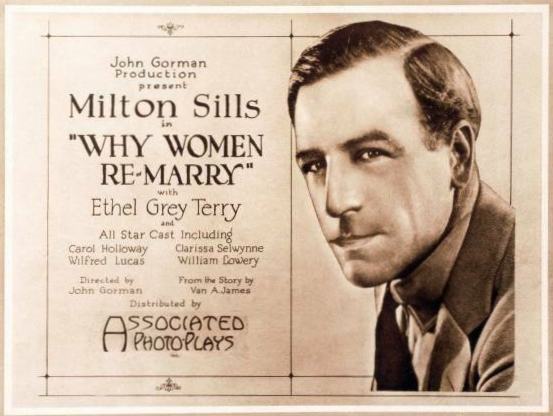
The year 1923 stood as a pivotal juncture in the evolution of American silent cinema, a period where the medium began to shed its stage-bound origins in favor of a more nuanced, psychologically driven visual language. Why Women Remarry emerges from this era not merely as a moralistic fable, but as a surprisingly gritty examination of the fragility of the nuclear family and the social imperatives that drive women toward second chances. Directed with a keen eye for domestic tension, the film navigates the murky waters of abuse, wrongful accusation, and the eventual alchemy of romantic rebirth.
The narrative engine is ignited by the detestable presence of Martin Talbot. In an era where the 'head of the house' was often romanticized, the film takes a subversive turn by presenting Talbot as a parasitic force. His gambling isn't portrayed with the glamorous veneer often found in later noir, but as a grinding, soul-crushing vice that leaves his family in a state of perpetual anxiety. This depiction of domestic toxicity provides the necessary justification for the film's later thematic pivots. When Talbot is finally excised from the narrative—violently, by Tuck McKinnon—there is no sense of tragedy for the character, only a profound sense of relief for the audience and the remaining cast. This creates a fascinating moral vacuum that the rest of the film must fill.
The brilliance of the screenplay lies in how it effortlessly transitions from a domestic drama into a high-stakes procedural. Don Compton, played with a palpable sense of desperation, becomes the focal point of a terrifying judicial error. The film expertly utilizes the trope of the 'wrongly accused man,' a theme explored with varying degrees of success in other contemporary works like The Sin That Was His. Compton’s predicament is a masterclass in building tension through circumstantial evidence. Found with the murder weapon and harboring a well-known grudge, he represents the vulnerability of the individual against a system that prioritizes closure over truth. The visual storytelling here is stark; the shadows seem to close in on Compton, mirroring his psychological entrapment.
Enter Dan Hannon, the archetype of the noble protector. His role is twofold: he is the instrument of justice and the catalyst for Mary Talbot’s emotional resurrection. Unlike the frantic energy seen in films like Movie Mad, Hannon’s approach is methodical and empathetic. His interest in Mary Talbot and her children adds a layer of warmth to an otherwise cold investigative process. The chemistry between the leads is subtle, dictated by the era's social mores, but it provides the necessary emotional stakes for the film’s resolution. Hannon represents the 'ideal' man of the 1920s—authoritative yet compassionate—a direct antithesis to the chaotic energy of the late Martin Talbot.
The film’s title is not a question but an observation, and it fulfills its promise through four distinct subplots of remarriage. This structural choice elevates the film from a singular story into a broader sociological survey.
1. Mary Talbot and Dan Hannon: This is the anchor of the film, representing the move from trauma to security. It argues that remarriage is an act of reclamation.
2. Mrs. Compton and Robert Milton: This subplot introduces a more intellectual and philanthropic dimension to romance. It suggests that a woman’s 'charitable work'—often dismissed by lesser men—requires a partner of equal depth. It echoes the thematic maturity found in Our Better Selves.
3. The Jazz-Crazed Mrs. McKinnon: Perhaps the most modern element of the film is its acknowledgement of the Jazz Age's influence. Mrs. McKinnon’s search for happiness with a musician named Billy reflects the era's burgeoning youth culture and the shift toward hedonistic compatibility.
4. Dan’s Sister: Her subplot, though less developed, serves to round out the film's thesis that the pursuit of happiness is a universal right, regardless of past failures.
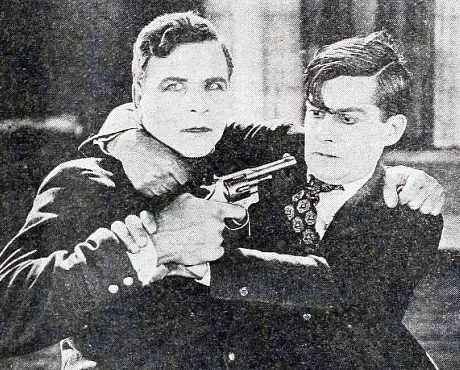
Visually, Why Women Remarry utilizes the chiaroscuro lighting that would later become a staple of the noir genre. The interiors of the Talbot home are often shrouded in gloom, symbolizing the oppressive nature of Martin’s presence. In contrast, the scenes involving the 'new' romances are bathed in a softer, more diffused light. This binary visual approach effectively guides the audience's emotional response. The pacing is deliberate, allowing the weight of the accusations against Compton to settle before the final act of revelation. When compared to the more whimsical pacing of Saturday, this film feels remarkably grounded and serious.
To fully appreciate this work, one must look at it alongside films like The Bait (1921), which also dealt with themes of entrapment and moral ambiguity. While The Cave Girl or The Jungle Trail took audiences to exotic locales, Why Women Remarry finds its drama in the mundane settings of the parlor and the courtroom. It shares a certain DNA with Lovetime in its exploration of romantic destiny, yet it remains far more cynical about the initial state of marriage. Even the more obscure titles of the era, such as Sliakot bulvarnaia, rarely captured the specific intersection of crime and domesticity with such clarity.
Milton Sills delivers a performance of remarkable restraint. In an age where overacting was often the default, Sills brings a quiet intensity to the screen. His portrayal of Dan Hannon is the glue that holds the disparate subplots together. He manages to convey authority without being overbearing, a trait that makes his eventual union with Mary Talbot feel earned rather than forced. His work here stands in stark contrast to the more theatrical performances found in Radio-Mania or the simplistic archetypes of Anne of Little Smoky.
One cannot ignore the feminist undertones of the film. While the solution to every woman's problem is ultimately another man, the film acknowledges that the *choice* of that man is an act of empowerment. It posits that women should not be shackled to the mistakes of their past or the crimes of their first husbands. In a society that often stigmatized divorce and remarriage, this film acts as a progressive voice, suggesting that the pursuit of a compatible partner is a virtuous endeavor. It lacks the comedic bite of Choose Your Weapons, but it replaces it with a sincere, almost urgent, plea for emotional intelligence in relationships.
As we look back from a century’s distance, Why Women Remarry stands as a testament to the sophistication of early 20th-century storytelling. It manages to balance a complex murder mystery with a multi-layered character study without losing its thematic focus. While some of its conclusions might seem dated to a modern audience—particularly the 'jazz-crazed' caricature—the core of the film remains resonant. It is a story about the possibility of a second act, a theme that remains as relevant today as it was in 1923. It avoids the surrealism of Eva or the experimental nature of Wo ein Wille, ist ein Weg, opting instead for a gritty, relatable realism that leaves a lasting impression. This is a film that deserves its place in the pantheon of silent cinema, not just for its plot, but for its profound empathy toward the plight of the 'second-time' bride.
IMDb —
1919
Community
Log in to comment.