DbcultAccessing Vault...
Cult Review
Senior Film Conservator
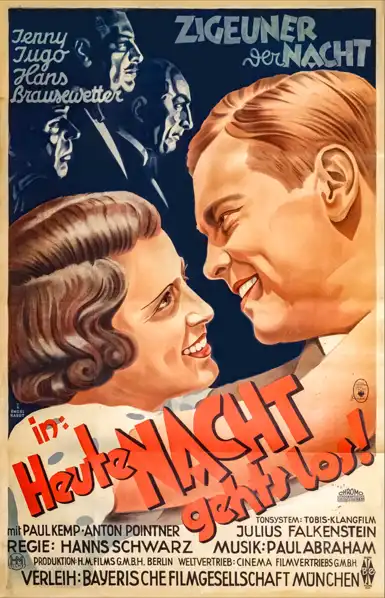
"Zigeuner der Nacht," a 1928 German silent film, might not be for everyone today. If you're someone who enjoys a peek into early cinema, especially with a bit of a crime caper twist, then yes, give it a shot.
For those who need dialogue, fast pacing, or modern visual flair, it’s probably one to skip. It's a curiosity, a neat piece of its time.
The story centers around a poor projectionist, played by Paul Kemp. He's just doing his job, all quiet and dark in the projection booth, when these thugs burst in. It’s pretty sudden, the kidnapping.
The gangsters are a motley crew, nothing too menacing, more like guys trying really hard to be tough. Their leader’s sister, played by Jenny Jugo, is instantly the most interesting person on screen. She has a certain spark.
They need our projectionist for a very specific task: to show them a film reel of a Dutch jewel dealer. This part is clever. Using a film within a film as a plot device feels pretty modern, even for 1928.
There's a scene where Kemp's character, the projectionist, is just trying to focus the image. You can almost feel the tension, not just from the gangsters watching him, but from the technical demands of the job itself. It’s a very specific kind of stress.
Jenny Jugo's character, the sister, has these wonderfully subtle glances. She’s clearly not thrilled with her brother’s plans. Her face often tells a richer story than the intertitles do.
Some of the gangster acting, honestly, it goes a little too big. One guy keeps twirling his imaginary mustache, even when he doesn't have one. It’s a bit much, sometimes.
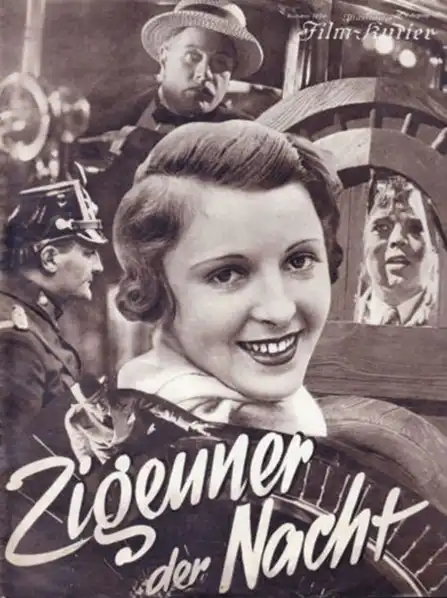
The actual "reconnaissance" footage of the jewel dealer is brief, almost a flash. It makes you wonder how much detail they could really gather from it. The plan relies a lot on that quick glimpse.
There’s a moment when the projectionist tries to make a break for it, and it feels... a little clumsy. Not incompetent, just real, like someone who isn't a hero trying to escape. That felt more authentic than some grand, acrobatic stunt.
Jugo’s character is really the heart of the film. She clearly has a moral compass. She’s always looking for a way out, for her own sake and for the projectionist. Her actions are the real driving force.
The sets are functional, mostly dark rooms or simple street scenes. Nothing too elaborate. The focus is definitely on the characters and their movements, not grand backdrops.
I liked how they used light and shadow, especially in the gangster hideout. It makes everything feel a bit more conspiratorial. Some shots, though, feel a little flat. Like the camera was just… there.
It's funny, you can see the director, Henry Koster, really trying to build suspense with the close-ups on hands and eyes. Sometimes it works great, other times, it's like, okay, we get it, he's nervous.
One shot of Paul Kemp, when he's first dragged in, he has this wide-eyed stare that just lingers. It's almost comedic how long it holds, but it also sells his fear.
The ending wraps up pretty neatly, maybe a little too fast after all the build-up. But it's a silent film, they often liked to tie things up quickly. You don't get a lot of lingering emotional aftermath.
"Zigeuner der Nacht" is a fun watch if you approach it with the right mindset. It’s not a masterpiece, but it’s got a certain charm, particularly because of Jenny Jugo. It feels like a solid silent film effort, showing off some clever ideas even with its limitations. It's a nice little slice of cinematic history. 🎬
IMDb —
1935
Community
Log in to comment.