DbcultAccessing Vault...
Cult Review
Senior Film Conservator
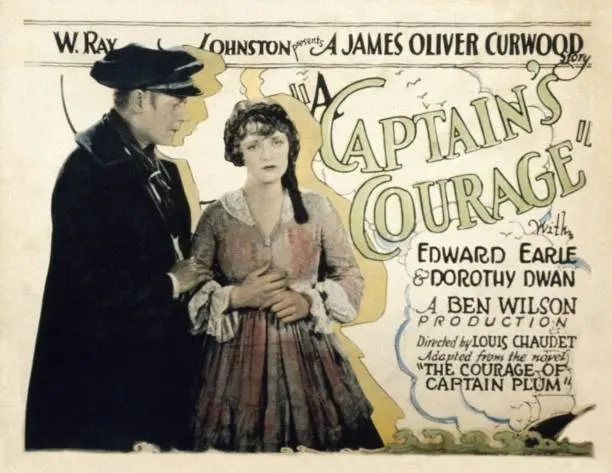
Does A Captain's Courage still hold water for a modern audience? Short answer: Yes, but only if you view it as a gritty precursor to the modern survival thriller rather than a polished action epic.
This film is specifically for those who appreciate the 'Northern' genre—think Jack London but on water—and for historians of the silent era who want to see how the Great Lakes were mythologized. It is absolutely not for viewers who require fast-paced CGI spectacle or those who find the deliberate pacing of 1920s storytelling tedious.
1) This film works because it manages to make Lake Michigan feel as vast and terrifying as the Atlantic, using the 1853 setting to create a genuine sense of isolation.
2) This film fails because the secondary characters, particularly the kidnapped brother, are treated more like MacGuffins than actual human beings with stakes.
3) You should watch it if you enjoyed the rugged atmosphere of The Lone Wolf or the character-driven tension found in The Pinch Hitter.
A Captain's Courage, based on the work of James Oliver Curwood, understands that the environment is the true antagonist. In 1853, the shores of Lake Michigan were not the developed hubs we know today; they were the edge of the world. The film captures this beautifully through its cinematography, which favors wide, bleak shots of the shoreline over intimate interior sets.
Edward Earle plays Captain Plum with a stoicism that feels earned. Unlike some of the more theatrical performances in films like Camille, Earle keeps his movements grounded. When he stands on the deck of his ship, he doesn't look like an actor; he looks like a man who has spent a decade fighting the wind. One specific scene, where Plum first interrogates a local informant about the pirate’s whereabouts, showcases this perfectly. There are no grand gestures, just a steady, intimidating gaze that tells the audience exactly who is in charge.
The pirate element is handled with a surprising lack of cliché. Al Ferguson, playing the villain, avoids the 'Arrr' tropes of later cinema. Instead, he portrays a man who is essentially a maritime warlord. He is a product of the 1850s frontier—violent, opportunistic, and deeply territorial. This realism makes the threat to Marion Whitley’s brother feel much more visceral than a standard adventure flick.
A Captain's Courage is worth watching for its unique historical setting and its refusal to lean on easy melodrama. It offers a rare look at mid-19th-century Great Lakes life through the lens of 1920s filmmaking. While the pacing reflects the era's slower sensibilities, the core conflict remains engaging for fans of classic adventure literature.
Dorothy Dwan as Marion Whitley provides the emotional core of the film, though her role is admittedly limited by the conventions of the time. She is the catalyst, the reason Plum risks his vessel and his life. However, Dwan manages to inject a sense of urgency into her scenes that prevents her from becoming a mere 'damsel.' In the scene where she first pleads with Plum for help, her desperation feels genuine, not performative.
The pacing, however, is where the film shows its age. Much like The Show-Off, there are moments where the narrative lingers too long on transitional scenes. We see a lot of Plum walking, a lot of Plum sailing, and a lot of Plum thinking. For a modern viewer, this can feel like padding. Yet, for the patient viewer, these moments build a sense of 'place' that is often lost in modern editing. You feel the cold of the lake. You feel the distance between the settlements.
"The film doesn't just tell a story; it captures a specific, freezing moment in American history where the law ended at the shoreline."
The writing by George W. Pyper and James Oliver Curwood is lean. They don't waste time with flowery title cards. The dialogue—what we see of it—is punchy and direct. This fits the characters. These are men and women of action, not philosophers. In one exchange, Plum is warned about the dangers ahead. His response is a simple shrug and a look toward the horizon. It works. It’s simple. It’s effective.
Technically, A Captain's Courage is a triumph of location scouting. While many films of the era, such as Molly Make-Believe, relied heavily on studio artifice, this film feels like it was dragged through the mud and the sand. The lighting during the night scenes—likely achieved through tinting—creates a haunting atmosphere that mimics the moonlit Great Lakes perfectly.
The action sequences are surprisingly physical. When the inevitable confrontation with the pirates occurs, it’s not a choreographed dance. It’s a scramble. It’s messy. It’s people falling over crates and swinging heavy lanterns. This lack of polish actually aids the film's realism. It feels dangerous because it looks uncoordinated, much like a real brawl on a shifting deck would be.
Pros:
- Edward Earle delivers a masterclass in silent-era restraint.
- The 1853 setting is meticulously realized through costume and location.
- The villain is genuinely menacing without being a caricature.
- The film avoids the overly sentimental tropes of other 1920s dramas like Charity.
Cons:
- The pacing can be glacial in the middle thirty minutes.
- The kidnapped brother character is underdeveloped.
- Some of the maritime jargon on the title cards may be lost on modern audiences.
A Captain's Courage is a sturdy piece of filmmaking. It doesn't try to reinvent the wheel, but it knows exactly how to make that wheel turn. It is a film about grit, about the cold, and about the quiet heroism of a man who refuses to look away from a problem. While it shares some of the DNA of lighter fare like The Bachelor Daddy in its structural simplicity, its tone is far more aligned with the rugged adventures of the era.
Is it a masterpiece? No. It’s too repetitive for that. But it is a solid, evocative piece of cinema that deserves a spot in the conversation about early American adventure films. It takes a stance on its characters and sticks to it. Captain Plum is a hero, but he’s a tired one. And in 1853, on the shores of a freezing lake, that’s the only kind of hero that makes sense.

IMDb 6.5
1935
Community
Log in to comment.