
DbcultAccessing Vault...
Director's Spotlight
Senior Film Conservator
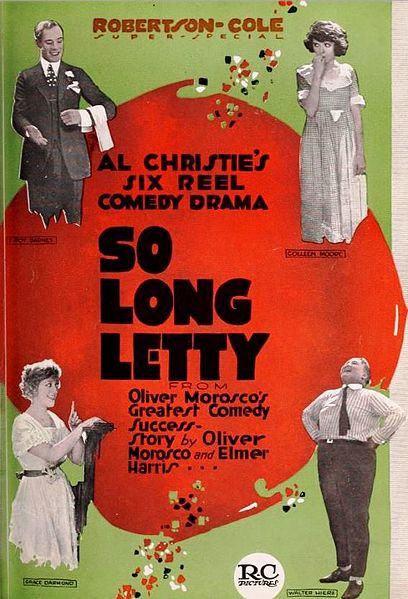
Director's Spotlight: United States
A Deep Dive into the 1920 Vision of Al Christie
As we revisit the 1920 masterpiece So Long Letty, we are struck by the meticulous attention to detail that Al Christie applied to every frame. Anchored by a narrative that is both personal and universal, it bridges the gap between traditional Comedy and contemporary vision.
In So Long Letty, Al Christie pushes the boundaries of conventional narrative. The film's unique approach to its subject matter has sparked endless debates and interpretations among cinephiles and critics alike.
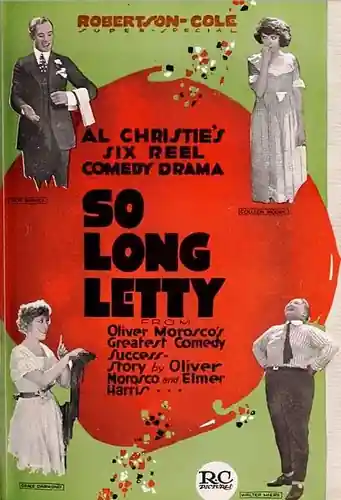
In this work, Al Christie explores the intersection of Comedy and United States cultural identity. The meticulous attention to detail suggests a deep-seated commitment to pushing the boundaries of the medium, ensuring that So Long Letty remains a relevant topic of study for Comedy enthusiasts.
| Cinematography | High-Contrast |
| Soundtrack | Orchestral |
| Editing | Invisible |
| Art Direction | Kitsch |
Visualizing the convergence of Al Christie's style and the core Comedy narrative.
Harry Miller is a "natural-born mixer" while his wife Grace is a homebody, distressed by her husband's errant ways. Grace finds a kindred spirit in Tommy Robbins, who lives in an adjoining bungalow and whose wife Letty is devoted to the cabarets. Harry admires Letty as much as Tommy admires Grace, and suggests to his neighbor that they arrange an exchange of wives. The wives overhear their husbands' plotting to obtain divorces and, still in love with the men they married, conceive a counter-plan of a week of platonic trial marriages. Over the seven-day period, the wives make life so miserable for each other's husbands that the two men gladly return to their respective spouses.
Decades after its release, So Long Letty remains a vital piece of the cinematic puzzle. Its influence can be seen in countless modern works, solidifying Al Christie's status as a master of the craft in United States and beyond.