Summary
A sun-bleached California bungalow court becomes the stage for a marital danse macabre in which two couples—mirror-images in reverse—discover that the grass on the neighbor’s lawn is merely painted green. Harry Miller, a gregarious jazz-age gadfly, flits from cocktail to cocktail while his wife Grace coils herself tighter into the upholstery, nursing a book and a grievance. Next door, Tommy Robbins—quiet, uxorious, almost translucent—watches his wife Letty vanish nightly into saxophone smoke. One moon-drunk evening the husbands hatch a scheme as old as Ovid: swap spouses, shed skins, start fresh. The wives, eavesdropping through thin stucco, do not weep; they smile like Cleopatra testing poisons. Instead of divorce papers they propose a week-long “platonic” trial marriage: each wife will live with the other’s husband, chastely yet catastrophically. What follows is seven days of domestic guerrilla warfare—Grace turns Tommy’s tidy bungalow into a shrine of high culture and higher standards, forcing him to endure Bach, beetroot salads, and bedtime at nine; Letty drags Harry through champagne hangovers, Charleston lessons at dawn, and a breakfast of nothing but gin and grapefruit. By the seventh sunrise the men crawl back to their original partners, egos flayed, contrite, and oddly aroused by the bruises of their own desires. The film ends with a restored symmetry: front porches close like curtains, radios resume their tinny chatter, and the bungalow court exhales, unaware it has been the amphitheater of a miniature sexual revolution.
Synopsis
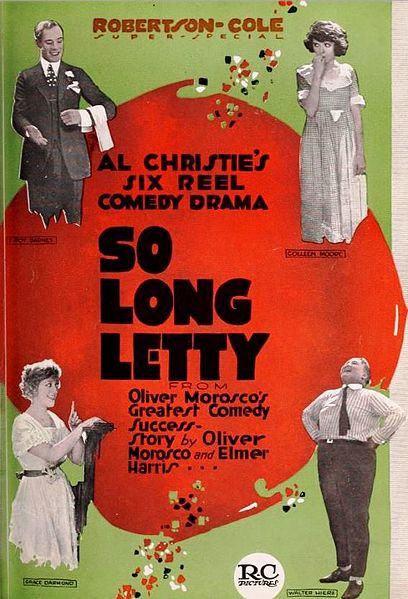
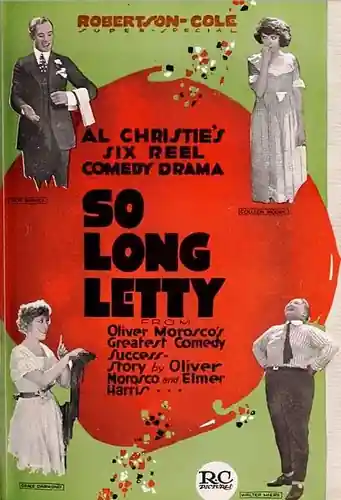
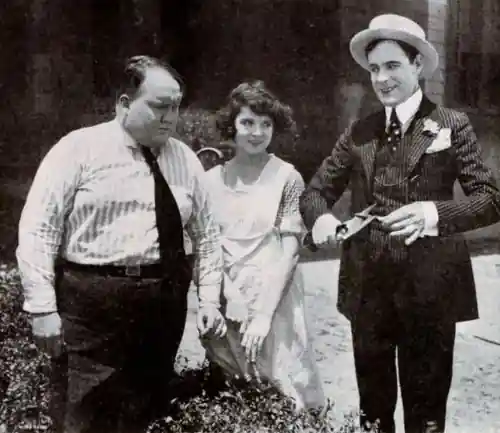
Harry Miller is a "natural-born mixer" while his wife Grace is a homebody, distressed by her husband's errant ways. Grace finds a kindred spirit in Tommy Robbins, who lives in an adjoining bungalow and whose wife Letty is devoted to the cabarets. Harry admires Letty as much as Tommy admires Grace, and suggests to his neighbor that they arrange an exchange of wives. The wives overhear their husbands' plotting to obtain divorces and, still in love with the men they married, conceive a counter-plan of a week of platonic trial marriages. Over the seven-day period, the wives make life so miserable for each other's husbands that the two men gladly return to their respective spouses.
Review Excerpt
"
The first thing you notice is the citrus glare of the print—amber and sea-foam flickers, like watching the film through a glass of iced Tom Collins. Paramount’s 1929 part-talkie So Long Letty survives only in a 16 mm reduction, crackling like a lo-fi phonograph, yet that very fragility intensifies its champagne fizz: every skipped frame feels like a missing heartbeat between scandalous laughs.
The Plot as Palimpsest
Oliver Morosco’s original stage farce—already a riposte to Fighting Mad’s melo..."