
DbcultAccessing Vault...
Director's Spotlight
Senior Film Conservator
Director's Spotlight: United States
A Deep Dive into the 1917 Vision of Albert Parker
Peeling back the layers of Albert Parker's The Man Hater exposes the collaborative alchemy between Albert Parker and the 1917 creative team. Anchored by a narrative that is both personal and universal, it reinforces the idea that cinema is a medium of infinite possibilities.
In The Man Hater, Albert Parker pushes the boundaries of conventional narrative. The film's unique approach to its subject matter has sparked endless debates and interpretations among cinephiles and critics alike.
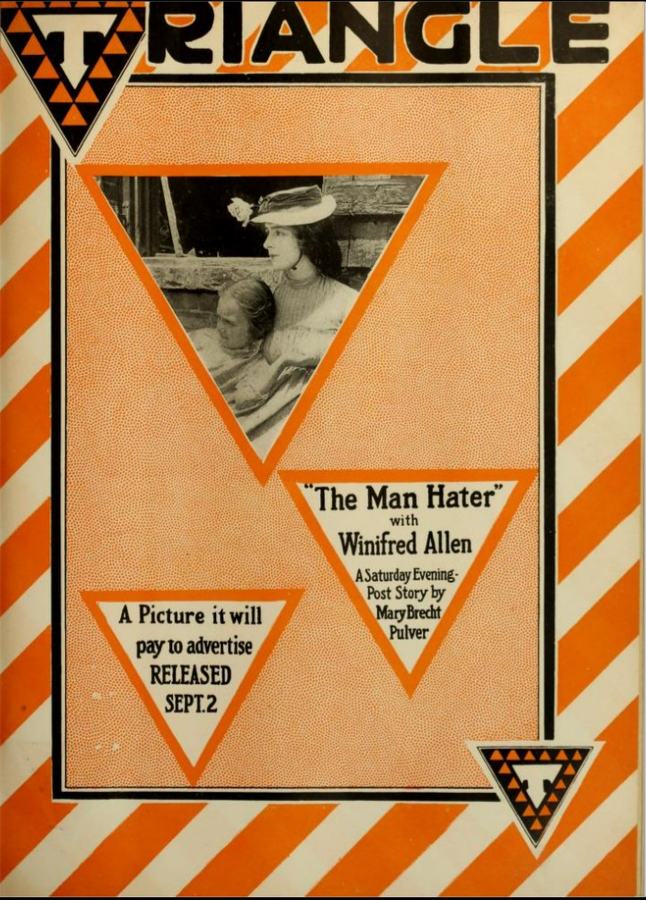
To fully appreciate The Man Hater, one must consider the cinematic climate of 1917. During this period, United States was undergoing significant artistic shifts, and Albert Parker was at the forefront of this cult movement, often challenging established norms.
| Cinematography | High-Contrast |
| Soundtrack | Orchestral |
| Editing | Slow-Burn |
| Art Direction | Brutalist |
Visualizing the convergence of Albert Parker's style and the core cult narrative.
Phemie Sanders, confronted with the unhappiness of her parents because of the perpetually drunken state of her father, harbors a hatred towards men which even extends to Joe Stull, the village blacksmith who wants to marry her. Upon her mother's death, Phemie takes her younger sister and goes to Joe to accept his proposal while announcing that she will never love him. Joe accepts her conditions, thinking that she will soon change her attitude, but Phemie remains steadfast. Having read in the paper of the power of matrimonial jealousy, Joe decides to write anonymous letters to Phemie, mentioning another woman in his life. These have no perceptible effect on the man-hater until another woman, in reality, looms upon the horizon. She is Lucy Conyer, a former admirer of Joe's who is now a widow. Lucy makes a play for Joe's attentions and this finally has an effect on Phemie, who upbraids her husband for neglecting her and, then forced to a confession, declares her love for him.
Decades after its release, The Man Hater remains a vital piece of the cinematic puzzle. Its influence can be seen in countless modern works, solidifying Albert Parker's status as a master of the craft in United States and beyond.