
DbcultAccessing Vault...
Director's Spotlight
Senior Film Conservator
Director's Spotlight: United States
A Deep Dive into the 1930 Vision of Albert Ray
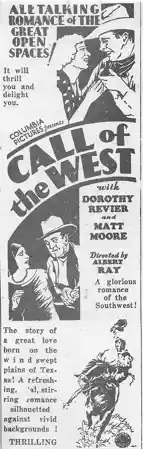
To understand the modern evolution of United States film, one must first look at Call of the West and the collaborative alchemy between Albert Ray and the 1930 creative team. Subverting the expectations of the typical 1930 audience, it remains a vital reference point for anyone studying the evolution of Albert Ray.
In Call of the West, Albert Ray pushes the boundaries of conventional narrative. The film's unique approach to its subject matter has sparked endless debates and interpretations among cinephiles and critics alike.
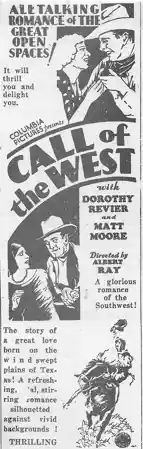
The visual language of Call of the West is defined by its use of shadows and framing, a hallmark of Albert Ray's style. By utilizing a 1930-era palette, the film creates an immersive experience that perfectly complements its Western themes.
| Cinematography | Handheld |
| Soundtrack | Minimalist |
| Editing | Slow-Burn |
| Art Direction | Brutalist |
Visualizing the convergence of Albert Ray's style and the core Western narrative.
Nightclub entertainer Violet La Tour collapses during a performance in Sagebrush, Texas, and is taken to the ranch of Lon Dixon. They fall in love and are married. Feeling deserted when Lon joins a posse in search of rustlers, she returns to New York. There, she is wooed by her agent, Maurice Kane, but confirms her love for Lon when he comes to claim her.
Decades after its release, Call of the West remains a vital piece of the cinematic puzzle. Its influence can be seen in countless modern works, solidifying Albert Ray's status as a master of the craft in United States and beyond.