
DbcultAccessing Vault...
Director's Spotlight
Senior Film Conservator
Director's Spotlight: United States
A Deep Dive into the 1925 Vision of Albert S. Rogell
As we revisit the 1925 masterpiece Fighting Fate, we are struck by the meticulous attention to detail that Albert S. Rogell applied to every frame. Anchored by a narrative that is both personal and universal, it bridges the gap between traditional Comedy and contemporary vision.
In Fighting Fate, Albert S. Rogell pushes the boundaries of conventional narrative. The film's unique approach to its subject matter has sparked endless debates and interpretations among cinephiles and critics alike.
The visual language of Fighting Fate is defined by its use of shadows and framing, a hallmark of Albert S. Rogell's style. By utilizing a 1925-era palette, the film creates an immersive experience that perfectly complements its Comedy themes.
| Cinematography | Noir-Inspired |
| Soundtrack | Orchestral |
| Editing | Invisible |
| Art Direction | Kitsch |
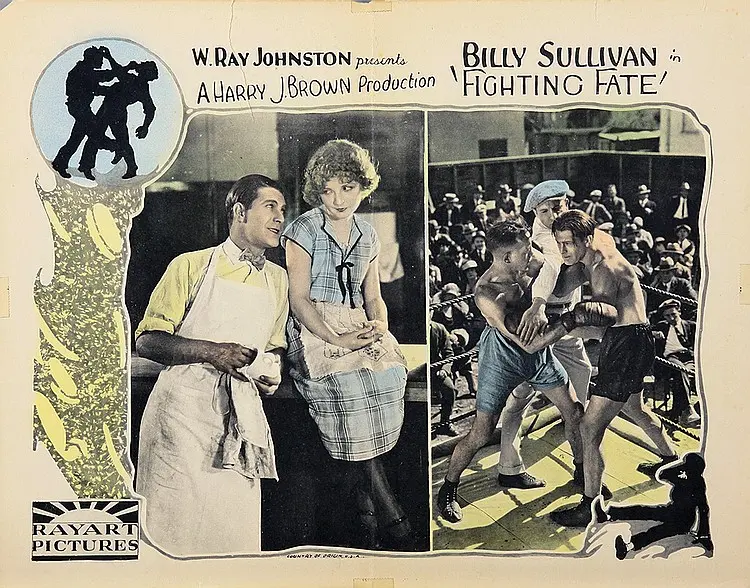
Visualizing the convergence of Albert S. Rogell's style and the core Comedy narrative.
The first of a series of twelve-proposed features starring ex-prizefighter Billy Sullivan. He plays a washed-up, drifting fighter, reduced to the job of a cook in a small-town diner. But when a fighter fails to show up, Billy is called on to substitute and take a beating. Billy has other plans.
Decades after its release, Fighting Fate remains a vital piece of the cinematic puzzle. Its influence can be seen in countless modern works, solidifying Albert S. Rogell's status as a master of the craft in United States and beyond.