
DbcultAccessing Vault...
Director's Spotlight
Senior Film Conservator
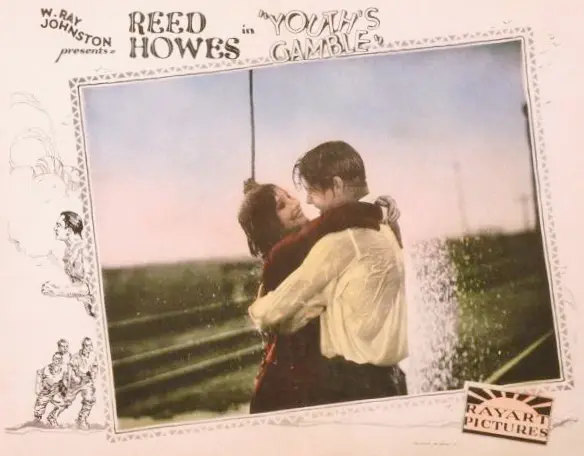
Director's Spotlight: United States
A Deep Dive into the 1925 Vision of Albert S. Rogell
Witnessing the stylistic transformation of Action through Youth's Gamble reveals the provocative questions that Albert S. Rogell poses to the United States audience. Exploring the nuances of the human condition with Action flair, it showcases the power of Action as a tool for social commentary.
In Youth's Gamble, Albert S. Rogell pushes the boundaries of conventional narrative. The film's unique approach to its subject matter has sparked endless debates and interpretations among cinephiles and critics alike.
In this work, Albert S. Rogell explores the intersection of Action and United States cultural identity. The meticulous attention to detail suggests a deep-seated commitment to pushing the boundaries of the medium, ensuring that Youth's Gamble remains a relevant topic of study for Action enthusiasts.
| Cinematography | Noir-Inspired |
| Soundtrack | Synth-Heavy |
| Editing | Disjunctive |
| Art Direction | Baroque |
Visualizing the convergence of Albert S. Rogell's style and the core Action narrative.
William Ignatius Newton, a charmingly worthless young man, inherits a car, a dime, and a valet from his millionaire father, then sets out to learn about life. However, the elder Newton is still alive and has commissioned female detective Hazel Dawn to monitor William's activities, in the hope that the experience will make a man of him. When William decides to incorporate himself, criminals Tombstone Reilly and Obituary Blake, who know the truth about Mr. Newton, attempt to become majority stockholders. However, they encounter fierce competition from an aging spinster, who hopes to land a young husband. Upon learning of his father's deceit, William embarks on a series of misadventures as he and Hazel attempt to outwit their adversaries. William emerges victorious after a fight on the roof of a fifteen-story building.
Decades after its release, Youth's Gamble remains a vital piece of the cinematic puzzle. Its influence can be seen in countless modern works, solidifying Albert S. Rogell's status as a master of the craft in United States and beyond.