
DbcultAccessing Vault...
Film History
Archivist John
Senior Editor
We have spent decades worshipping at the altar of the 'cool' cult hero. We lionize the leather-clad vigilante, the smooth-talking noir detective, and the hyper-competent assassin. But we are looking at the wrong map. If you want to find the real source code of cult devotion, you have to look at the wreckage of the 1920s. You have to look at the losers. Cult cinema is not built on excellence; it is built on the glorious, stinking mess of human inadequacy. The 1920s gave us a specific archetype that I call the 'Accidental Victor'—a character who survives not through skill, but through a chaotic blend of luck, neurosis, and sheer biological confusion. This is the era that birthed the 'Goof,' and without it, we wouldn't have the Coen Brothers, the Farrelly Brothers, or the entire subgenre of the 'lovable loser' that defines modern alternative film.
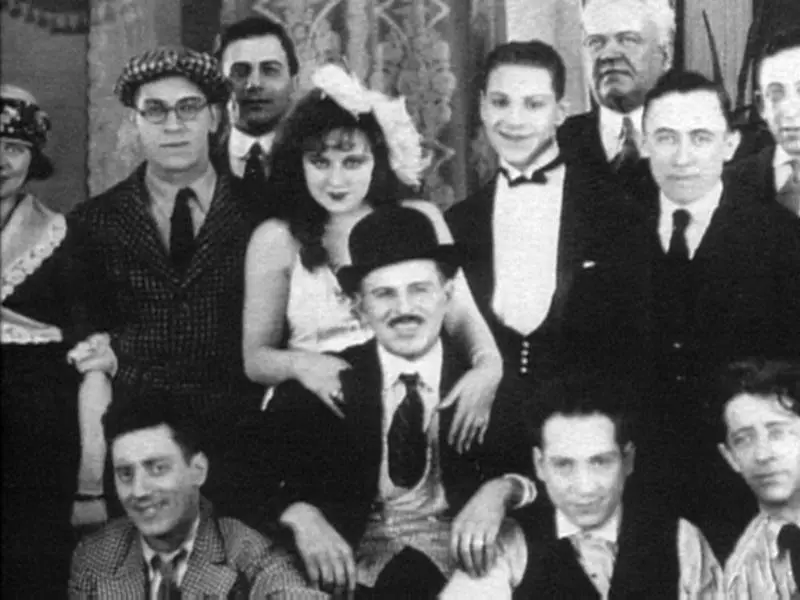
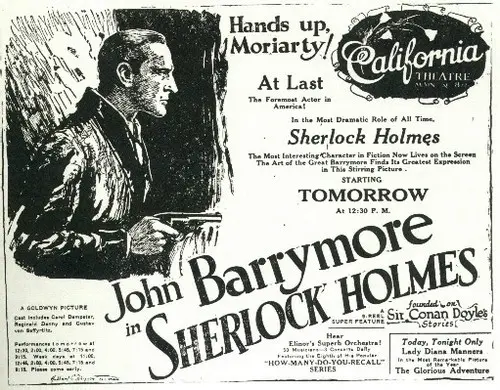
The most significant 'lost' film in history isn't some high-brow German masterpiece; it’s Humor Risk (1921), the Marx Brothers’ first attempt at cinema. Legend says the brothers hated it so much they burned the negative, but the plot synopsis reveals the primordial ooze of the cult misfit. Harpo played a detective named Watson who made his grand entrance by sliding down a coal chute into a basement. Think about that for a second. While Sherlock Holmes was using deductive reasoning, the proto-Marxian hero was literally falling into the plot. This is the first debatable opinion I’ll offer: Physical grace is the enemy of cult cinema.
When we watch a character stumble, we see ourselves. Humor Risk set a precedent for the 'detective who shouldn't be a detective,' a trope that leads directly to the bumbling protagonists of 1970s neo-noir. The fact that the film is lost only adds to its cult power. It exists as a ghostly reminder that at the dawn of Hollywood, the smartest guys in the room were already obsessed with playing the dumbest guys in the basement.
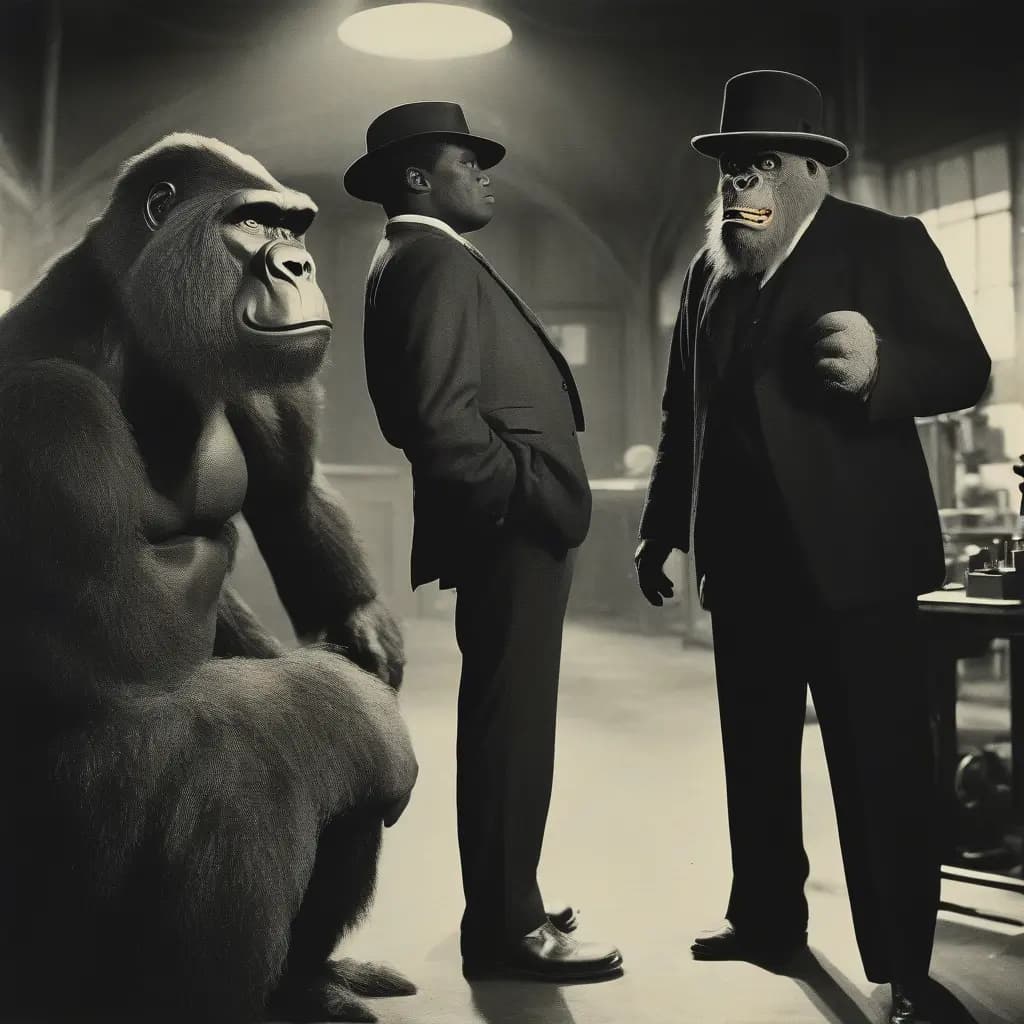
While the comedies were exploring mental inadequacy, the early horror-thriller hybrids were looking at biological failure. Consider Go and Get It (1920). This isn't your standard monster movie. It features an intrepid reporter trying to solve murders committed by a gorilla carrying a transplanted human brain. This is where cult cinema gets weird. It’s not just about a monster; it’s about a being that is fundamentally 'wrong.' The gorilla is incompetent at being a gorilla, and the human brain is incompetent at being human within a simian skull.
The 1920s 'Goof' wasn't just a character; it was a rejection of the industrial age's demand for efficiency. To be incompetent was to be human.
This film is a direct ancestor to the 'Body Horror' cults of the 1980s. It suggests that our bodies are just malfunctioning machines. The horror doesn't come from the gorilla's strength, but from the existential glitch of the transplant. We see this same 'mismatch' energy in Cursed by His Cleverness (1917), where the very trait that should lead to success—intelligence—becomes a trap. In the world of cult cinema, being 'too much' of anything is a death sentence. The hero must be a middle-ground mess.
Perhaps the most 'cult' performance of the 1920s belongs to Harold Lloyd in Why Worry? (1923). Lloyd plays a wealthy hypochondriac who seeks 'rest' in the tropics, only to find himself in the middle of a literal revolution. Here is my second stance: Anxiety is the ultimate cult superpower. Lloyd’s character is defined by his fear of germs and his obsession with his own imaginary illnesses. He is the antithesis of the action hero.
Yet, through his frantic, neurotic energy, he manages to quell a rebellion. He doesn't do it because he believes in a cause; he does it because he’s annoyed that the revolution is interrupting his pill schedule. This is the 'Accidental Victor' in its purest form. It mirrors the modern cult of the 'Beta Male' hero—the guy who wins because he’s too nervous to lose. The scene where he interacts with a giant (played by Johan Aasen) isn't about strength; it's about two outcasts finding a weird, symbiotic rhythm. It’s a blueprint for every odd-couple cult movie that followed.
Cult cinema often fetishizes the 'shadow' self, and few films do this as explicitly as The Price of Fame (1916). The film presents us with twins: William, the brilliant success, and John, the 'failure' living in the shadows. In any mainstream narrative, William is the protagonist. In the cult mindset, John is the king. We are drawn to the 'failure' because the successful man has no story left to tell. The failure, however, is a well of untapped potential and simmering resentment.
This fascination with the 'lesser' twin or the 'broken' version of a man is a recurring theme. Look at The Big Game (1921), where Sid’s father-in-law-to-be thinks he’s a coward. Sid has to 'test' his courage, but the humor comes from the fact that his courage is a performance. He is a fraud. Cult audiences love a fraud. We love the character who is 'playing' at being a hero, like the man in Faint Hearts (1917) who is mistaken for a vengeful killer just because he’s too shy to speak up. These films suggest that identity is just a series of misunderstandings, a concept that would later define the works of David Lynch and Jim Jarmusch.
Nowhere is the cult of incompetence more visible than in the 1920s sports comedy. In a genre that should be about discipline and training, films like The Half-Back of Notre Dame (1924) subvert every rule. The protagonists, Charlie Horse and Phil McCavity (names that already signal their status as jokes), win their final game through 'sheer luck.' This is an unconventional observation: In the 1920s, luck was the only honest way to win.
After the trauma of WWI, the idea that 'hard work' led to success felt like a lie. If you survived the trenches, it wasn't because you were the best soldier; it was because you were lucky. This cynicism bled into the cinema. In Zeb vs. Paprika (1924), Stan Laurel plays a jockey who is essentially a disaster on horseback. The victory isn't a triumph of the human spirit; it’s a punchline to a cosmic joke. This 'slacker' DNA is the foundation of films like The Big Lebowski. The Dude is just a 1920s jockey who traded the horse for a bowling ball.
Even in Westerns, the most masculine of genres, the 1920s was busy tearing down the Alpha. The Cowboy Sheik (1924) features a 'shy cowboy' who has to compete with a bully. The hero isn't a fast-talker; he’s a stuttering, awkward mess. We see this again in The No-Gun Man (1924). The title itself is a provocation. A cowboy without a gun? That’s like a slasher villain without a mask. It forces the character to use his wits—or more often, his ability to bumble his way through a crisis. This is the 'Soft Hero' who would eventually become a staple of indie and cult cinema.
The 1920s was an era of profound transition, and the 'Goof' was the only character that made sense in a world that had lost its mind. From the lost coal-chute antics of Humor Risk to the biological absurdity of Go and Get It, these films celebrated the person who didn't fit. They taught us that you don't have to be the smartest, the strongest, or even the most 'human' to be the hero of your own story. You just have to be there when the luck runs out.
If we want to save modern cinema from its obsession with hyper-competent superheroes, we need to return to the 1920s. We need more hypochondriacs in revolutions and more gorillas with human brains. We need to stop trying to be the 'Half-Back' and start embracing the 'Charlie Horse.' Because in the end, the only thing more enduring than a masterpiece is a perfectly executed blunder. That is the true gospel of cult cinema.