
DbcultAccessing Vault...
Director's Spotlight
Senior Film Conservator
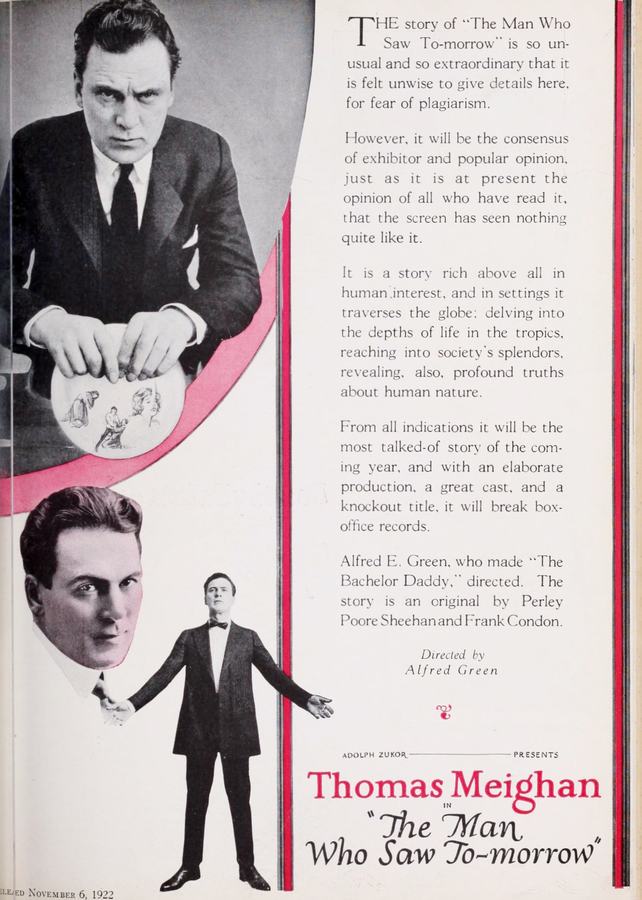
Director's Spotlight: United States
A Deep Dive into the 1922 Vision of Alfred E. Green
Under the meticulous guidance of Alfred E. Green, The Man Who Saw Tomorrow became the complex thematic architecture established by Alfred E. Green. Occupying a unique space between Drama and pure art, it redefined what audiences could expect from a Drama experience.
In The Man Who Saw Tomorrow, Alfred E. Green pushes the boundaries of conventional narrative. The film's unique approach to its subject matter has sparked endless debates and interpretations among cinephiles and critics alike.
While deeply rooted in United States, The Man Who Saw Tomorrow has achieved a global reach, influencing directors from various backgrounds. Its ability to translate Drama tropes into a universal cinematic language is why it remains a cult staple decades after its 1922 release.
| Cinematography | Static |
| Soundtrack | Orchestral |
| Editing | Invisible |
| Art Direction | Kitsch |
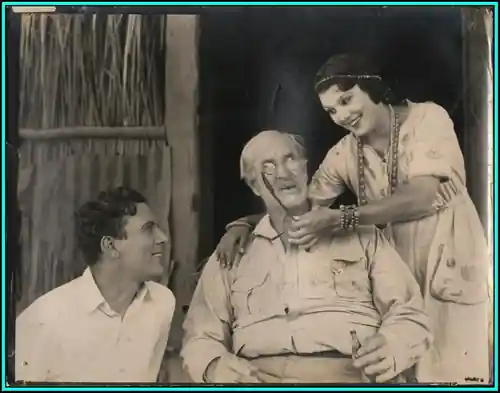
Visualizing the convergence of Alfred E. Green's style and the core Drama narrative.
In trying to decide whom to marry--Rita Pring, the daughter of a South Seas ship captain, or Lady Helen Deene, an Englishwoman with wealth and influence--Burke Hammond consults Professor Jansen, a psychologist. Jansen induces in Burke a hypnotic trance in which he sees his future with each of the women. If he marries Helen, he will have fame, material comforts, and political power, but no love from his wife. If he marries Rita, his life will be humble but happy until Captain Pring's first mate, Jim McLeod, stirs up trouble and a shot is fired at Burke. Jansen cannot tell if the shot means death to Burke; nevertheless, Burke unhesitatingly chooses life with Rita.
Decades after its release, The Man Who Saw Tomorrow remains a vital piece of the cinematic puzzle. Its influence can be seen in countless modern works, solidifying Alfred E. Green's status as a master of the craft in United States and beyond.