
DbcultAccessing Vault...
Director's Spotlight
Senior Film Conservator
Director's Spotlight: United States
A Deep Dive into the 1915 Vision of Alice Guy
Under the meticulous guidance of Alice Guy, My Madonna became the complex thematic architecture established by Alice Guy. Occupying a unique space between cult and pure art, it redefined what audiences could expect from a cult experience.
In My Madonna, Alice Guy pushes the boundaries of conventional narrative. The film's unique approach to its subject matter has sparked endless debates and interpretations among cinephiles and critics alike.
| Cinematography | Handheld |
| Soundtrack | Synth-Heavy |
| Editing | Rhythmic |
| Art Direction | Naturalist |
Visualizing the convergence of Alice Guy's style and the core cult narrative.
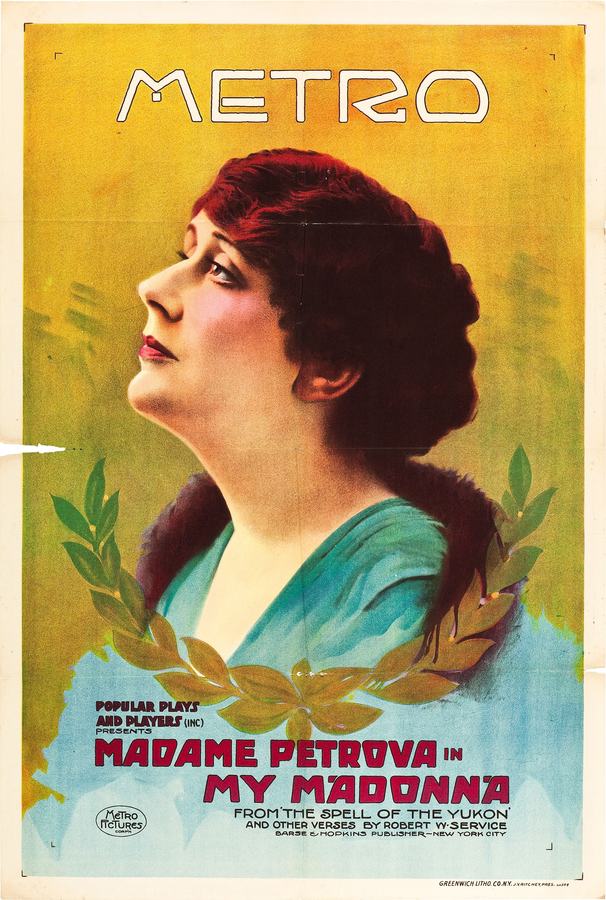
Robert, a poor artist, has a vision of a wonderful Madonna. He seeks a model vainly, until he meets, accidentally, the beautiful Lucille, a woman of the demimonde. She is drawn to the shabby artist, and forsaking her fashionable acquaintances, goes to pose for him. The two fall in love and Robert paints a wonderful picture of the Madonna, using Lucille as his model. Unknown to Robert, Lucille persuades an art merchant she knows to purchase the picture, which speedily brings Robert fame and fortune. The artist and his model are married, but with the access of wealth Robert grows cold in his devotion. Robert meets the Baroness, a woman of the world, who comes to sit for her portrait, and spends most of his leisure with her. Later he meets the Baron, her husband, who has known Lucille before her marriage, and is delighted at Robert's interest in his wife, to whom he is quite indifferent, because he thinks he can thus win Lucille's affections. Robert comes to keep an appointment with the Baron at his house and finds him lying dead in the hall, having just been killed by a workman whom he had wronged. He picks up the knife with which the crime has been committed just as the Baroness and her servants enter. Convinced that he is responsible for the death of her husband, the Baroness accuses Robert. He is convicted and sentenced to life imprisonment. Lucille, whose devotion to Robert remains undiminished, and who resolutely believes in his innocence, becomes a charity worker, devoting her wealth and talents to the poor. A dying workman confesses to her his guilt in the death of the Baron and Lucille takes his deathbed statement in the presence of a notary and the police officials. Robert is freed, but does not seek his wife, believing that she no longer cares for him. Broken in spirit, he goes to the church for consolation, where his painting of the Madonna is hung, seeking solace for his hungry heart in viewing the portrait of Lucille. There the two meet and are reunited before the Madonna.
Decades after its release, My Madonna remains a vital piece of the cinematic puzzle. Its influence can be seen in countless modern works, solidifying Alice Guy's status as a master of the craft in United States and beyond.