
DbcultAccessing Vault...
Director's Spotlight
Senior Film Conservator
Director's Spotlight: United States
A Deep Dive into the 1916 Vision of Allan Dwan
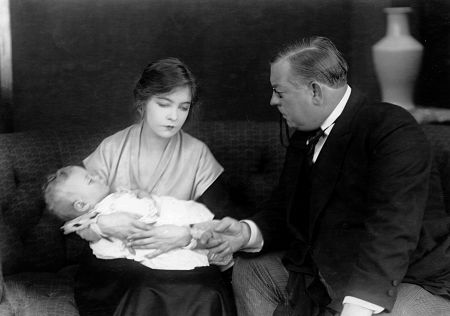
The artistic breakthrough represented by An Innocent Magdalene in 1916 highlights the philosophical inquiries that Allan Dwan embeds within the narrative. Framed by the hauntingly beautiful landscapes of the production, it leaves an indelible mark on the soul of the viewer.
In An Innocent Magdalene, Allan Dwan pushes the boundaries of conventional narrative. The film's unique approach to its subject matter has sparked endless debates and interpretations among cinephiles and critics alike.
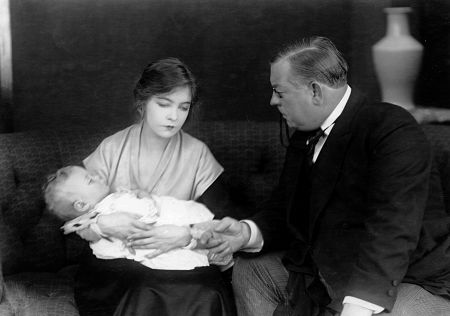
The visual language of An Innocent Magdalene is defined by its use of shadows and framing, a hallmark of Allan Dwan's style. By utilizing a 1916-era palette, the film creates an immersive experience that perfectly complements its cult themes.
| Cinematography | Handheld |
| Soundtrack | Minimalist |
| Editing | Disjunctive |
| Art Direction | Baroque |
Visualizing the convergence of Allan Dwan's style and the core cult narrative.
Dorothy Raleigh is a high-spirited Southern beauty who has been brought up by her father, Col. Raleigh, an unreconstructed Kentuckian, to have nothing to do with the townspeople of the little village of Norwalk, just outside of Louisville. She has no other companions than the old negro servants, her animal pets and her books. One day there comes into her life by chance a young millionaire gambler named Forbes Stewart. He makes love to her and asks the Colonel for her hand. Indignant at his presumption, the Colonel orders him from the house. But the young people elope. When Dorothy meets her husband's friends she is grievously disappointed. He determines, rather than cause her unhappiness. to change his mode of living, and give up his old friends. But a detective who knows something of his past, tries to blackmail him. His defiance leads to his arrest, and he is sentenced to a year in the penitentiary. Dorothy is loyal to him at first but when another woman enters her home and seemingly proves that she is Stewart's wife by an earlier marriage, she goes back to her father. The stern old man, however, has disowned her, and she is compelled to seek shelter in a cabin with her old negro mammy. When Stewart is released from the penitentiary he hastens to his home to find his wife. Instead he finds this other woman, an old flame who has taken this method to win him back again. He repudiates her, however, and hurries to Norwalk to see the Colonel and demand Dorothy. The Colonel refuses to tell her whereabouts, but from an old servant Stewart learns the truth. Dorothy in the meantime has been led to believe her baby illegitimate, and the villagers, glad to see the proud name of the Raleighs dragged in the dust, make her life miserable. She is about to kill herself when Stewart arrives. The outcome reunite the lovers and brings a change in the heart of the father that is supremely satisfying.
Decades after its release, An Innocent Magdalene remains a vital piece of the cinematic puzzle. Its influence can be seen in countless modern works, solidifying Allan Dwan's status as a master of the craft in United States and beyond.