
DbcultAccessing Vault...
Director's Spotlight
Senior Film Conservator
Director's Spotlight: United States
A Deep Dive into the 1914 Vision of Allan Dwan
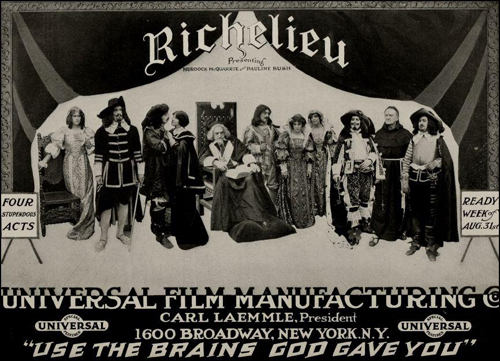
As we revisit the 1914 masterpiece Richelieu, we are struck by the atmospheric immersion that Allan Dwan achieves throughout Richelieu. Exploring the nuances of the human condition with cult flair, it solidifies Allan Dwan's reputation as a master of the craft.
In Richelieu, Allan Dwan pushes the boundaries of conventional narrative. The film's unique approach to its subject matter has sparked endless debates and interpretations among cinephiles and critics alike.
To fully appreciate Richelieu, one must consider the cinematic climate of 1914. During this period, United States was undergoing significant artistic shifts, and Allan Dwan was at the forefront of this cult movement, often challenging established norms.
| Cinematography | Static |
| Soundtrack | Diegetic |
| Editing | Elliptical |
| Art Direction | Expressionist |
Visualizing the convergence of Allan Dwan's style and the core cult narrative.
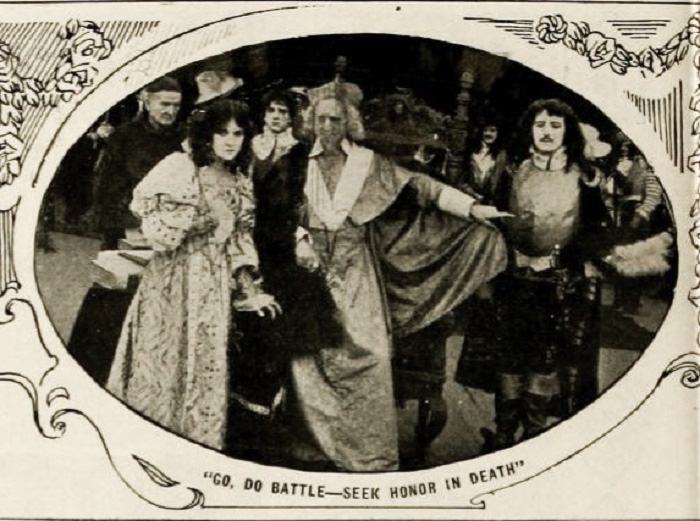
With the opening of the story Richelieu pardons the Duke of Orleans and all his followers in the Languedoc revolt, save one. The exception is Adrien de Mauprat, because he seized a French town without his leader's orders. Richelieu advises him to lead his troops against the Spaniards and seek honorable death in battle. Julie, Richelieu's ward, loves de Mauprat, but notwithstanding her entreaties, the Cardinal is relentless; de Mauprat courts death on the battlefield. But now that he seeks death, it shuns him; instead of a soldier's grave, he wins glory. Julie has another admirer, Haradas, the King's favorite. Aware of de Mauprat's place in Julie's affections, he sets himself to bring discredit upon his rival. Later, Julie, at the King's request, attends court. She makes a deep impression upon the weak-minded, fickle monarch. A year after the departure of de Mauprat, Baradas and his followers conspire to murder Richelieu and seize the throne of France. At this critical time de Mauprat returns, famous in battle, sad of heart and loathing Richelieu. Thus he becomes a ready member of the conspirators. However, Richelieu hears of his arrival and of the conspiracy and has him arrested. In the meantime, Julie has returned from court and again appeals for de Mauprat's life. Thus, when de Mauprat is ushered into the Cardinal's presence, instead of hearing his death sentence, he is informed that he will marry Julie the following day. Hearing of this the King is violently angry: Julie is summoned to appear at court. Once there she is virtually held prisoner and her marriage is declared invalid. The false Barad is convinces de Mauprat that he has been tricked by Richelieu. De Mauprat swears vengeance and again joins the conspirators, all of whom sign a scroll addressed to the Spaniards offering to deliver France into their hands. From here the story develops with plot and counterplot. How de Mauprat discovers his tragic mistake in thinking the Cardinal has double-crossed him, how he manages, through a heroic effort, to save the old man's life, how de Mauprat falls into the hands of the King and is only saved by a master stroke of diplomacy on Richelieu's part, the death of the scheming Baradas and the final achievement of happiness for the young lovers, Julie and de Mauprat, makes up the essential points of the story.
Decades after its release, Richelieu remains a vital piece of the cinematic puzzle. Its influence can be seen in countless modern works, solidifying Allan Dwan's status as a master of the craft in United States and beyond.