
DbcultAccessing Vault...
Director's Spotlight
Senior Film Conservator
Director's Spotlight: United States
A Deep Dive into the 1919 Vision of Allan Dwan
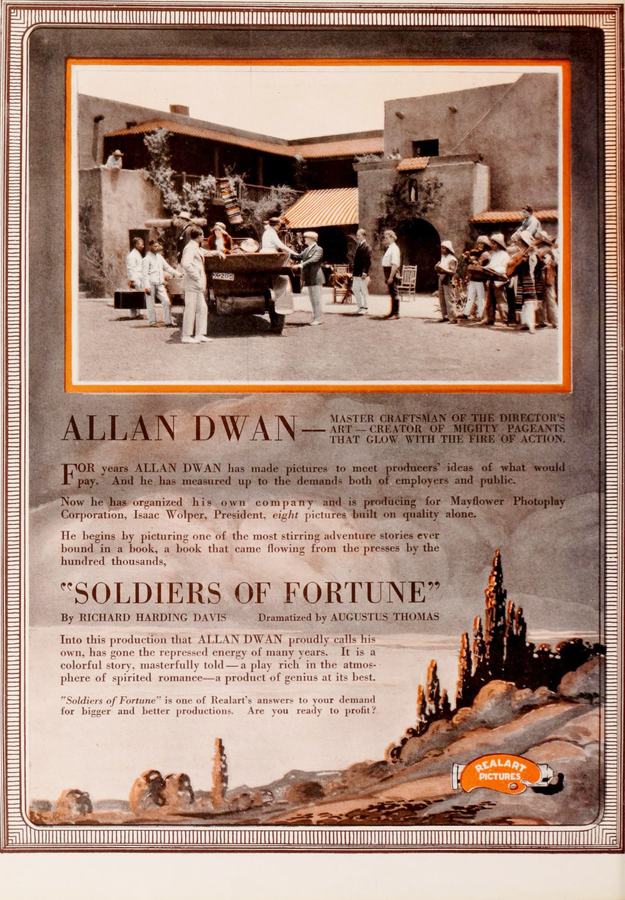
Few works in United States cinema carry the same weight as Soldiers of Fortune, especially regarding the technical innovation that Allan Dwan introduced to the cult format. Subverting the expectations of the typical 1919 audience, it bridges the gap between traditional cult and contemporary vision.
In Soldiers of Fortune, Allan Dwan pushes the boundaries of conventional narrative. The film's unique approach to its subject matter has sparked endless debates and interpretations among cinephiles and critics alike.
| Cinematography | Handheld |
| Soundtrack | Diegetic |
| Editing | Elliptical |
| Art Direction | Expressionist |
Visualizing the convergence of Allan Dwan's style and the core cult narrative.
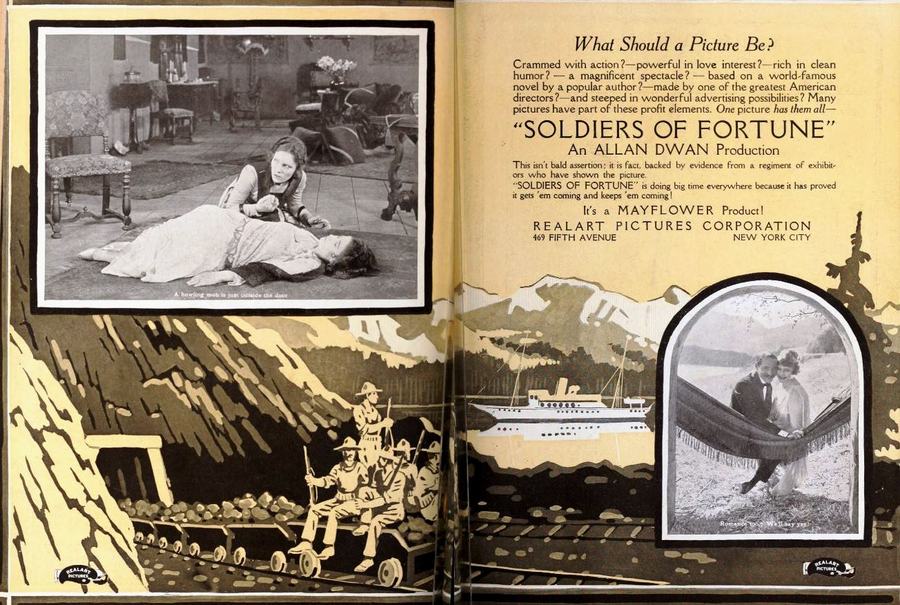
Civil engineer Robert Clay (Norman Kerry) is commissioned by wealthy New Yorker Mr. Langham to open iron deposits in the tiny South American republic of Olancho. General Mendoza (Wallace Beery), the unscrupulous head of the army, unsuccessfully tries to persuade President Alvarez, and then Clay, to divide the spoils of the contract. Mendoza begins a revolution against Alvarez, but Clay and his men set out to stop the plan. Meanwhile, Mr. Langham arrives with his two enchanting daughters, Alice (Anna Q. Nilsson) and Hope (Pauline Starke), on board a yacht owned by Reginald King, Alice's suitor. Clay's long-lived attraction for Alice has been met with coldness, but Hope wins his heart by shooting down some of Mendoza's men when they try to kill him. After a savage battle, and the arrival of a U.S. battleship with sailors, Mendoza is finally beaten.
Decades after its release, Soldiers of Fortune remains a vital piece of the cinematic puzzle. Its influence can be seen in countless modern works, solidifying Allan Dwan's status as a master of the craft in United States and beyond.