
DbcultAccessing Vault...
Director's Spotlight
Senior Film Conservator
Director's Spotlight: Sweden
A Deep Dive into the 1925 Vision of Anton Gunnarsson
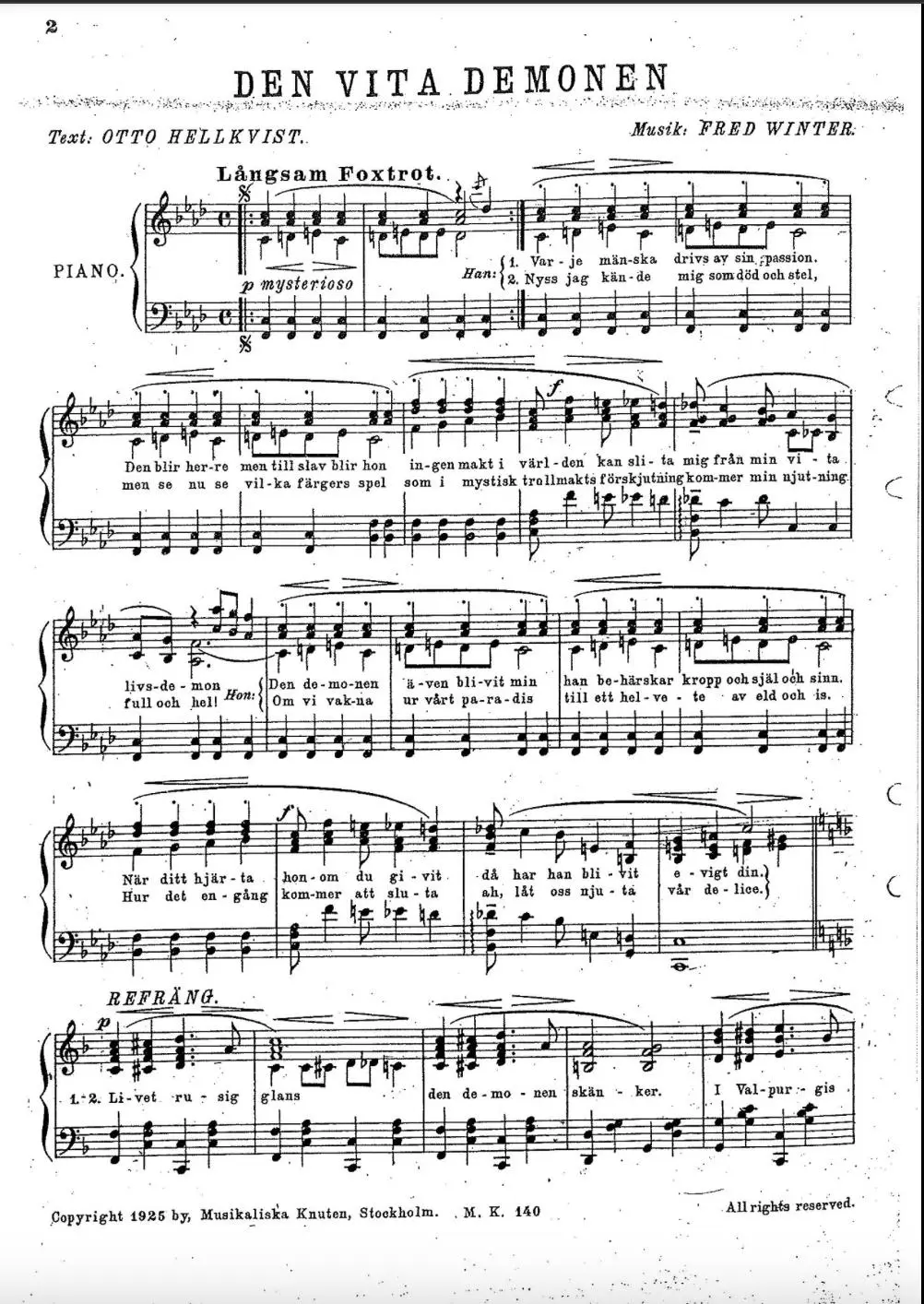
The Musical DNA of Den vita demonen is a reflection of Sweden's the subversive storytelling techniques employed by Anton Gunnarsson in 1925. Breaking the traditional rules of Musical engagement, it leaves an indelible mark on the soul of the viewer.
In Den vita demonen, Anton Gunnarsson pushes the boundaries of conventional narrative. The film's unique approach to its subject matter has sparked endless debates and interpretations among cinephiles and critics alike.
While deeply rooted in Sweden, Den vita demonen has achieved a global reach, influencing directors from various backgrounds. Its ability to translate Musical tropes into a universal cinematic language is why it remains a cult staple decades after its 1925 release.
| Cinematography | Handheld |
| Soundtrack | Experimental |
| Editing | Elliptical |
| Art Direction | Expressionist |
Visualizing the convergence of Anton Gunnarsson's style and the core Musical narrative.
The story begins in a pawnshop owned by a middle-aged woman whose daughter is a cocaine addict. The woman is divorced and has just begun an affair with her sales assistant, a young man with extravagant habits. In the second act, we find the pawnbroker, her husband, daughter and sales assistant in one of the city's dance halls, the Eldorado. Suddenly, the police raid the place, and one of the cocaine addicts is so frightened that he pulls out a gun and shoots himself. In the third act, the whole group is in custody. However, it all ends happily when a decent police officer, who knows the pawnbroker from before, ensures that they are released.
Decades after its release, Den vita demonen remains a vital piece of the cinematic puzzle. Its influence can be seen in countless modern works, solidifying Anton Gunnarsson's status as a master of the craft in Sweden and beyond.