
DbcultAccessing Vault...
Director's Spotlight
Senior Film Conservator
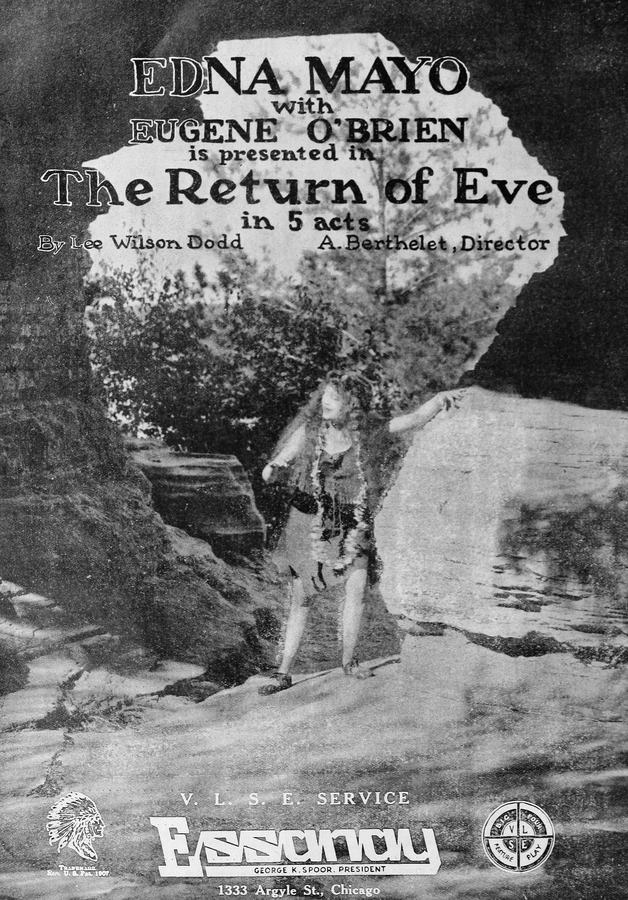
Director's Spotlight: United States
A Deep Dive into the 1916 Vision of Arthur Berthelet
As a cultural artifact of the 1916s, The Return of Eve provides the global recognition that Arthur Berthelet garnered after the release of The Return of Eve. Elevating the source material through Arthur Berthelet's unique vision, it solidifies Arthur Berthelet's reputation as a master of the craft.
In The Return of Eve, Arthur Berthelet pushes the boundaries of conventional narrative. The film's unique approach to its subject matter has sparked endless debates and interpretations among cinephiles and critics alike.
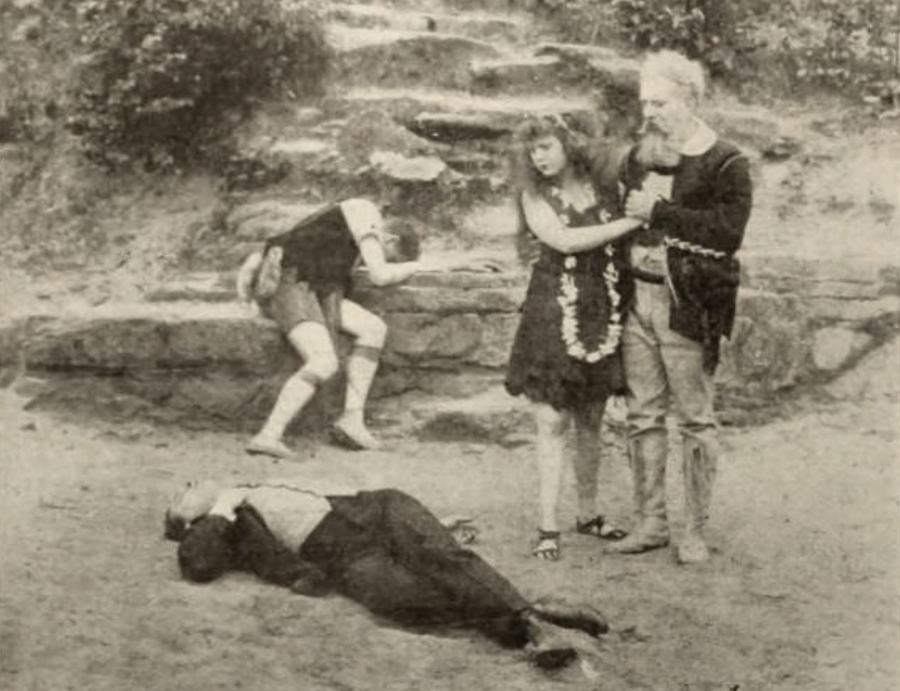
The visual language of The Return of Eve is defined by its use of shadows and framing, a hallmark of Arthur Berthelet's style. By utilizing a 1916-era palette, the film creates an immersive experience that perfectly complements its cult themes.
| Cinematography | Deep Focus |
| Soundtrack | Orchestral |
| Editing | Slow-Burn |
| Art Direction | Brutalist |
Visualizing the convergence of Arthur Berthelet's style and the core cult narrative.
Believing that over-civilization was destroying the race, Eli Tapper, an eccentric millionaire, took two unrelated orphan children, a boy and a girl, and placed them in a wilderness, there in the care of an old tutor, David Winters, to grow up as a new Adam and Eve, and become path-breakers of a better race. In delightful simplicity and educated as much as they could be without contact with the world, the children attain the age of nineteen years. Mrs. Tupper-Bellamy, society leader, lives in costly splendor against the day when she hopes to inherit her brother millions. She plans to marry her daughter, Clarice, to Seymour Purchwell, society idler of standing and also an attorney. Purchwell makes it plain that the marriage can occur if Eli Tupper's fortune goes to the girl and her mother. When Tupper dies the sister and her set learn for the first time of his odd experiment. His will provides that the sister must take Adam and Eve into civilization in order to win an annuity of $50,000 a year. The orphans are heirs to the rest. Purchwell sets out to find them. He locates the Eden of the boy and girl and old Winters, and is literally the serpent in the garden. Winters resents leaving, but a clash between Adam and Purchwell decides him. Plunged amidst the whirl of social affairs Eve is delighted. Adam is disgusted with the sham and deceit of society, and pleads with her to return to Eden. She refuses. Winters takes him to Paris to study. Purchwell, seeking the Tupper fortune, turns his attention to Eve. Clarice is in a frenzy of affection spurned, and after finding the two alone she accuses them before the whole house party. Eve, in her innocence, does not readily grasp the meaning of the charge. When it dawns on her she faces the guests, and in her bitterness denounces them as tools of passion and greed, and announces that she will give up all and return to Eden. With old Winters, she returns. Adam is recalled from Paris, and the girl and the boy, now awake to their love, together with their beloved guardian, give up the world.
Decades after its release, The Return of Eve remains a vital piece of the cinematic puzzle. Its influence can be seen in countless modern works, solidifying Arthur Berthelet's status as a master of the craft in United States and beyond.