
DbcultAccessing Vault...
Cult Cinema
Archivist John
Senior Editor
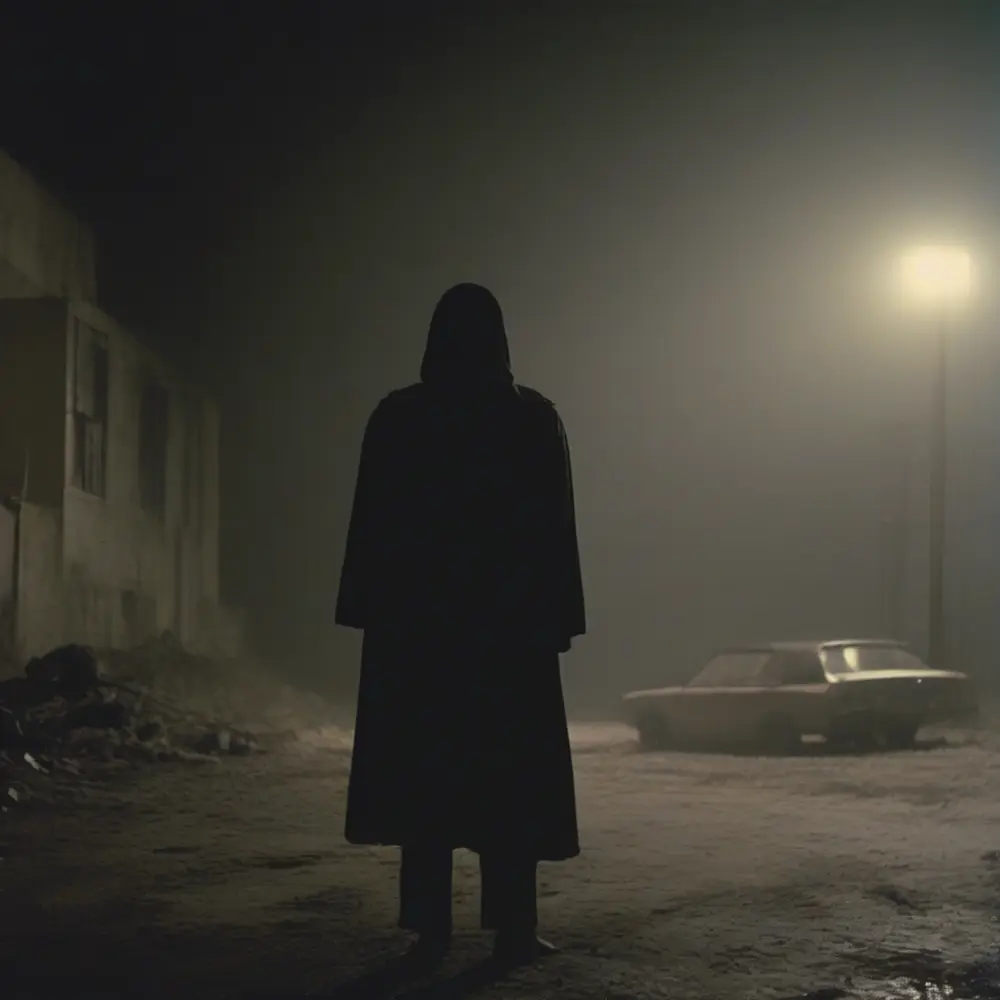
The 1970s. A decade of seismic shifts. Vietnam's shadow lingered, Watergate eroded trust, urban landscapes decayed, and the counter-culture dream curdled into something far more cynical. It was a time when the veneer of societal order felt thin, exposing raw nerves and existential anxieties. And what emerged from this cultural crucible, particularly in the dark corners of cult cinema, was a profound obsession with the unseen, the anonymous, and the terrifying power of the hidden identity. This wasn't just about villains in masks; it was about a collective unconscious grappling with a world where the faces you knew, or thought you knew, could no longer be trusted. Why do these figures, from the literal masked monsters to the metaphorically cloaked anti-heroes, still resonate with such chilling clarity today? Because they spoke to a primal fear: the monster isn't just under the bed; it's the person you don't know, or worse, the person you do, stripped of all recognizable humanity.
The most visceral manifestation of the hidden identity in 70s cult cinema arrived not with a bang, but with the terrifying scrape of a chainsaw. Tobe Hooper's The Texas Chain Saw Massacre (1974) unleashed Leatherface upon an unsuspecting world, a hulking figure whose masks, crudely fashioned from human skin, weren't about concealment as much as they were about grotesque appropriation. His initial appearance, a guttural shock, isn't about hiding his identity but about asserting a monstrous, stolen one. These aren't just grotesque props; they're a terrifying refusal of individuality, a visual manifesto against the very concept of human uniqueness. Leatherface's different masks—the 'killing mask,' the 'pretty woman' mask, the 'old lady' mask—suggest a desperate, pathetic attempt to fit into a societal role, albeit a deranged one, reflecting a profound psychological brokenness rather than calculated evil. He’s a terrifying cipher, a blank slate onto which the audience projects their deepest fears of the unknown, the rural grotesque, and the complete breakdown of civility.
Four years later, John Carpenter perfected the art of the anonymous terror with Halloween (1978). Michael Myers's iconic, stark white mask, famously a painted Captain Kirk mask, isn't just a prop; it's a terrifying void. It strips him of all human expression, making him the ultimate 'shape' of pure, unmotivated evil. When Laurie Strode (Jamie Lee Curtis) first glimpses him in the shadows, it’s not a face she sees, but the absence of one. The mask transforms him from a disturbed child into an elemental force, an unknowable entity that simply *is*. This choice was brilliant, tapping into post-Manson anxieties where evil could wear any face, or no face at all, lurking in suburban shadows. The lack of discernible motive, combined with the mask's blankness, makes Michael Myers an enduring cult figure because he embodies the terrifying randomness of violence, a fear that felt all too real in the turbulent 70s.
Leatherface's masks aren't just grotesque; they're a terrifying refusal of identity, a visual manifesto against the very concept of individual humanity. They force us to confront the horror of a being who finds identity only in the skin of others.
Beyond the explicit masks of horror, the 70s also birthed a different kind of hidden identity: the urban vigilante. These figures, often ordinary men pushed to extraordinary acts, didn't wear physical masks, but their transformation into anonymous avengers served the same psychological function, reflecting a widespread distrust in failing institutions. Michael Winner's Death Wish (1974), starring Charles Bronson as Paul Kersey, is the quintessential example. After his family is brutally attacked, Kersey becomes a ghost, a whispered rumor on the streets of a crumbling New York, his true identity as a mild-mannered architect hidden beneath layers of brutal, retaliatory violence. The scene where he first uses his newfound gun, an almost accidental act of self-defense that quickly escalates, marks the shedding of his old self and the adoption of this new, hidden persona. He operates outside the law, a shadow figure delivering his own brand of justice, applauded by a segment of the audience frustrated with escalating crime and bureaucratic impotence.
Similarly, Clint Eastwood's Dirty Harry (1971), though earlier in the decade, laid the groundwork for this archetype. Harry Callahan doesn't wear a mask, but his moral ambiguity and willingness to contravene procedure make him an outsider, a maverick operating with a hidden agenda that often clashes with the official one. His badge, rather than being a symbol of transparency, often becomes a mask for his true, often brutal, methods. The iconic scene where he confronts Scorpio, demanding to know if he feels lucky, is a challenge not just to the killer, but to the very concept of justice itself, suggesting that only an individual operating beyond conventional morality can truly clean up the mess. These protagonists weren't wearing physical masks, yet their actions were cloaked in an anonymity that reflected a society where the 'good guys' were no longer clearly defined, and the line between hero and villain blurred into a morally gray haze.
The 70s also saw the mask as a potent symbol in dystopian cinema, reflecting fears of corporate control, loss of individuality, and societal collapse. Stanley Kubrick's A Clockwork Orange (1971), though set in a near-future, perfectly captured the era's anxieties. The Droogs’ iconic bowler hats and stylized make-up, particularly Alex's single false eyelash, function as tribal war paint, a uniform of perverse conformity. When they assault the writer and his wife, their faces are simultaneously obscured and exaggerated, embodying a performative, almost theatrical cruelty that hides individual culpability behind a collective, terrifying aesthetic. Their masks are not just costumes; they're uniforms of a twisted ideology, a chilling premonition of how easily individuality can be subsumed by violent groupthink.
George Miller's Mad Max (1979), a brutal vision of a collapsing society, features Max Rockatansky (Mel Gibson) whose sunglasses and stoicism act as an emotional mask, a survivor's shield against the relentless savagery of the wasteland. He's not physically masked, but his identity is submerged beneath layers of grief and a grim determination to survive, making him a hidden, almost mythical figure in a lawless world. In films like Rollerball (1975), the players themselves become cogs in a corporate spectacle, their individual identities subsumed by the sport and the all-encompassing power of the corporations that control them. While not literal masks, their uniforms and the demands of the game strip them of personal agency, a chilling vision of how societal structures can force a different kind of anonymity.
The Droogs' bowler hats and stylized masks are not just costumes; they're uniforms of a twisted ideology, a chilling premonition of how easily individuality can be subsumed by violent groupthink. Their theatrics are a mask for pure, unadulterated malice.
Brian De Palma's rock opera horror, Phantom of the Paradise (1974), offers a more theatrical and tragic exploration of the mask. Winslow Leach (William Finley), a talented but naive composer, is disfigured and driven to madness by the nefarious music mogul Swan (Paul Williams). His transformation into the Phantom is a literal scarring and masking, his bird-like helmet forced upon him after his face is disfigured in a record press. The mask becomes a symbol of his artistic mutilation, his hidden pain, and his desperate, unrequited love for the singer Phoenix (Jessica Harper). The scene where he first confronts Swan in his full Phantom regalia, a creature of shadow and distorted sound, is a visceral depiction of a soul trapped between genius and monstrosity. The mask isn't just a symbol of his pain; it's also his stage persona, a literal manifestation of the Faustian bargain, turning his suffering into spectacle. It’s a tragic, beautiful, and deeply unsettling film that finds its cult status in its unique blend of glam rock, horror, and operatic melodrama, all centered around a masked figure of tormented artistry.
Dario Argento's masterwork, Suspiria (1977), while not featuring literal masks on its characters, builds its entire narrative upon a profound 'hidden identity.' The prestigious Tanz Akademie, a bastion of artistic refinement and classical ballet, is merely a sophisticated façade for a malevolent coven of ancient witches. The true identities of the instructors, their sinister rituals, and their murderous intentions are masked by their elegant demeanor and the academy's reputation. The creeping realization for Suzy Bannion (Jessica Harper) that the school itself is a living, breathing entity of evil, its true face hidden beneath layers of classical music, vibrant colors, and ballet, is the film’s most potent use of 'masking.' The film uses aesthetic beauty and academic prestige as a deceptive veil, hiding a terrifying, primal evil that is ultimately unmasked in a violent, supernatural climax. It's a testament to how effectively a hidden identity can be woven into the fabric of a setting itself, rather than just a character.
The 1970s, with its profound social fractures and existential dread, provided fertile ground for the masked figure and the hidden identity to flourish in cult cinema. These films, whether through literal masks or metaphorical disguises, tapped into a collective fear of the unknown, the hidden enemy within society, and perhaps most unsettlingly, the loss of one's own self. The mask allowed filmmakers to explore themes of dehumanization, the arbitrary nature of violence, the breakdown of justice, and the desperate search for identity in a world that seemed to be losing its moral compass. They became totems of an anxious age, reflecting back a distorted image of a society grappling with its own shadows.
The enduring cult appeal of these films lies in their brutal honesty and their refusal to offer easy answers. They forced audiences to confront uncomfortable truths about human nature and societal decay, often without the catharsis of a clear hero or a definitive victory. The masked figure, whether a slasher icon, a vigilante, a dystopian rebel, or a tragic artist, became a mirror held up to a turbulent decade, reflecting a profound sense of alienation and a terrifying anonymity. And in our increasingly complex, often digitally masked world, these silent screams behind the masks of the 70s continue to resonate, reminding us that sometimes, the most terrifying thing is not what you see, but what remains hidden.