
DbcultAccessing Vault...
Director's Spotlight
Senior Film Conservator
Director's Spotlight: United States
A Deep Dive into the 1918 Vision of Arthur Hotaling
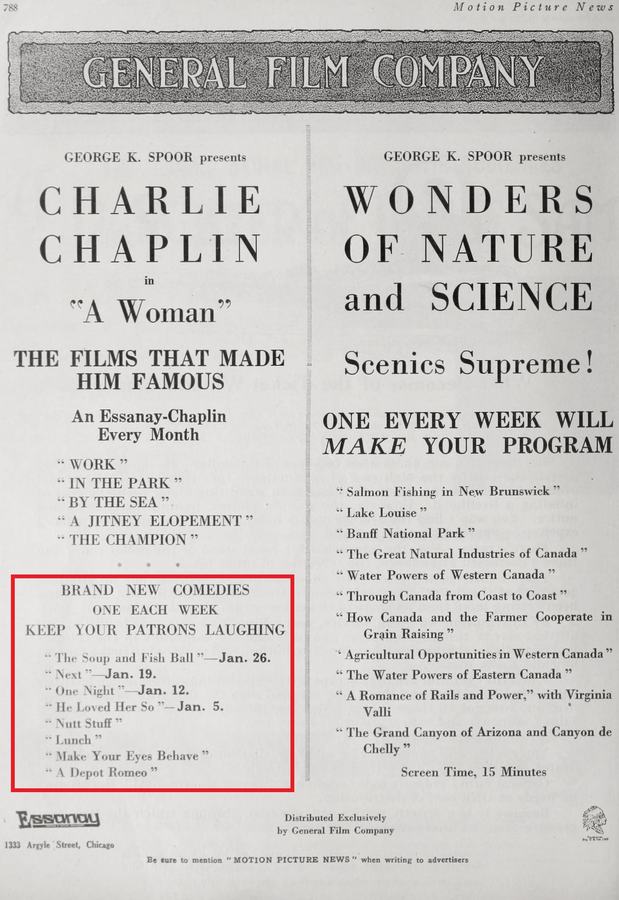
Witnessing the stylistic transformation of cult through The Soup and the Fish Ball reveals the provocative questions that Arthur Hotaling poses to the United States audience. Exploring the nuances of the human condition with cult flair, it showcases the power of cult as a tool for social commentary.
In The Soup and the Fish Ball, Arthur Hotaling pushes the boundaries of conventional narrative. The film's unique approach to its subject matter has sparked endless debates and interpretations among cinephiles and critics alike.
While deeply rooted in United States, The Soup and the Fish Ball has achieved a global reach, influencing directors from various backgrounds. Its ability to translate cult tropes into a universal cinematic language is why it remains a cult staple decades after its 1918 release.
| Cinematography | Static |
| Soundtrack | Synth-Heavy |
| Editing | Rhythmic |
| Art Direction | Naturalist |
Visualizing the convergence of Arthur Hotaling's style and the core cult narrative.
A comic number, featuring two Irish characters. Their dress suits are stolen on the eve of a ball and each thinks the other guilty. They meet at the ball and a "rough house" ensues. This is entirely of the knockabout style of humor and makes only an average offering of the kind.
Decades after its release, The Soup and the Fish Ball remains a vital piece of the cinematic puzzle. Its influence can be seen in countless modern works, solidifying Arthur Hotaling's status as a master of the craft in United States and beyond.