
DbcultAccessing Vault...
Director's Spotlight
Senior Film Conservator
Director's Spotlight: United States
A Deep Dive into the 1919 Vision of Arthur Rosson
The brilliance of Sahara (1919) is inseparable from the visionary mind of its creator, Arthur Rosson. Serving as a mirror to the anxieties of a changing world, it persists as a haunting reminder of our own cinematic history.
In Sahara, Arthur Rosson pushes the boundaries of conventional narrative. The film's unique approach to its subject matter has sparked endless debates and interpretations among cinephiles and critics alike.
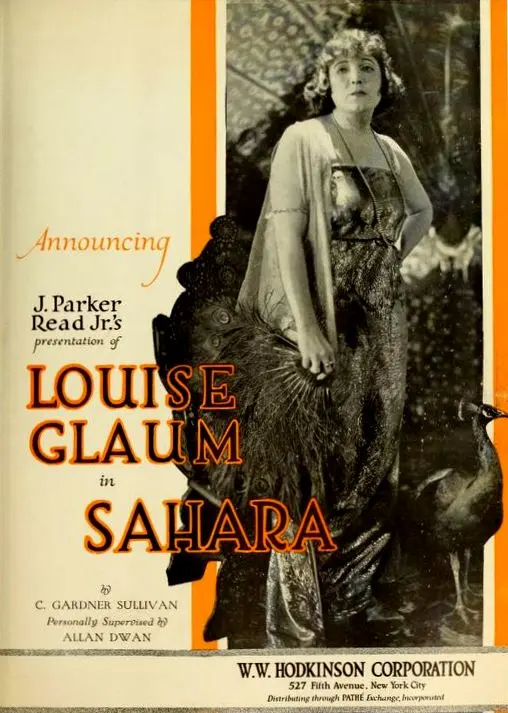
To fully appreciate Sahara, one must consider the cinematic climate of 1919. During this period, United States was undergoing significant artistic shifts, and Arthur Rosson was at the forefront of this cult movement, often challenging established norms.
| Cinematography | Static |
| Soundtrack | Synth-Heavy |
| Editing | Rhythmic |
| Art Direction | Naturalist |
Visualizing the convergence of Arthur Rosson's style and the core cult narrative.
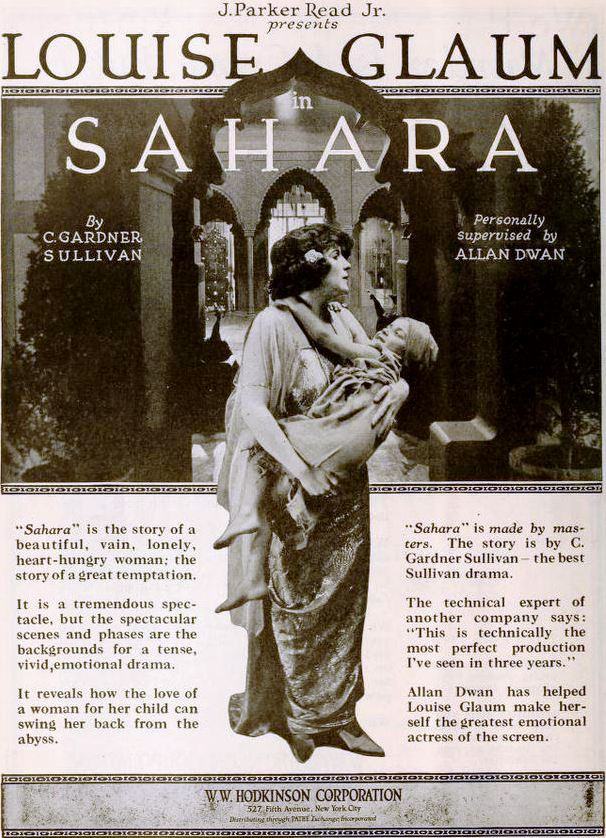
Parisian music hall celebrity Mignon marries young American civil engineer John Stanley. When John is suddenly assigned to undertake an engineering project in the Sahara, Mignon accompanies him and her son to the desert, although she is accustomed to a life of frivolity. After months of discontent, Mignon leaves her husband and son for Russian Baron Alexis, who establishes her in a palace in Cairo. Brokenhearted, John becomes a drug addict. Mignon later runs across her husband and son, who have become beggars. She is filled with remorse and returns to the desert to nurse her husband. John recovers slowly, reconciles with his wife, and the family finds happiness together.
Decades after its release, Sahara remains a vital piece of the cinematic puzzle. Its influence can be seen in countless modern works, solidifying Arthur Rosson's status as a master of the craft in United States and beyond.