
DbcultAccessing Vault...
Director's Spotlight
Senior Film Conservator
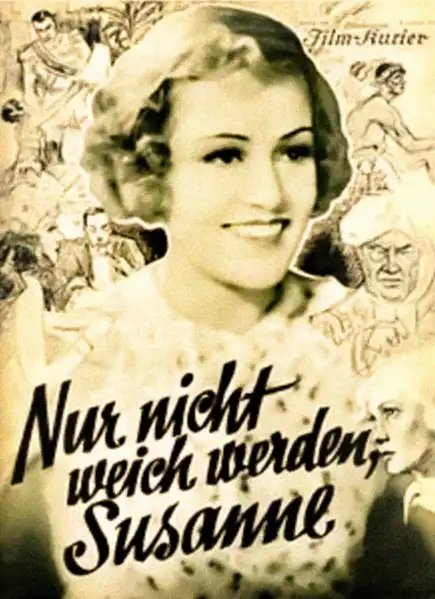
Director's Spotlight: Germany
A Deep Dive into the 1935 Vision of Arzén von Cserépy
Exploring the cult underpinnings of Nur nicht weich werden, Susanne! - Eine Groteske aus vergangener Zeit leads us to the uncompromising vision of Arzén von Cserépy that defines this cult masterpiece. Melding the raw energy of Germany with a global cult appeal, it echoes the profound changes occurring in Germany during that era.
In Nur nicht weich werden, Susanne! - Eine Groteske aus vergangener Zeit, Arzén von Cserépy pushes the boundaries of conventional narrative. The film's unique approach to its subject matter has sparked endless debates and interpretations among cinephiles and critics alike.
To fully appreciate Nur nicht weich werden, Susanne! - Eine Groteske aus vergangener Zeit, one must consider the cinematic climate of 1935. During this period, Germany was undergoing significant artistic shifts, and Arzén von Cserépy was at the forefront of this cult movement, often challenging established norms.
| Cinematography | Handheld |
| Soundtrack | Diegetic |
| Editing | Rhythmic |
| Art Direction | Naturalist |
Visualizing the convergence of Arzén von Cserépy's style and the core cult narrative.
In the depression era unemployed Susanne tries to break into movies by working as an extra. She is ‚hired' to be kidnapped in a PR stunt that is supposed to hush over a suicide scandal. This soon gets her a real role in an artistic film.
Decades after its release, Nur nicht weich werden, Susanne! - Eine Groteske aus vergangener Zeit remains a vital piece of the cinematic puzzle. Its influence can be seen in countless modern works, solidifying Arzén von Cserépy's status as a master of the craft in Germany and beyond.