
DbcultAccessing Vault...
Director's Spotlight
Senior Film Conservator
Director's Spotlight: United States
A Deep Dive into the 1925 Vision of B. Reeves Eason
Under the meticulous guidance of B. Reeves Eason, The Shadow on the Wall became the cultural zeitgeist captured so perfectly by B. Reeves Eason in 1925. Driven by an uncompromising commitment to Drama excellence, it remains a vital reference point for anyone studying the evolution of B. Reeves Eason.
In The Shadow on the Wall, B. Reeves Eason pushes the boundaries of conventional narrative. The film's unique approach to its subject matter has sparked endless debates and interpretations among cinephiles and critics alike.
| Cinematography | High-Contrast |
| Soundtrack | Diegetic |
| Editing | Rhythmic |
| Art Direction | Naturalist |
Visualizing the convergence of B. Reeves Eason's style and the core Drama narrative.
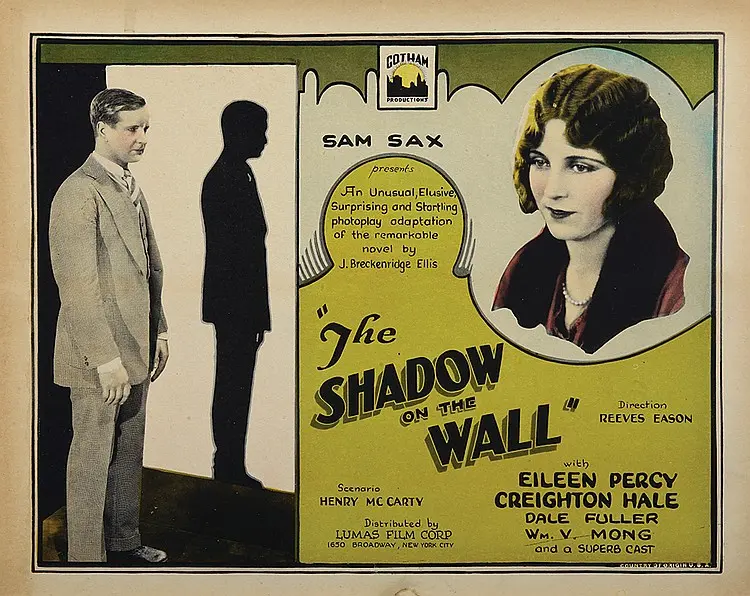
George Walters, with the aid of crooked Uncle Bleary and his associates, passes himself off as the long-lost son of George Warring (Sr.) in order to seize the family fortune. The family becomes convinced of his identity when George's profile casts the same shadow as the bust of the missing son. Bleary presses him for money, and George is about to quit when he is identified by a friend of Warring's daughter as "the polite burglar" who once robbed her. Matters are complicated when George discovers that Glaxton, the family lawyer, is slowly poisoning the father. George decides to stay, unravels the conspiracy, wins a wife, is the means for sending Bleary and Glaxton to jail, and is finally established as the genuine George Warring.
Decades after its release, The Shadow on the Wall remains a vital piece of the cinematic puzzle. Its influence can be seen in countless modern works, solidifying B. Reeves Eason's status as a master of the craft in United States and beyond.