
DbcultAccessing Vault...
Director's Spotlight
Senior Film Conservator
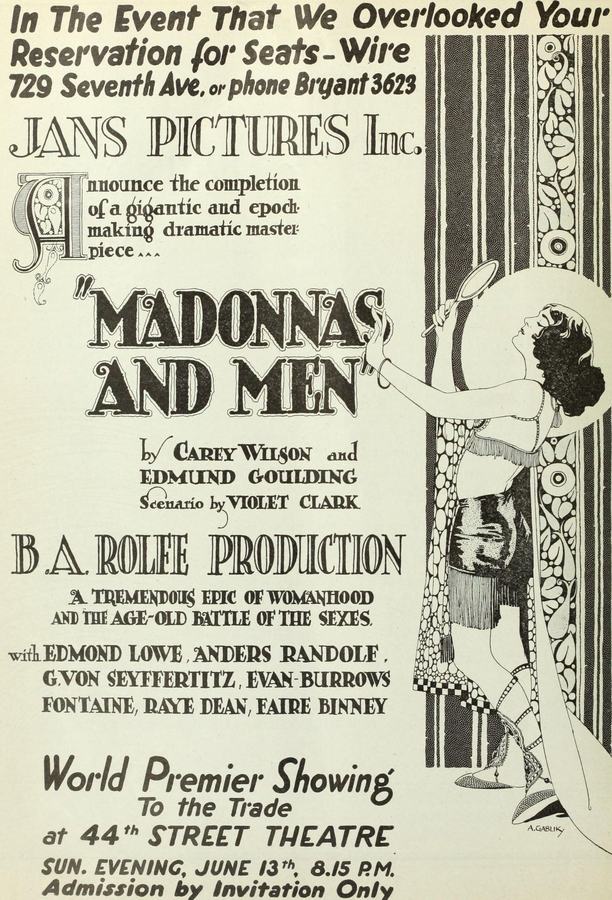
Director's Spotlight: United States
A Deep Dive into the 1920 Vision of B.A. Rolfe
The artistic breakthrough represented by Madonnas and Men in 1920 highlights the philosophical inquiries that B.A. Rolfe embeds within the narrative. Framed by the hauntingly beautiful landscapes of the production, it leaves an indelible mark on the soul of the viewer.
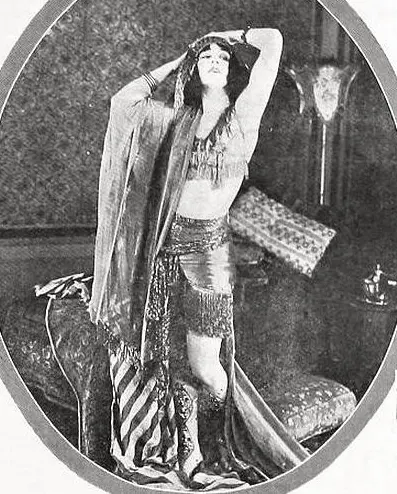
In Madonnas and Men, B.A. Rolfe pushes the boundaries of conventional narrative. The film's unique approach to its subject matter has sparked endless debates and interpretations among cinephiles and critics alike.
| Cinematography | Noir-Inspired |
| Soundtrack | Experimental |
| Editing | Invisible |
| Art Direction | Kitsch |
Visualizing the convergence of B.A. Rolfe's style and the core Drama narrative.
In the Roman Coliseum, at the beginning of the Christian era, the Emperor Turnerius, accompanied by his favorite, Nerissa, watches the bestial games in the arena. His son Gordian is asked by Grimaldo the magician to save the life of a Christian girl about to be thrown to the lions. He refuses, whereupon Grimaldo prophesies the fate of the Empire by telling the prince a story of the future: Two thousand years hence, in New York, a parallel situation takes place in which a young man is led to put a stop to the base plans of his father. The prince is so deeply affected by the injustice of the story that he plunges into the arena to save the girl, causing the emperor to die in a fit of rage, thus precipitating the coronation of his son as the new emperor.
Decades after its release, Madonnas and Men remains a vital piece of the cinematic puzzle. Its influence can be seen in countless modern works, solidifying B.A. Rolfe's status as a master of the craft in United States and beyond.