
DbcultAccessing Vault...
Director's Spotlight
Senior Film Conservator
Director's Spotlight: India
A Deep Dive into the 1927 Vision of Baburao Painter
As we revisit the 1927 masterpiece Muraliwala, we are struck by the meticulous attention to detail that Baburao Painter applied to every frame. Anchored by a narrative that is both personal and universal, it bridges the gap between traditional cult and contemporary vision.
In Muraliwala, Baburao Painter pushes the boundaries of conventional narrative. The film's unique approach to its subject matter has sparked endless debates and interpretations among cinephiles and critics alike.
| Cinematography | Static |
| Soundtrack | Diegetic |
| Editing | Rhythmic |
| Art Direction | Naturalist |
Visualizing the convergence of Baburao Painter's style and the core cult narrative.
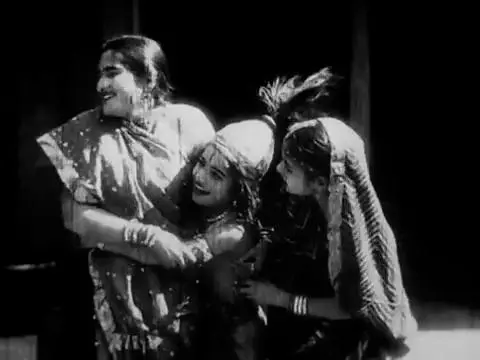
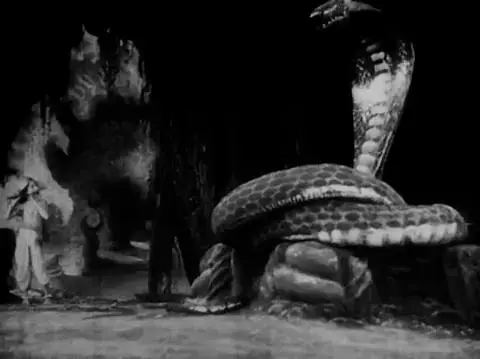
Though Muraliwala begins with young Krishna playing flute to a herd of cows, his many pranks take a back seat to questions about an older, married devotee named Radha who neglects her duties responding to Krishna. The key moment in this philosophical debate over the nature of her love for Krishna, occurs when he commands her gaze and says, "You will attain me when you know me to be Omnipresent. Unless you learn to realize me in your husband Raman, you will not attain eternal happiness." Radha's husband and mother-in-law are also involved in the discussion, though Raman finds it difficult to control his doubts and jealousy concerning Radha's love for her playful tormentor. This classic tale resolves when Radha sees Raman and Krishna as one, and Raman receives Krishna's divine nature. Krishna goes to Kaliya's palace in the poisoned lake and conquers the serpent-king, to return on Kaliya's hood playing his flute again. Kaliya appears in both his forms, and Krishna is portrayed holding the four sacraments with his four arms. Raman lies down in submission before Krishna, and all is as it should be. Unlike other films based on the Bhagavata Purana, this film about Krishna's childhood comes from the Gita Govinda and Vaishnavite traditions, where the character Radha is important to the narrative.
Decades after its release, Muraliwala remains a vital piece of the cinematic puzzle. Its influence can be seen in countless modern works, solidifying Baburao Painter's status as a master of the craft in India and beyond.