Summary
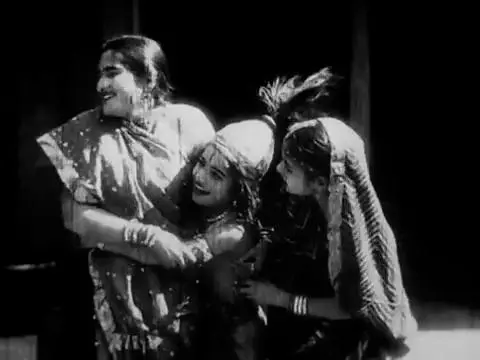
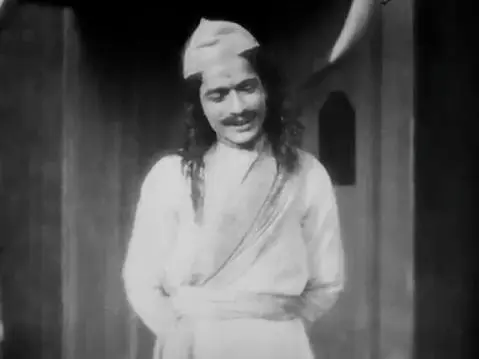
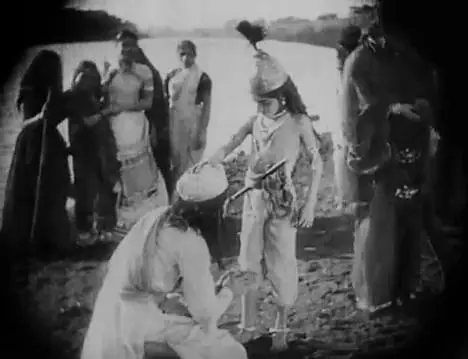
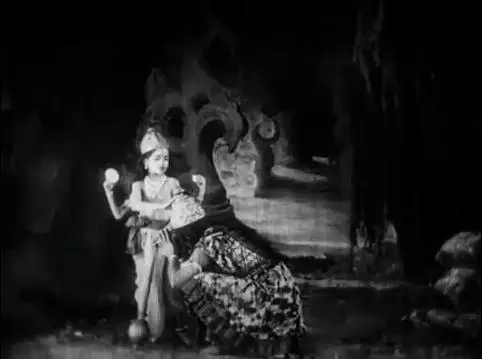
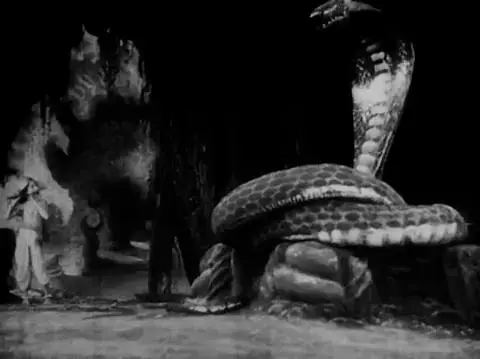
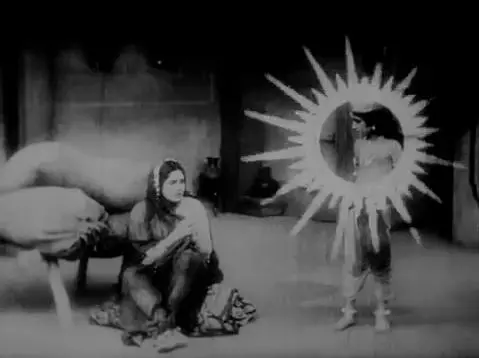
Muraliwala opens not merely with the youthful Krishna's pastoral flute-playing, but quickly pivots to a profound theological and emotional quandary. The narrative’s true heart lies in the complex relationship between Krishna and the married devotee Radha, whose unwavering devotion to the divine is perceived by her in-laws, particularly her husband Raman, as a neglect of her marital duties. The film’s philosophical core crystallizes when Krishna directly challenges Radha’s understanding of love, commanding her to recognize his omnipresent nature within her husband. This injunction sets the stage for a spiritual journey, fraught with Raman's jealousy and doubt, as Radha grapples with the concept of seeing the divine in the mundane. The resolution, a hallmark of Vaishnavite philosophy, sees Radha achieve enlightenment by perceiving Krishna and Raman as one, leading to Raman's own spiritual awakening. This internal transformation is mirrored by Krishna’s triumphant conquest of the serpent-king Kaliya, a visually potent metaphor for the overcoming of worldly obstacles, culminating in the iconic image of a four-armed Krishna, holding the sacraments, symbolizing ultimate divinity and Raman’s final, complete submission.
Synopsis
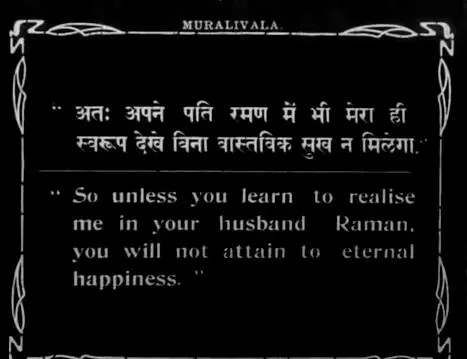
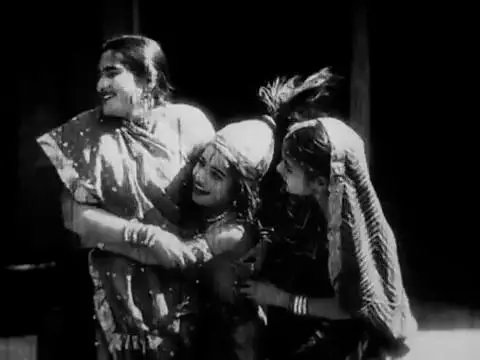
Though Muraliwala begins with young Krishna playing flute to a herd of cows, his many pranks take a back seat to questions about an older, married devotee named Radha who neglects her duties responding to Krishna. The key moment in this philosophical debate over the nature of her love for Krishna, occurs when he commands her gaze and says, "You will attain me when you know me to be Omnipresent. Unless you learn to realize me in your husband Raman, you will not attain eternal happiness." Radha's husband and mother-in-law are also involved in the discussion, though Raman finds it difficult to control his doubts and jealousy concerning Radha's love for her playful tormentor. This classic tale resolves when Radha sees Raman and Krishna as one, and Raman receives Krishna's divine nature. Krishna goes to Kaliya's palace in the poisoned lake and conquers the serpent-king, to return on Kaliya's hood playing his flute again. Kaliya appears in both his forms, and Krishna is portrayed holding the four sacraments with his four arms. Raman lies down in submission before Krishna, and all is as it should be. Unlike other films based on the Bhagavata Purana, this film about Krishna's childhood comes from the Gita Govinda and Vaishnavite traditions, where the character Radha is important to the narrative.
Review Excerpt
"Is Muraliwala worth watching today? Short answer: yes, absolutely, but with significant caveats. This isn't a film for casual viewing; it's a profound, often challenging, cinematic artifact that demands a specific kind of engagement.It's a film for those deeply invested in the philosophical underpinnings of devotional cinema and the rich tapestry of Indian mythology, particularly the Vaishnavite tradition. However, it is decidedly NOT for viewers seeking fast-paced narrative, contemporary produc..."