
DbcultAccessing Vault...
Director's Spotlight
Senior Film Conservator
Director's Spotlight: United States
A Deep Dive into the 1916 Vision of Barry O'Neil
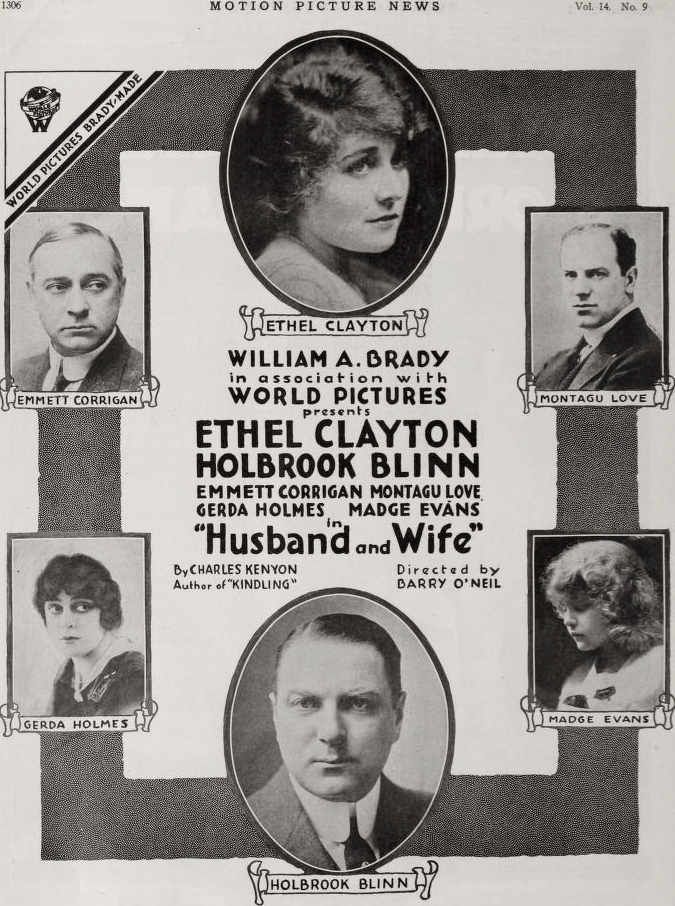
Under the meticulous guidance of Barry O'Neil, Husband and Wife became the complex thematic architecture established by Barry O'Neil. Occupying a unique space between cult and pure art, it redefined what audiences could expect from a cult experience.
In Husband and Wife, Barry O'Neil pushes the boundaries of conventional narrative. The film's unique approach to its subject matter has sparked endless debates and interpretations among cinephiles and critics alike.
While deeply rooted in United States, Husband and Wife has achieved a global reach, influencing directors from various backgrounds. Its ability to translate cult tropes into a universal cinematic language is why it remains a cult staple decades after its 1916 release.
| Cinematography | Noir-Inspired |
| Soundtrack | Minimalist |
| Editing | Slow-Burn |
| Art Direction | Brutalist |
Visualizing the convergence of Barry O'Neil's style and the core cult narrative.
Dick Baker, cashier of the National Bank, is in financial difficulties through his wife's extravagance. Becoming desperate, he plays the stock market with "borrowed" securities. Schmidt, a social climber and director of the bank, goes in with Dick on some of his speculations and in return Doris, Dick's wife, is expected to receive Mrs. Schmidt. Pat Alliston, a wealthy young man, is in love with Doris, but is playing "on the level." Doris refuses to receive Mrs. Schmidt one afternoon while Alliston is calling. This infuriates her and she confides in her husband, who then refuses to go in on a deal with Dick. Porter, Dick's younger brother, has learned something of Dick's difficulties, and blames Doris for her extravagance. Doris complains of Porter to Dick and they quarrel. The next day the stock Dick has invested in drops heavily and his margin is wiped out. He cannot cover it and is forced to let it go. Schmidt has become suspicious and sets detectives to watch Dick. That evening Dick learns that Doris is dining with Alliston again and asks her why she doesn't get a divorce and in anger she says, "Very well, I will." Doris plans to go to Japan with Mrs. Prescott, a chum, Alliston and their daughter Bessie. She has planned to give Dick the impression that she is eloping with Alliston so that he will get a divorce, but Doris confesses to Mrs. Prescott that if Dick should even hold out his hand to her, she would stay. Schmidt's suspicion is again aroused, and when Schreiber. the detective, reports that Doris is planning this trip. Schmidt thinks Dick is planning to slip away with them and cautions Schreiber to guard against this. Schmidt has Knight, the bank examiner, go over things and when Dick learns of this and of Doris' intended departure, feeling utterly deserted and alone, he attempts suicide, but is prevented by the unconscious intervention of Bessie. Alliston calls for Doris and Bessie and they meet Mrs. Prescott at the railroad station. They are followed by the detective's assistant and brought hack, he mistaking Alliston for Dick. Doris denounces Dick for having, as she supposes, detectives trail her and Alliston, and when she learns the truth, falls unconscious to the floor. Dick carries her into the drawing room and they are reconciled. Knight tells Schmidt that his suspicions of the bank's soundness were groundless and the latter leaves crestfallen. Alliston, alone in the hallway with Bessie, realizes his own part in this domestic tragedy. Knight asks him if he will help him to give Dick another chance, and he agrees. Knight writes a check and a note and sends it by Bessie to Dick.
Decades after its release, Husband and Wife remains a vital piece of the cinematic puzzle. Its influence can be seen in countless modern works, solidifying Barry O'Neil's status as a master of the craft in United States and beyond.