
DbcultAccessing Vault...
Director's Spotlight
Senior Film Conservator
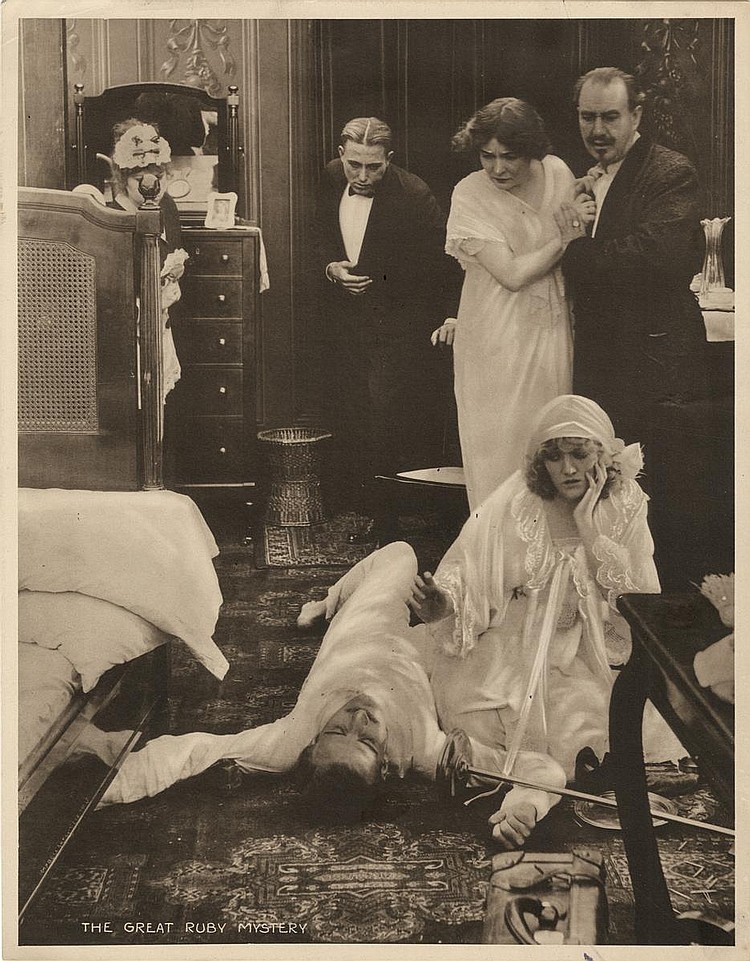
Director's Spotlight: United States
A Deep Dive into the 1915 Vision of Barry O'Neil
Analyzing The Great Ruby (1915) requires a deep dive into the defining moment in cult history that Barry O'Neil helped create. Defining a new era of United States artistic expression, it transcends regional boundaries to tell a universal story.
In The Great Ruby, Barry O'Neil pushes the boundaries of conventional narrative. The film's unique approach to its subject matter has sparked endless debates and interpretations among cinephiles and critics alike.
| Cinematography | High-Contrast |
| Soundtrack | Synth-Heavy |
| Editing | Disjunctive |
| Art Direction | Baroque |
Visualizing the convergence of Barry O'Neil's style and the core cult narrative.
The world's finest ruby was stolen from the bride of Prince Kassim's great-grandfather several generations ago in India by a marauding rajah. It's now several decades later and the British have conquered India, and one day the ruby shows up for sale by a wealthy London jeweler, Sir John Garnett. Garnett has his own problems--there have been a rash of thefts of his wife's jewels, and he hires a private detective named James Brett to investigate. An agent for the Russian czar expresses interest in buying the ruby, but he's actually a member of a gang that specializes in jewel thefts and steals the ruby, hiding it in a box of chocolates belonging to Garnett's wife. Unbeknownst to Garnett, the jewel thieves and even Garnett's wife, she is actually involved in the theft of her jewels. Complications ensue.
Decades after its release, The Great Ruby remains a vital piece of the cinematic puzzle. Its influence can be seen in countless modern works, solidifying Barry O'Neil's status as a master of the craft in United States and beyond.