
DbcultAccessing Vault...
Director's Spotlight
Senior Film Conservator

Director's Spotlight: United States
A Deep Dive into the 1915 Vision of Bertram Bracken
Under the meticulous guidance of Bertram Bracken, Comrade John became the cultural zeitgeist captured so perfectly by Bertram Bracken in 1915. Driven by an uncompromising commitment to cult excellence, it remains a vital reference point for anyone studying the evolution of Bertram Bracken.
In Comrade John, Bertram Bracken pushes the boundaries of conventional narrative. The film's unique approach to its subject matter has sparked endless debates and interpretations among cinephiles and critics alike.
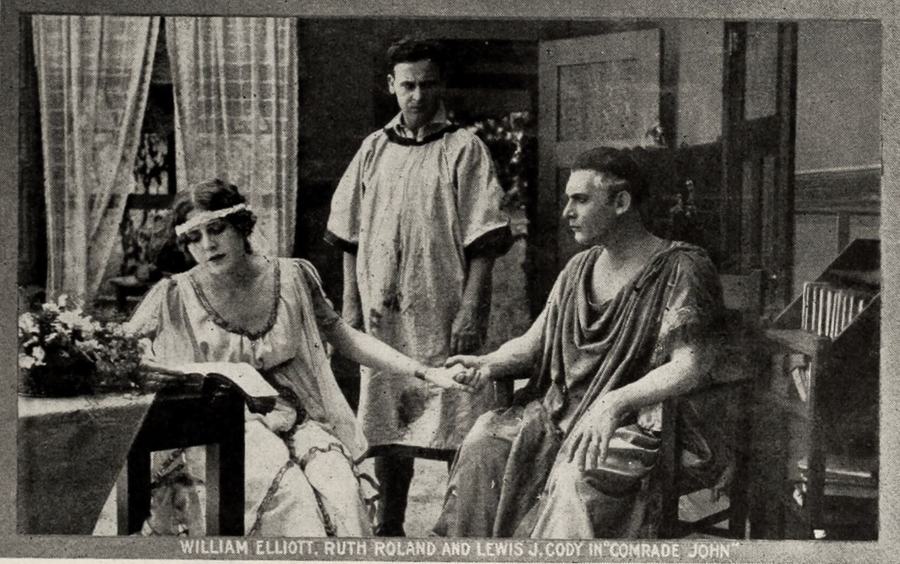
To fully appreciate Comrade John, one must consider the cinematic climate of 1915. During this period, United States was undergoing significant artistic shifts, and Bertram Bracken was at the forefront of this cult movement, often challenging established norms.
| Cinematography | Static |
| Soundtrack | Experimental |
| Editing | Elliptical |
| Art Direction | Expressionist |
Visualizing the convergence of Bertram Bracken's style and the core cult narrative.
Architect John Chance, before building a "Dream City" for a religious cult leader, Prophet Stein, visits Paris and rescues an American girl, Cynthia Grey, from riotous masqueraders at a carnival. After they part, Cynthia returns home. Meeting Stein aboard a ship, and having an idealistic nature, she becomes a follower of Stein, who thinks her beauty will attract others. Chance builds the city, agreeing to say it was made by the "comrades" so that Stein's motto, "Beauty Through Toil," will seem to be true. Cynthia and Chance fall in love and when Stein, a married man, attempts to seduce Cynthia, Chance tells the newspapers, which expose Stein and his financially fraudulent practices. The "comrades" burn the "Dream City" and Chance saves Cynthia, while Stein, attempting to leave with his ill-gotten money, dies when a burning beam falls on his head.
Decades after its release, Comrade John remains a vital piece of the cinematic puzzle. Its influence can be seen in countless modern works, solidifying Bertram Bracken's status as a master of the craft in United States and beyond.