
DbcultAccessing Vault...
Recommendations
Senior Film Conservator
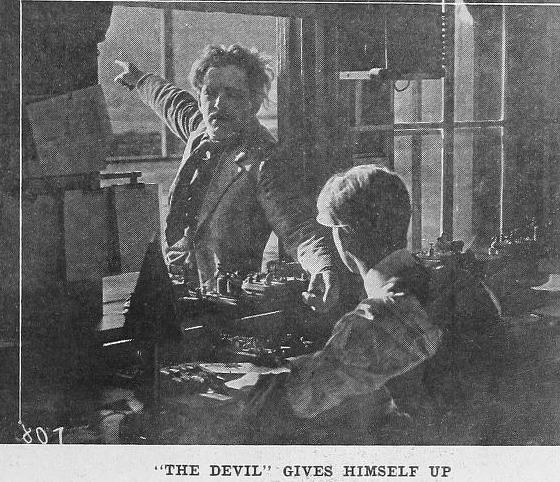
In the vast archive of cult cinema, A Law Unto Himself stands as a cult status beacon, it's essential to look at the contemporaries that shared this cult status. Our cinematic experts have identified several titles that reflect the spirit of 1916.
Few films from 1916 manage to capture to leave an indelible mark on the history of United States film.
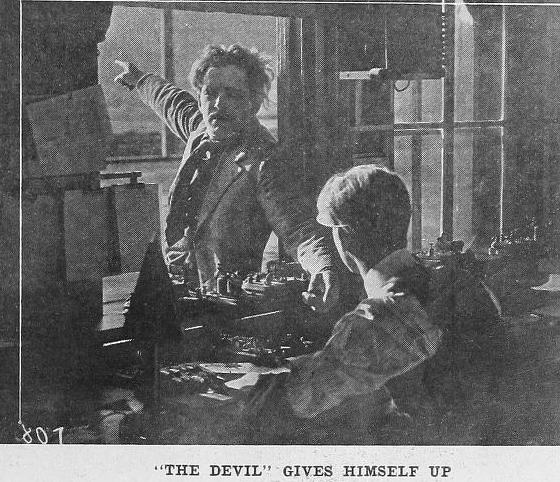
Allan Dwight, sheriff, and Jean Belleau, a young French surveyor, live in Circle City. They bear such a striking resemblance that they can hardly be distinguished one from the other. Jean has a half-wit brother, Paul, whom Holden, a political crook, teases and bullies. Dwight catches him in the act, thrashes him, and incurs the enmity of the bully. That night Holden and Pascal, a Mexican, meet McFadden to get from him their share of money contributed by Senator Thurston tor certain nefarious undertakings. McFadden does not turn over what Holden and Pascal consider their rightful share and they vow vengeance. Their opportunity comes when Paul, the half-wit, in trying to enter McFadden's outhouse to get his runaway dog, is menaced by McFadden. Pascal fires at McFadden, killing him, and then throws the gun and Paul beside the dead man. When the crowd, which is attracted by the shot, gathers around, Holden accuses Paul of the murder, and incites the mob to lynch him. Bob Clayton, a friend of Jean's, attempts to stay them, but, being unsuccessful, he hurries to notify Jean and Dwight. Dwight arrives first and tries to circumvent the mob's fury. A struggle follows in the course of which Dwight is thrown against the barrel upon which Paul is standing and the boy is hung. Jean arrives and swears vengeance upon those responsible for his brother's death. Dwight is in love with Evelyn, the daughter of Senator Thurston, who is in control of the party known as the Thurston gang. Dwight makes his feelings known in the matter of the gang's activities, and Evelyn feels that her father is the brunt of his remarks. Dwight, however, continues his course of attempting to stamp out the work of the gang. A month or so rolls by and a mysterious bandit appears. After each successful robbery he leaves a note signed "The Devil." He becomes so daring that a vigilante committee is organized to capture him. In his mountain lair it is seen that "the devil" is none other than Jean Belleau. His lieutenants are Clayton and Holden, the latter having confessed to Jean that Pascal was his brother's murderer, causing Jean to end the Mexican's existence. Holden has grown jealous of Jean and makes known the bandit's identity to two detectives, advising them that he may be known by his horse, which is branded with the form of a pitchfork. When Jean goes to town he is pursued by the officers, but escapes capture by hiding in Dwight's automobile. Dwight learns that he is in his car, and desirous to save the good that is in him, Dwight permits the bandit to take his car to escape while he takes charge of Jean's horse. Jean returns the car the next morning and leaves with it a note saying that he has decided to give up his lawless life. Soon after Jean leaves after extracting a promise from his friend, Clayton, that he, too. will also abandon the lite of an outlaw. Holden assumes the leadership of the gang and plans a bold daylight robbery, proposing to assume the character of "The Devil." Clayton overhears the plot and determines to frustrate it for the sake of "The Devil's" name. In the attempt Clayton is shot by Holden, who, with his gang, escapes to the mountain retreat. When Dwight hears of the robbery and is told that "The Devil" is responsible, he determines to seek out Jean and either make a man of him or bring him back a prisoner. He starts out on Jean's horse. Meanwhile the vigilante committee is also bent upon entering the bandit mountain stronghold. Holden was badly wounded in the affray at the bank. Holden wounds Dwight, and noting the remarkable resemblance between the sheriff and Jean, he places evidences of the bank robbery upon the man he has wounded. So the posse finds Dwight, and of course, their natural assumption is that Dwight has been the bandit. Dwight is taken back to town and arraigned before the authorities. An account of the bandit's career is printed in the papers and attributed to Dwight. Jean, speeding eastward on a train, reads the story, and realizing the situation, wires back to the Circle City authorities to stop prosecution until he arrives. He does return and Dwight is released from custody. The police are anxious to run down Holden and offer Jean certain clemency if he will lead them to the mountain stronghold, where Holden and his men are hidden. Jean consents to avenge the death of his friend Clayton, at Holden's bands. When Jean and the posse arrive a pitched battle takes place. At last Jean and Holden meet. After a terrific fight Jean succeeds in rolling Holden over to the edge of a cliff. Holden falls over it, but Jean, with a firm grip upon his wrists, holds him suspended in midair as he himself lies at the edge of the cliff on his breast. One of the bandits takes aim and fires at Jean. As the bullet enters his body Jean, with a convulsive movement, loosens his hold on Holden's wrists and the latter is dashed on the rocks thousands of feet below. Jean struggles to his feet and tries to make his way back to the posse, but only succeeds in reaching his faithful horse and at her side he falls. Meanwhile Dwight has recovered from his wounds and found a happy resting place in the arms of Evelyn.
Critics widely regard A Law Unto Himself as a cult-favorite piece of cult cinema. Its cult status is frequently cited as its strongest asset, solidifying its place in United States's film legacy.
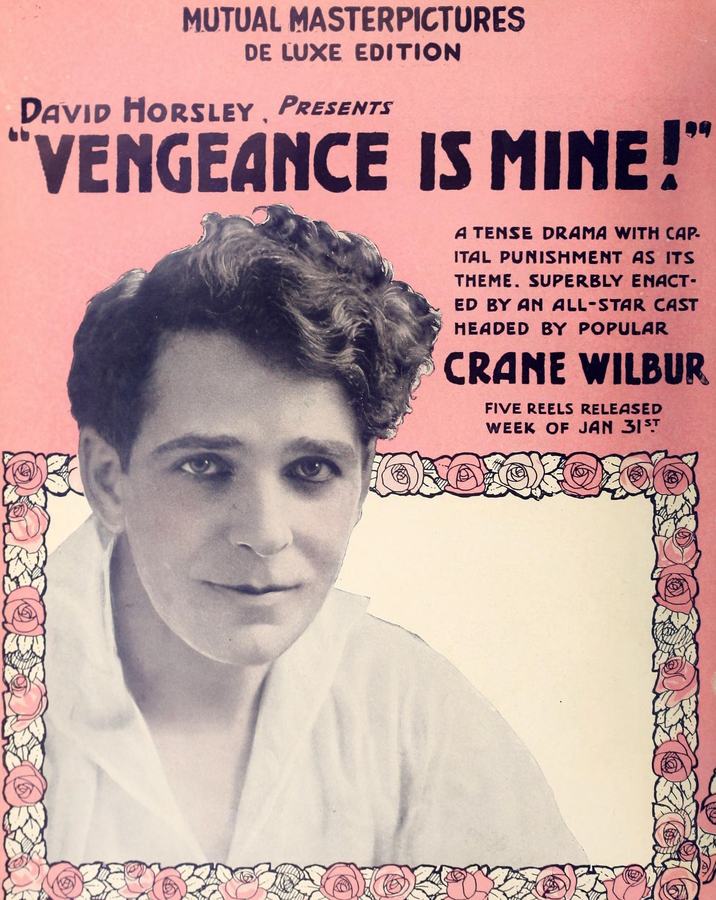
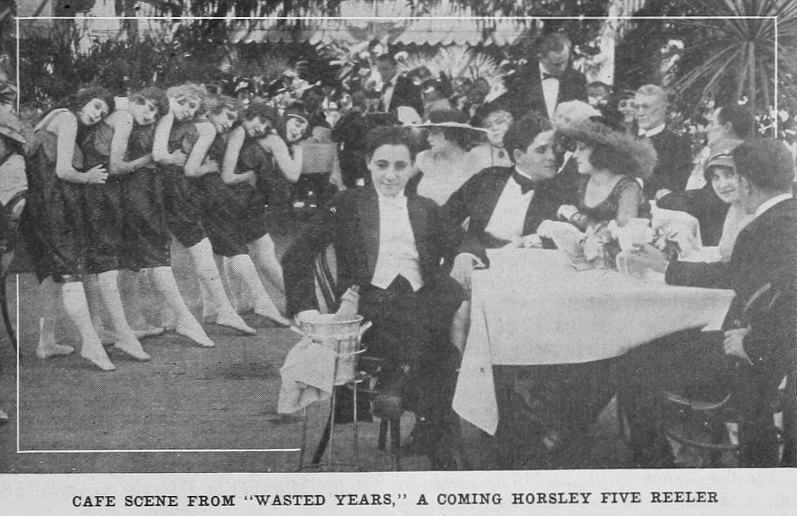
Based on the unique cult status of A Law Unto Himself, our vault has identified these titles as the most compelling follow-up experiences for fans of cult cinema:
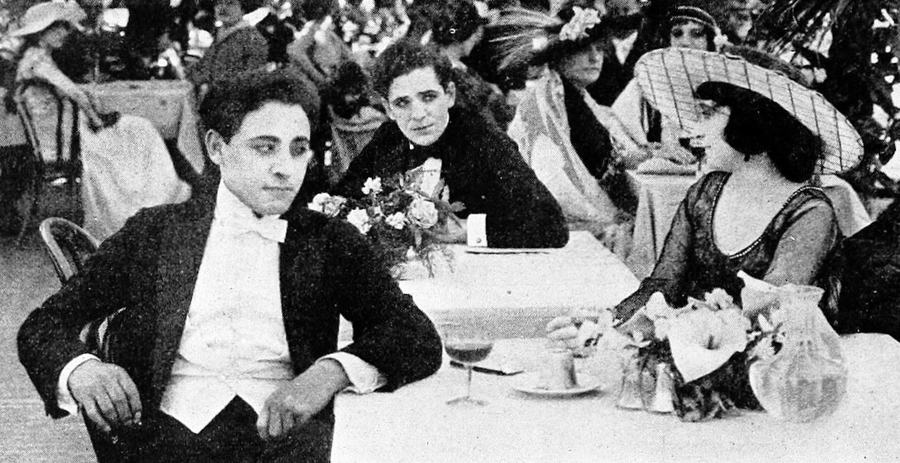
Dir: Robert Broadwell
Old Weatherby, a broken down tramp, finds a friend in a passerby. With money given him by the good Samaritan, Weatherby starts off to satisfy his hunger. He is attracted by some theater posters announcing the performance of the drama, "Youth." The pangs of hunger urge him to buy food, but the play of "Youth" calls him and he spends his money to witness the play. It is the story of his own youth, of the years he wasted. Harry and June were child sweethearts in an orphanage at Cedarville. They grow up together, Harry becoming a machinist in a village factory and June a milliner's apprentice. As they grew older they planned to marry, but the young man was summoned to a big city where he was informed that he had inherited a vast amount of money, left him by his uncle. The fortune is turned over to the young man and he lingers among the white lights. The village physician is also in love with June, but she does not encourage his attentions and openly makes known that she is betrothed to Harry. A desire to see a little of life takes a hold on Harry and be visits one of the roof gardens where Bohemians gather. "Billie," a woman of the world, and Robert Leslie, her friend, are attracted by the strange actions of the country boy. The woman plans to catch him in her net and Leslie helps to pave the way by bidding her a hasty good-night, to leave her to fascinate Harry. Her charms set Harry's brain in a whirl. One night at the roof garden, Leslie "dares" Harry to marry "Billie," for such is the trap set by the two schemers. Hypnotized by the woman and his brain dull from wine, Harry consents and the party hurries to a Justice of the Peace and the ceremony takes place. Not until the next day does Harry realize what he has done. In the meantime June's heart has wilted and she wonders for her lover. She goes to the city to seek him and there confronts Harry with the woman. June is heartbroken at the news of the wedding. June returns to the country and the young physician, still pleading his love for her, she marries him and they establish a happy home. Gradually "Billie" extracts the wealth of her husband and so great is his love for her that he is blind to her sham love for him. Suddenly his eyes are opened when he finds his wife and Leslie scheming against him in his own home. A scene follows, Harry ordering Leslie from the house with a demand never to return and the woman then betrays her real attitude toward Harry. As Harry broods, his wife gathers her belongings together and elopes with Leslie, although it is the eve of her motherhood. Through a detective agency Harry tries to trace his wife and her would-be lover. Four years have passed and Harry has used every means to find his wife and child without result. Leslie has sunken to the level of a common crook, deserted "Billie," who, heartbroken at her folly, passes to another world. The little daughter is left in a wretched condition in a dirty tenement room. The child goes out into the open in a drenching rain and looking for shelter climbs into an unoccupied automobile. Soon Harry enters the machine, discovers the child, and takes her home. That night, Leslie and some of his associates go out on a burglarizing expedition. Masked, Leslie climbs into the living room of Harry's apartment, a struggle follows and the mask is torn from his face. The little child is aroused by the noise and as she appears, Leslie makes known that it is Harry's own daughter. As the father clings to the child, Leslie steals away. The following day Harry resolves to return to Cedarville. As he and his little "Pal" near the town, Harry sees the scenes of his happy childhood. The swimming pool appeals to him and he attires himself in a bathing suit and plunges into the water. A gypsy and his family come across the automobile belonging to Harry and likewise the man's clothes. These the gypsy appropriates to his own use and leaving his wagon behind rides away with his family in style. When "Little Pal" and her father are ready to go they are forced to use the abandoned wagon and Harry attires himself in the clothes left by the gypsy. Reaching the town of Cedarville, the child has taken sick and Harry goes to the town doctor. He learns of the marriage of June and the physician and after getting medicine, starts off to lead the life of a gypsy. For months he and his daughter travel near the outskirts of the village until the child is suddenly taken very ill and dies. He takes the body back to the scene of his younger days and there makes a little grave. The play of "Youth" is ended. The crowd leaves the theater and "Old Weatherby" remains unmoved. An usher shakes him and then draws back, realizing that the old man has passed away.
View Details
Dir: Robert Broadwell
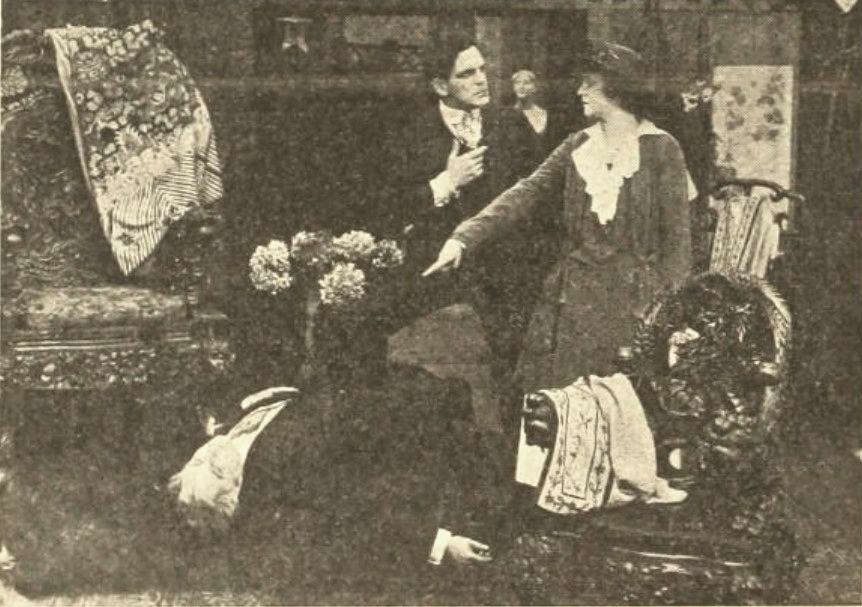
Stanley Clark seduces innocent young Marion in a hotel room, then tears out the incriminating page from the hotel register to use for blackmailing. Years later, Marion marries Governor John Loring whose brother, Richard, overhears Clark extorting money from Marion. Richard follows Marion to Clark's room where she begs for more time to raise the required money. As Richard fights with Clark, Marion picks up a gun and accidentally shoots and kills the blackmailer. Richard takes the blame for the murder, is convicted and sentenced to be executed. Out of guilt and fear, Marion remains silent during the trial, but eventually tells her husband the truth. In order to save his brother, John sacrifices the governorship and moves his family to another city.
View Details
Dir: Robert Broadwell
Criminals steal a radium-powered tank from an inventor. His heiress and a government agent take up the chase.
View Details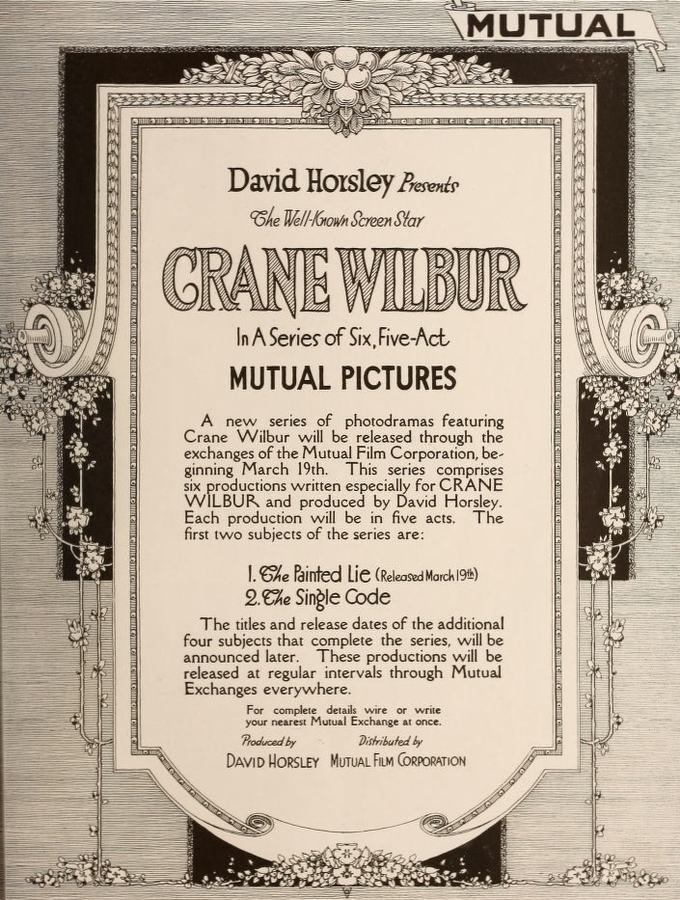
Dir: Robert Broadwell
The first of a series of pictures entitled "The Morals of Men." Against the advice of her fiancé a social favorite permits a famous artist to paint her portrait. When the sitting is over the artist attempts to embrace her. She repulses him, and angered, he conceives the idea of painting the undraped figure to the portrait. By showing his picture the girl's reputation will be blasted and his work of revenge complete. The visits of the girl to the artist's studio cause a separation between her and the young lieutenant, so when the painting is put on exhibition by the artist he believes his sweetheart has been the model. He is, however, enraged at the liberty the artist has taken and challenges the painter to a duel. The latter is wounded. The model who has posed for the figure had been cast aside by the artist, and on the day of the duel she calls at the studio to plead with the artist to take her back. A heated argument follows, the artist attempts to strangle the girl, and in defense she kills him. The lieutenant is arrested on suspicion for the murder because of his duel with the artist. Overcome with the torture of the guilty the model attempts to end her life. When she recovers consciousness and realizes that her end is near she confesses that she posed for the figure and that she had killed the artist in self-defense. The confession frees the lieutenant and brings about a reconciliation between the estranged lovers.
View DetailsAnalysis relative to A Law Unto Himself
| Film Title | Atmosphere | Complexity | Similarity |
|---|---|---|---|
| The Wasted Years | Tense | Linear | 89% Match |
| Vengeance Is Mine! | Gritty | Linear | 93% Match |
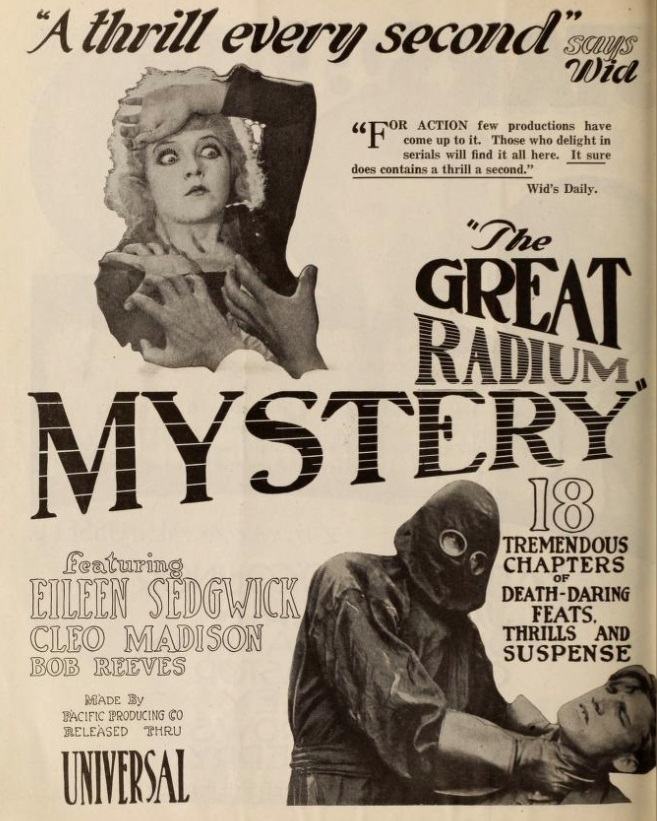
| The Great Radium Mystery | Tense | Abstract | 88% Match |
| The Painted Lie | Ethereal | Linear | 92% Match |
This guide was algorithmically generated using the cinematic metadata of Robert Broadwell's archive. Last updated: 8/17/2026.
Back to A Law Unto Himself Details →