
DbcultAccessing Vault...
Recommendations
Senior Film Conservator
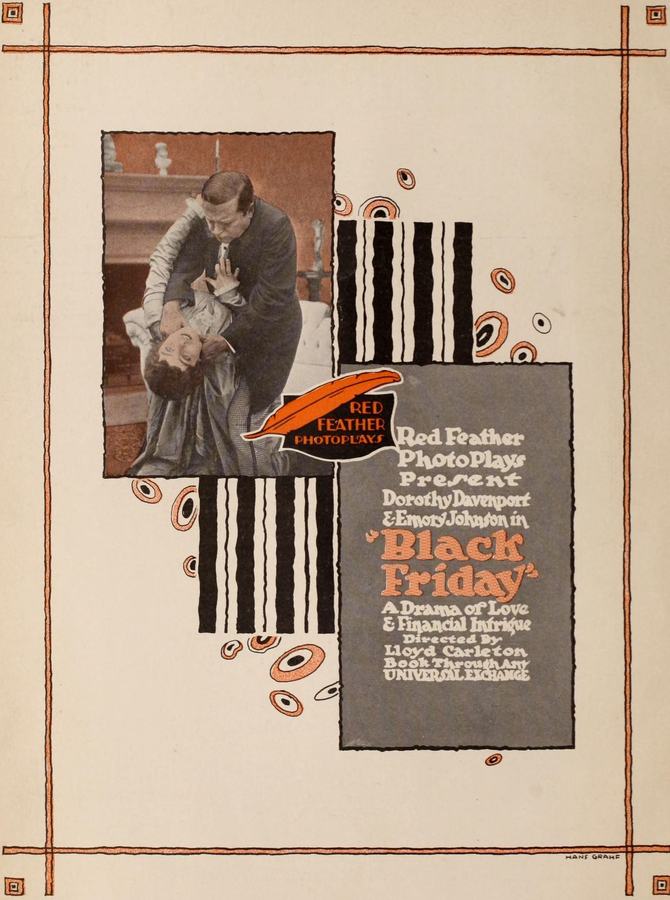
The United States-born brilliance of Black Friday offers a unique cinematic excellence, the profound questions raised in 1916 still require cinematic answers today. Our curated selection of recommendations echoes the very essence of Black Friday.
In the Pantheon of cult cinema, Black Friday to provide a definitive example of Lloyd B. Carleton's stylistic genius.
Railroad tycoon Richard Strong discovers that his enemies are scheming to bankrupt him. Strong enlists the help of Charles Dalton, and together they foil the plot. By chance Dalton meets Strong's wife, Elinor.
Based on the unique cinematic excellence of Black Friday, our vault has identified these titles as the most compelling follow-up experiences for fans of cult cinema:
Dir: Lloyd B. Carleton
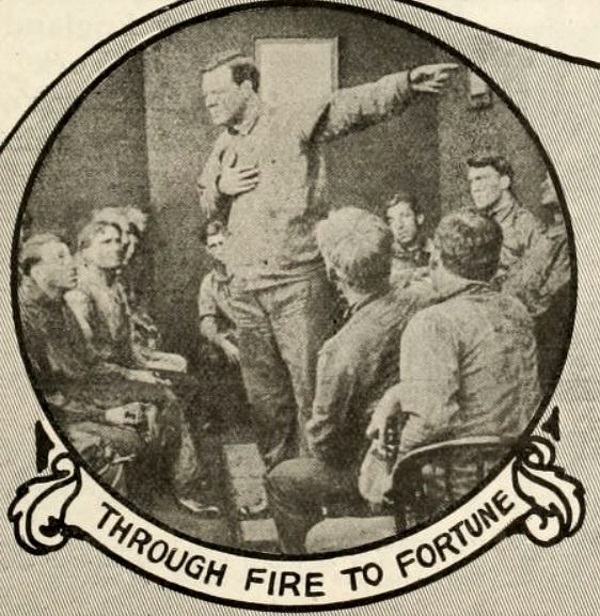
Jane Barrett and her son, Tom, are suddenly beggared by the speculations of her husband, known on Wall Street as Plunger Barrett. At an auction sale, the Barrett yacht, real estate and household effects are sold without reserve to satisfy some of the demands of the creditors. The bankrupt plunger goes to his room, plies himself with liquor, falls out of the window and is killed. It now depends upon Tom to bear the burden of his mother's support. In a newspaper he finds an advertisement offering a position, with promises of advancement, for a young man of education. This is signed by John Pearce, an old friend of the family, who, with his daughter, Helen, has often been a guest on the yacht and in their home. Helen has been attracted by Tom's manly bearing and finds herself gradually weaning her affections away from Phil Blair, an almost accepted lover, who is associated with her father in coal mining. The transfer of her affections comes one day when, out riding with Blair, a child falls from a bridge and he has not the courage to attempt to save her life. This is effected by Tom, and, as a reward, the girl insists upon her father giving the position to Tom. Wishing to begin at the bottom, Tom passes through the different stages of mining and handling coal, and is about to be appointed Assistant Superintendent. But his hopes, as well as those of his mother and lady love, are frustrated by the jealous Blair, assisted by George Bowers, ex-partner in the firm wrecked by Barrett. Thereupon Tom's mother, after making protest to the directors without avail, appeals to the men and a meeting of the Miners' Union is called. While this is in progress, Pearce, who is still Tom's ardent champion, receives a decision of the Supreme Court, giving him a clear title to a mine at the village of Mayflower. After the meeting, the miners having decided to walk out, through sympathy for Tom, he is offered the position of superintendent at Mayflower. He accepts it and takes most of his striking friends with him. The once deserted village now takes on new life, and the mine is opened by Tom on the co-operative principle. While the mining is progressing with fine promise, a flow of oil opened on the levels takes fire, setting the mine ablaze. Then follow the harrowing scenes which it is impossible to avert even after most heroic efforts on the part of the relief train and State Constabulary. After burning for more than three weeks, the fire bums away the supporting pillars of the mine, and the fated village caves into the abyss made by the sinking earth. The villainous Blair succeeds in convincing the excited people that Tom himself has fired the mine to conceal the fact of its utter worthlessness, and they set out to lynch him. For a time the brave mother and a few friends succeed in staying the advance of the mob, but they are the stronger, and are about to destroy him when a pillar of fire arises. This proved to be an oil well of great magnitude, and, amid the promises of the rehabilitated hero, that what they have lost will be more than regained, the defeated Blair is seen slinking away, silhouetted against the dying flames of the sunken village.
View Details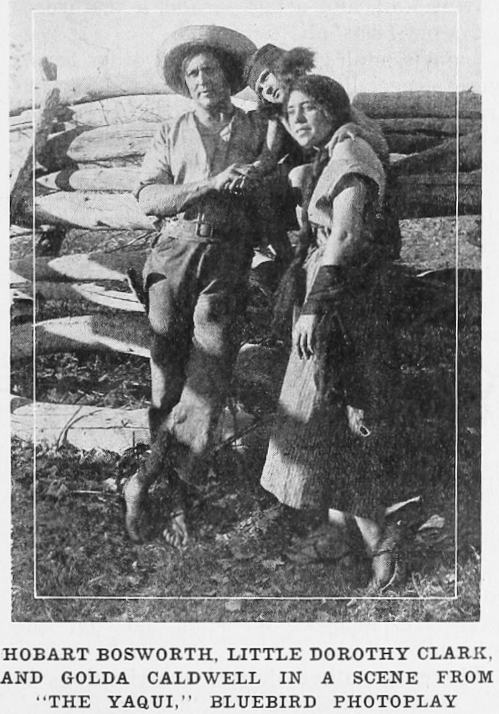
Dir: Lloyd B. Carleton
In Mexico, a poor Yaqui Indian loses his family through the actions of a racist Mexican officer named Martinez.
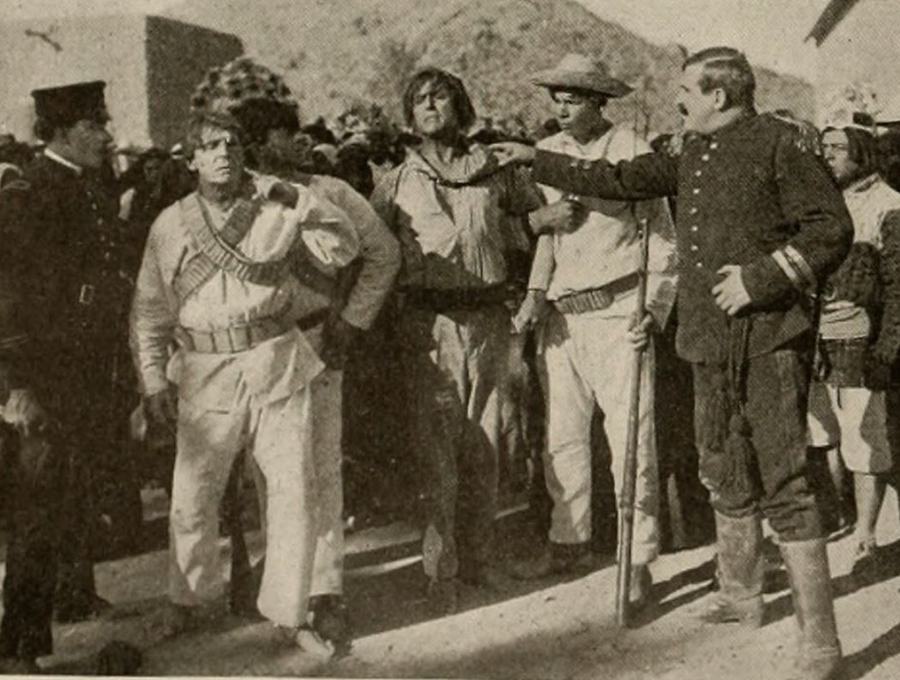
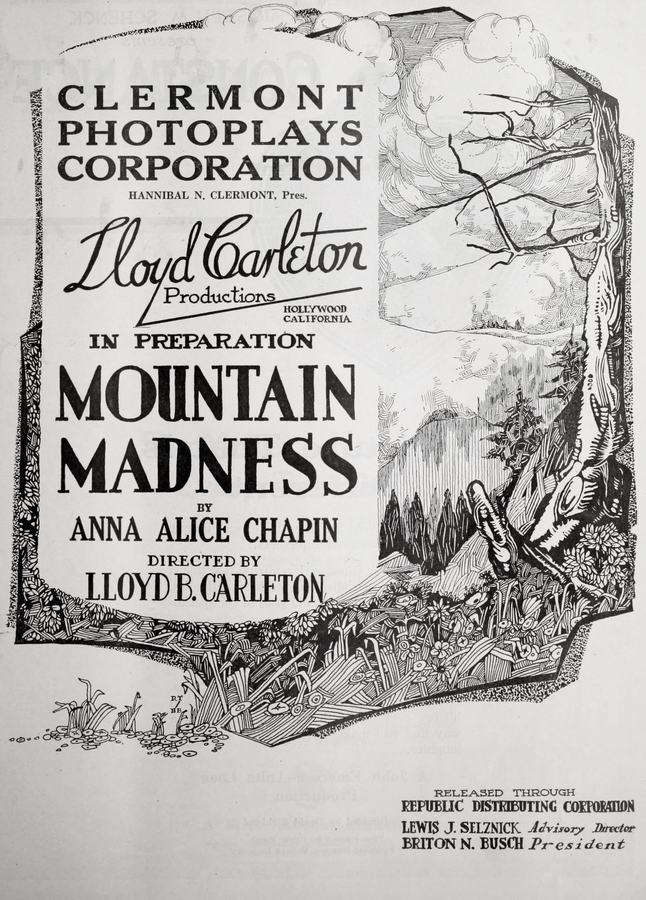
Dir: Lloyd B. Carleton
After Enid and Jack Radnor, vacationing in the Virginia mountains, have a bitter quarrel, Enid meets Polly Mason and Martin Hale, who invite her to their cabin. There she discovers that something mysterious is happening in the mountains. When a train robbery occurs, the sheriff, believing that Martin is a member of the outlaw gang, demands his surrender. After many misadventures, Martin finally proves his innocence. Then Enid mysteriously disappears and is found unconscious at the edge of a cliff. Enid's mother comes to resolve her problems and recognizes Polly's father as an old sweetheart who quarreled with her many years before. Finally, Enid and Jack, after observing so many romantic separations, realize their deep love and are reconciled.
View Details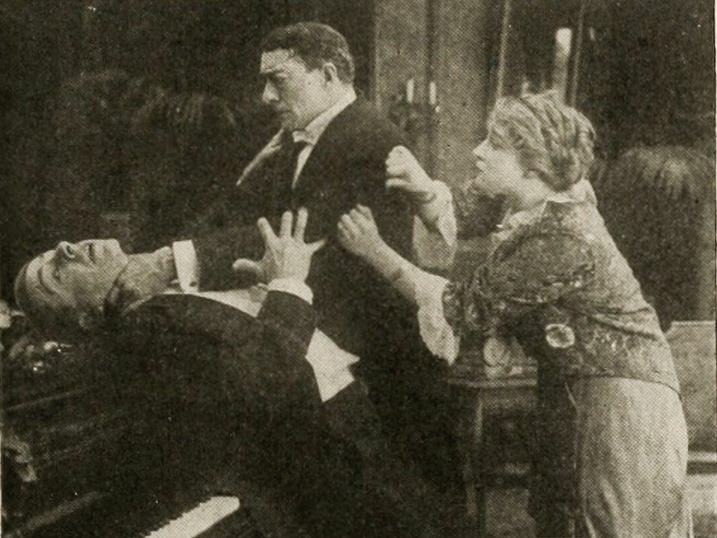
Dir: Lloyd B. Carleton
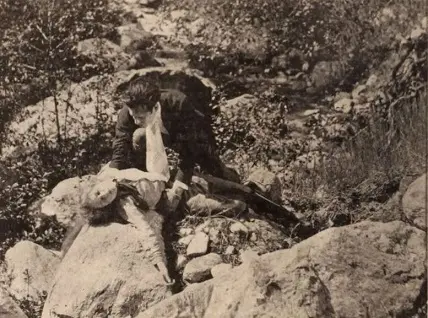
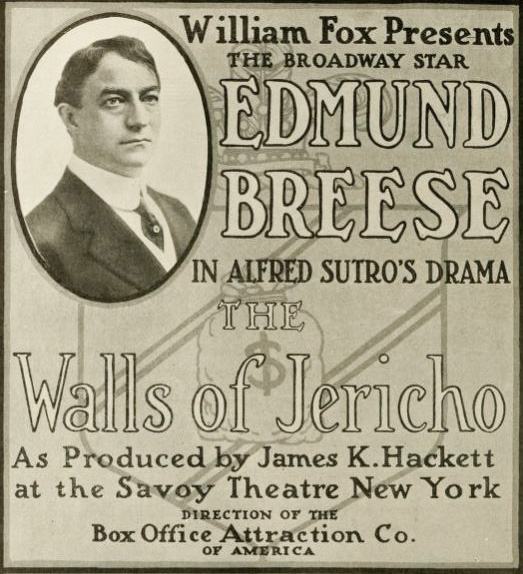
Jack Frobisher, a sheep farmer in Queensland, has returned to England a millionaire, bought his way into the inner circle of Vanity Fair, married the daughter of a marquis, and settled in Mayfair, with a country house outside, a shooting box in Scotland, and a yacht on the "Solent." Having accepted the patronage of a titled family, he is forced to lend money to his father-in-law, and having fallen in love with a society woman, he becomes a witness of the vacuous amusements of the smart set. He settles her score when she is a very heavy loser at bridge and watches her flirtations with fashionable idlers in general and with a contemptible rake, Harry Dallas, in particular. The return of Hanky Bannister, one of his Australian pals, and a millionaire like himself, opens the way for a patrician intrigue for the enrichment of the marquis' family by the marriage of Lady Lucy Derenham. Frobisher is unable to interest Eva, his wife, or her relations in his schemes for making a good use of his money in the erection of sanitary dwellings in the East End, and he is disgusted with the tendencies of fashionable life and anxious to keep his friend, Bannister, out of a marriage similar to his own. A sympathetic friend Lady Westerby, tells him that she is disappointed in finding him so tame a bear, and assures him that he has only to shout and the walls of Jericho will fall flat. At the marquis' house during a ball, and a game of bridge in Lady Alethea Frobisher's boudoir, during which one of her titled players cheats, wins a lot of money and suddenly discovers that he has an engagement and must go. The most serious flirtation of the smart wife ends in a declaration of love by Harry Dallas, which is interrupted by the gloomy, serious husband. The trumpets of rams' horns are blown, and the Australian shouts before the Jericho of smartness. The battle opens when Frobisher insists upon helping the titled brother-in-law to marry a girl whose honor his been compromised and to make a fresh start in the colonies. The Marquis is angry over the Australian interference with family coat of honor, and Lady Alethea attempts to reduce the rebel to submission by sarcastic flings at his tiresome virtue. The trumpets sound again when Frobisher attempts to prevent a marriage between his sister-in-law and the infatuated Bannister by telling him how heartless and mercenary she is, and there is another blast when the rake, Harry Dallas, is compelled to read to the indignant husband a love letter written to the wife. The Walls of Jericho are rent asunder and thrown down when Frobisher announces that he will sell his property in England and go back to Queensland with his wife and child. The welkin rings when this social Joshua guarding the ark of the covenant of manhood shouts in trumpet tones, "I have enough of these companions of yours, these wretched sexless women who do nothing but flirt and gamble. I've had enough of their brainless, indecent talk, where everything good is turned into ridicule and each word has a double meaning. I've had enough of this existence of ours, in town and country, where all the men make love to their neighbors' wives. I'm done with it. done with it all." Furious as is the onslaught, Lady Alethea offers stubborn resistance and refuses to surrender. Later, with the mediation of Lady Westerby, before a reconciliation can be effected and Frobisher enabled to carry her off to Queensland. By that time the Walls of Jericho are indeed fallen flat.
Dir: Lloyd B. Carleton
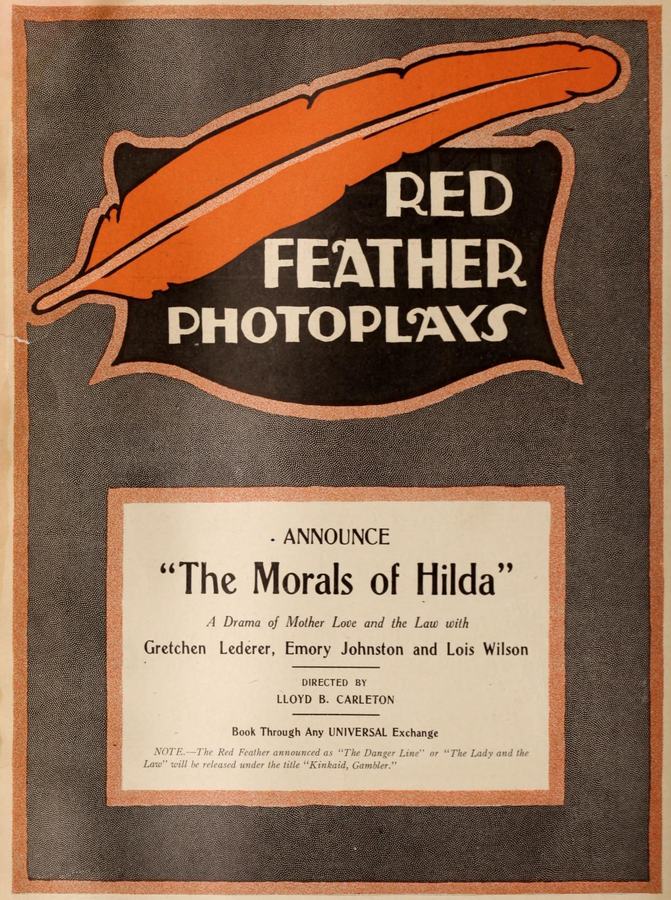
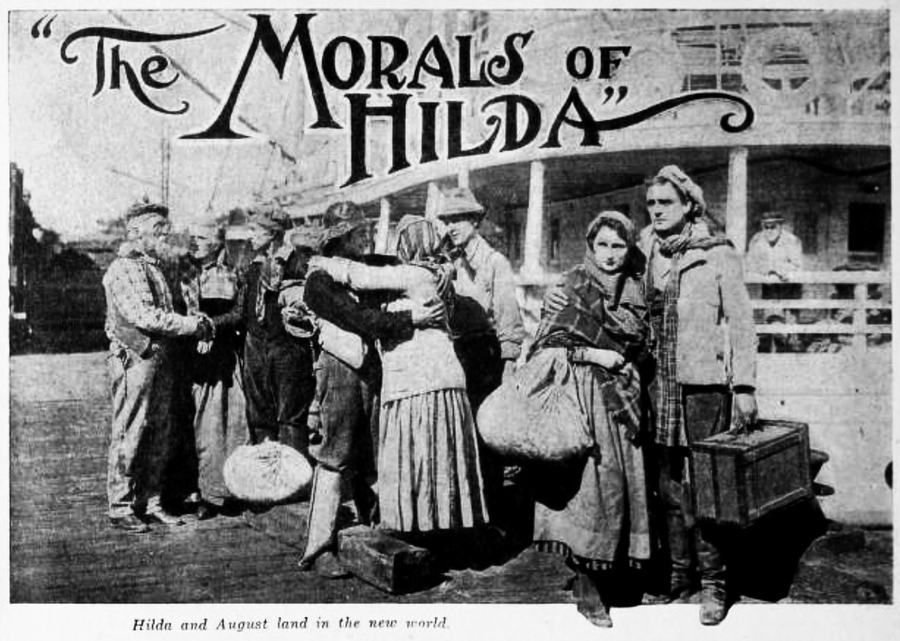
August and Hilda are recent immigrants who cannot understand the American emphasis on weddings, because in their country, couples never get married. Fearing that he will be arrested for living with a woman who is not his wife, August stows away on a ship and dies in a wreck at sea. Afterward, Hilda tries to commit suicide, but rich Esther Grail saves her, and then adopts her infant son Stephen. Years later, Esther tells him the circumstances of his birth, and so Stephen goes on a crusade for the rights of illegitimate children. He is soon elected governor, but during his inaugural speech, a fanatic tries to shoot him. Hilda, however, not having seen Stephen for years but deciding to come hear him speak out for the underprivileged, sees the madman and, jumping in front of her son before the bullet hits him, dies in his place.
View Details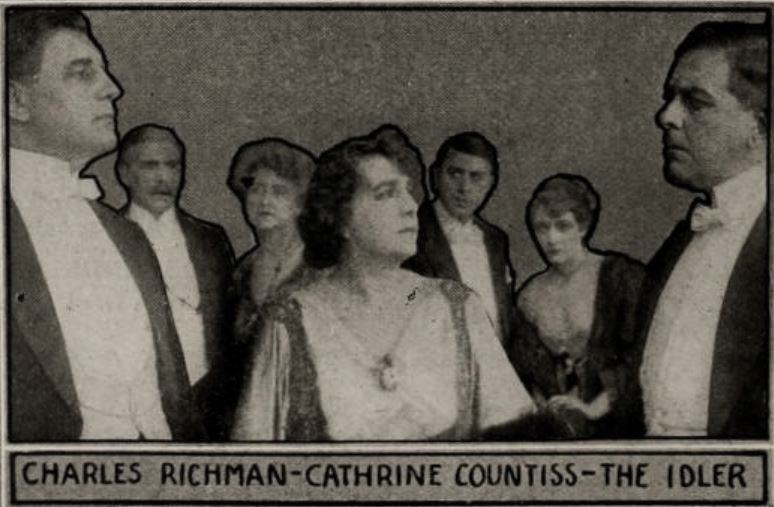
Dir: Lloyd B. Carleton
"The Idler" is Mark Cross, a young man of good family, who in a wild fit of daredeviltry has emigrated from London to the far west. John Harding, also well-born of wealthy parents, but disinherited, and a poor clerk, is also seeking his fortune in the gold fields. One day Harding receives a letter from a firm of London solicitors informing him that his father has died and that he is now Sir John Harding, Bart. He sets out at once to make his preparations for his return to civilization and to take up the station in life that is rightfully his. But that very day he becomes involved in a quarrel with Felix Strong, the young brother of a miner named Simeon Strong, and Felix is shot accidentally during the dispute. Harding is accused of murder, but flees to England in time to escape the vengeance of a posse, headed by Simeon Strong, who is determined to avenge his brother. Years after in London, Harding, who has married the girl both he and Cross were in love with before they emigrated, comes face to face with Cross and Strong, who have become partners and have "struck it rich." In order to win Lady Harding for his own Cross allows the evil side of his nature to get the upper hand of him and plots to have Strong kill Sir John in a duel. Strong slaps Harding in the face in the foyer of the opera house in order that he may involve him in "an affair of honor" and avenge his brother's death by killing Harding. Cross in the meantime lures Lady Harding to his rooms where Sir John comes to seek her. She hides in Mark Cross's bedroom, but reveals herself at a dramatic moment when Harding, shouting "Curse you, I'll kill you," springs at Cross's throat. Her splendid nature, as shown in her denunciation of both men, one as a husband without faith in his wife and the other as the would-be destroyer of a home, overcomes them with shame. They shake hands and Mark, parting forever with Lady Harding, orders his valet to pack his things for he is off "on a long trail."
Dir: Lloyd B. Carleton
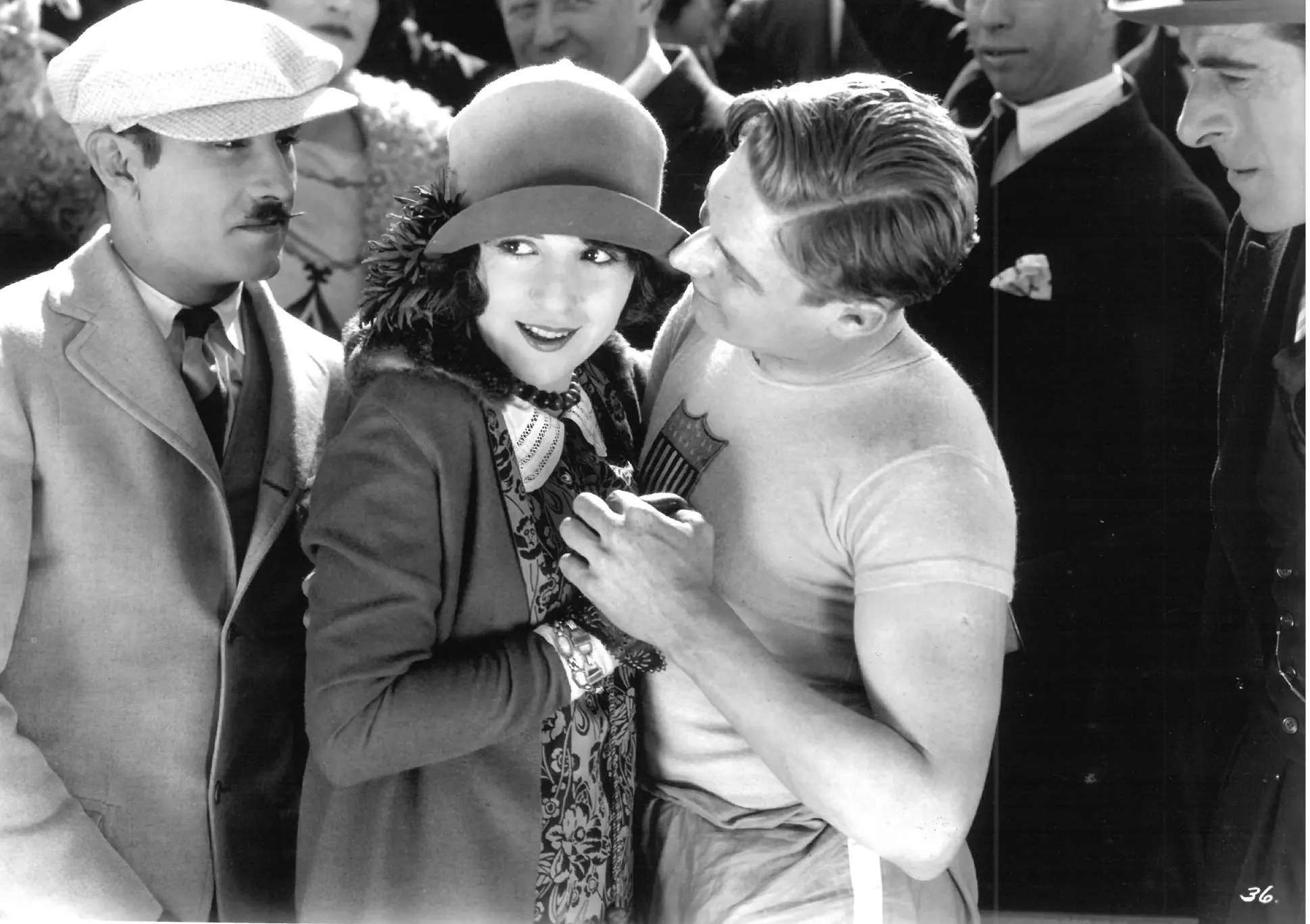
Charley Raymond, college athlete, is disowned by his father, has his clothes stolen by a hobo, assumes latter's garments and the nickname of "Chuck" and is thrown off a freight train. He meets and loves Mary Bowser, ranch-man's daughter and wins a race against a fast horse. Mary is kidnapped by a jealous suitor. Charley pursues on foot and rescues her. Later, he returns home, breaks the world sprinting record in the Olympic Games and wins Mary.
View Details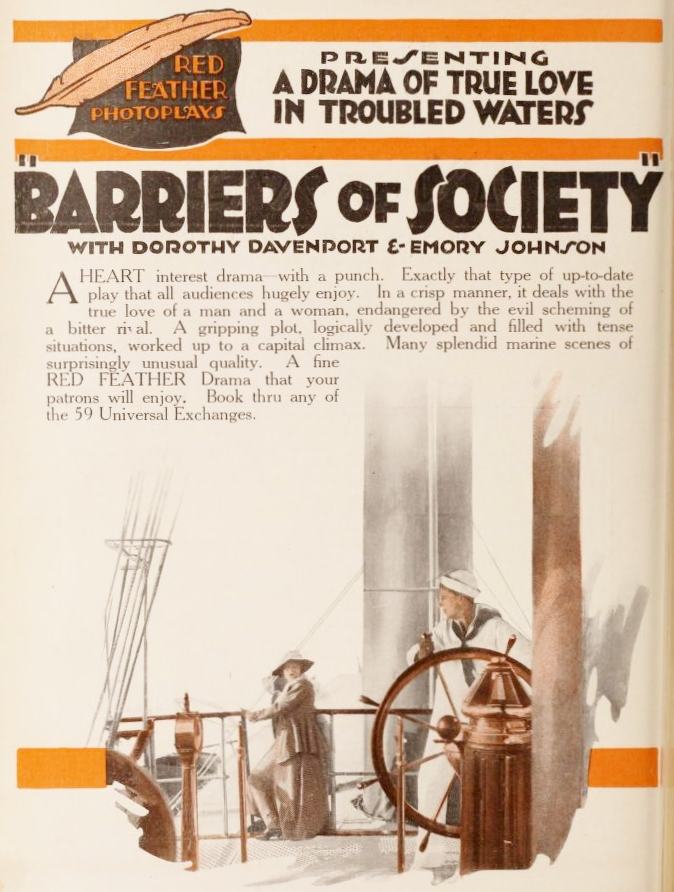
Dir: Lloyd B. Carleton
Westie Phillips, the son of poor and simple Quaker folk, notices a woman marooned on a rock with the tide rising. He rescues her and ever this memory of her remains with him. To Martha Gorham, the daughter of a millionaire, it is only an incident to be remembered for a short time with gratitude toward the boy. In love with Martha Gorham is Harry Arnold, a man considerably older, whose one aim in life now seems to be the winning of her, despite her refusal. Her father, Silas Gorham, is fond of Arnold and favors his suit, although he does not urge his daughter to marry. Arnold invites Martha and her father to go on a cruise with him on his yacht and she consents. Arnold has arranged with his captain to have it appear that the yacht is wrecked near an uncharted island, so he can take Martha to this spot alone and after a month or so the captain is to return and pick them up. About the same time Westie Phillips decides to go out into the world and make his way. He is shanghaied aboard a vessel bound for the Orient and meets with such severe treatment that he manages to escape in Honolulu. It so happens that the Arnold yacht is in the vicinity, and one of the men becoming troublesome, the captain decides to put him ashore. Fate again brings Westie and Martha together, for he secures the sailor's place on board the yacht. He recognizes Martha, but she does not know him. Westie scents that Martha is in danger, and it is with a great deal of satisfaction that he sees Martha repulse the advances of Arnold. Then comes the time when the yacht is in the vicinity of the island. Arnold's plans work out nicely, as he gets Martha in a boat away from her father, but Westie, though he does not know exactly what is happening, senses that there is danger for the woman he loves and insists upon accompanying Arnold. The captain fells him with a blow. Gorham and the others take to the boats and Arnold and Martha are in a boat by themselves. Westie secures a boat and rows for the island. He hears a woman's screams and again comes to Martha's rescue. Then the three take up their life as they find it on the island. Arnold becomes almost crazed when he finds his plans foiled and offers Westie any amount of money if he will but move to the other side of the island. One night Arnold tries to kill the girl, and Westie again saves her. One day Westie and Martha sight a ship and manage to attract it. Before the boat arrives Westie and Martha recognize their love for each other, and their destiny is fulfilled.

Dir: Lloyd B. Carleton
James Fordham returns home after a 6 months' absence to find that his wife has left him for another man. She returns, asking for forgiveness, but dies shortly thereafter. James swears to avenge her death and sets out to find the man who has wronged her. After changing his name, he discovers that the young girl with whom he is falling in love is engaged to the low fellow who stole his wife. He wins out by proving her fiancé is involved in a crooked business deal.
View Details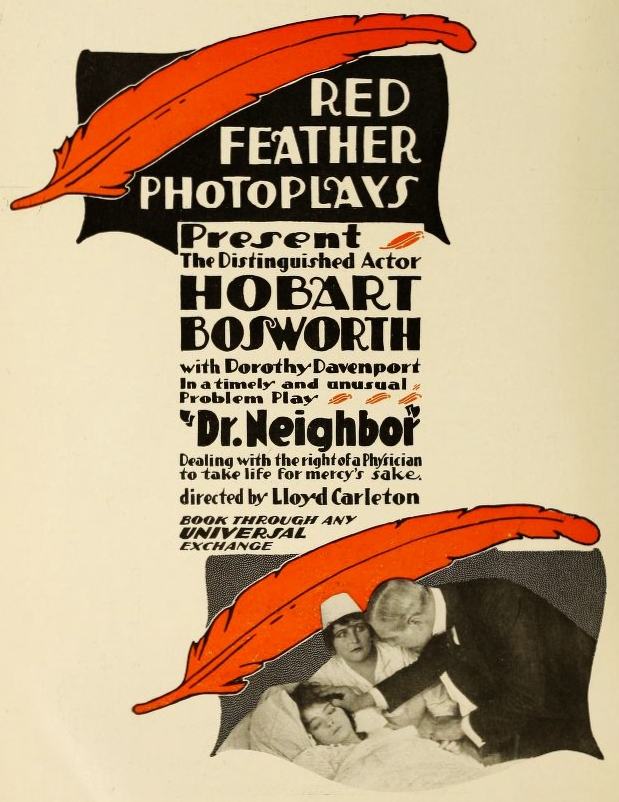
Dir: Lloyd B. Carleton
Hazel Rogers, a young girl eighteen years old and heiress in her own right to millions through the death of her father, falls in love with Hamilton Powers, the District Attorney. Powers is cold, calculating, indifferent, wrapped up in his law; attentive to Hazel, but in love with Christine, a trained nurse and a school friend of Hazel's and she, too loves Powers. Hazel's mother, Mrs. Albert Rogers, lives with Hazel. Dr. Joel Samson, the famous surgeon, forty-two years old, warm-hearted, upright, respected, loves Hazel, who is his ward. He is guardian of her millions until her twenty-first birthday, and in the event of her death, previous to her twenty-first birthday, sole heir to her estate. Hazel eventually marries Powers, very much against the wish of Dr. Samson, with the usual result. Powers failing in his request to Dr. Samson to obtain the management of Hazel's money, becomes morbid, indifferent, cold to Hazel and after a few months of married life he leaves her in her magnificent home on Long Island and goes to New York City to better practice his law. Mrs. Preston and Morgan Keith, two hangers-on, are at this time visiting Hazel in her home. One day Powers comes down from town and sees Hazel have a scene. Hazel, desperate, goes out alone for a spin in her auto. Driving too fast, she meets with an accident and is thrown violently out. Her back is fractured. She is brought home a helpless, hopeless invalid. Her suffering is intense. Dr. Neighbor attends Hazel. Christine nurses her. One night in her agony she begs Dr. Neighbor to put her out of her misery. Christine, heartbroken, and almost distracted with love and agony for her suffering friend, administers an overdose of morphine. Hazel never awakens. Dr. Neighbor finds the hypo needle which Christine has left on the table. He puts it in his pocket. He knows. Powers' dislike of Dr. Neighbor causes him to investigate, and the doctor is accused. Dr. Neighbor keeps silent. At the trial Christine confesses all and Dr. Neighbor is freed. Dr. Neighbor later gives his life for a patient.
View DetailsAnalysis relative to Black Friday
| Film Title | Atmosphere | Complexity | Similarity |
|---|---|---|---|
| Through Fire to Fortune | Tense | Linear | 94% Match |
| The Yaqui | Surreal | Dense | 93% Match |
| Mountain Madness | Gritty | Dense | 91% Match |
| The Walls of Jericho | Tense | Abstract | 94% Match |
| The Morals of Hilda | Tense | Layered | 91% Match |
This guide was algorithmically generated using the cinematic metadata of Lloyd B. Carleton's archive. Last updated: 6/28/2026.
Back to Black Friday Details →