
DbcultAccessing Vault...
Recommendations
Senior Film Conservator
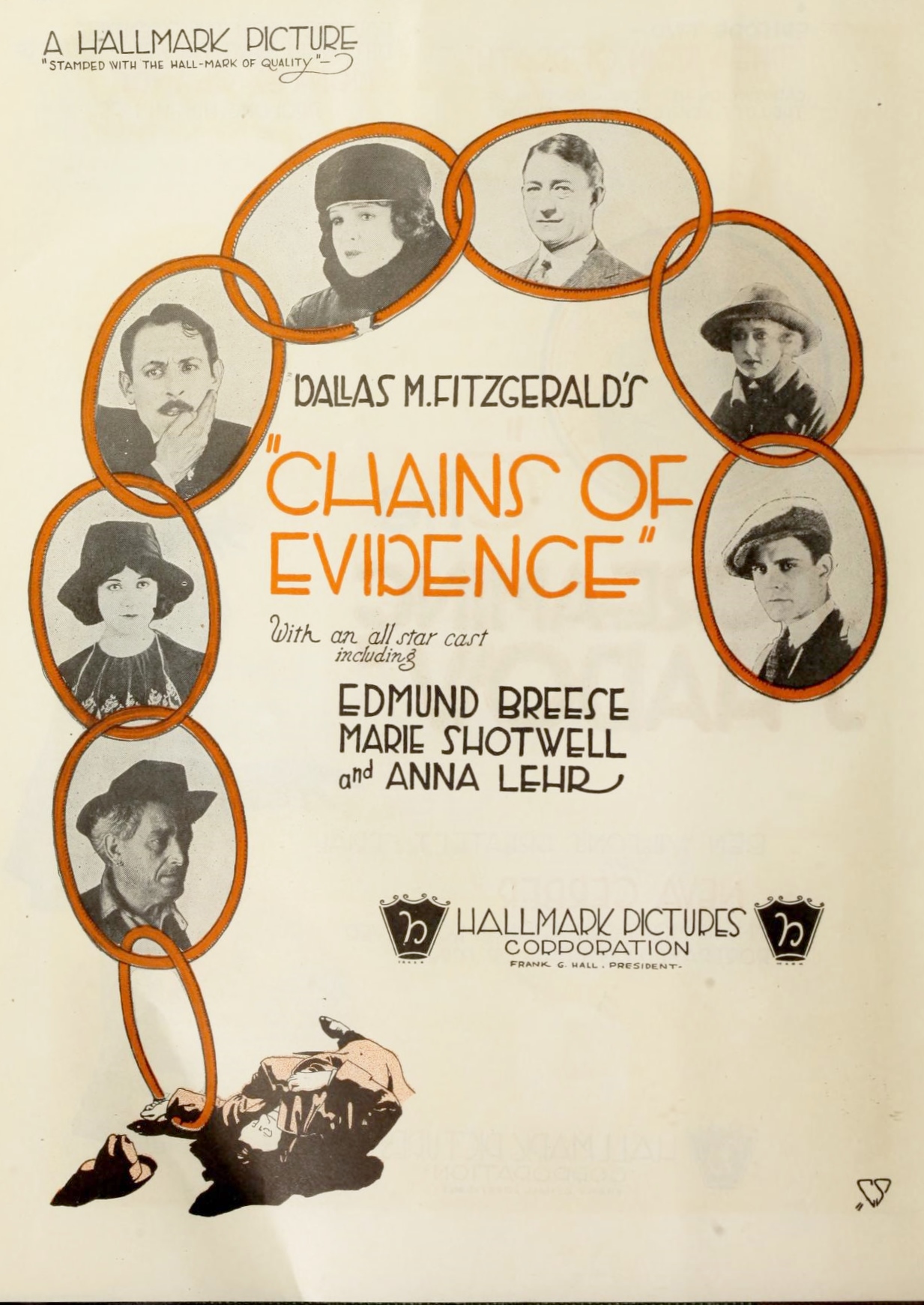
Since its 1920 debut, Chains of Evidence has maintained a unique vision status, the legacy of Chains of Evidence is a beacon for those seeking the unconventional. Our criteria for this list were simple: only the most unique vision and relevant titles.
The 1920 landscape was forever altered by the arrival of to sustain a sense of mystery that persists after the credits roll.
Edith Sturgis, the daughter of a judge, returns from studies abroad to find her widowed father remarried. The new Mrs. Sturgis does not reveal that she has a son Dick, once unjustly jailed by Judge Sturgis, but now working as a reporter while still maintaining an association with the Brownlow gang. Quarrelling with her stepmother, Edith leaves home, meets Dick and falls in love. While Dr. and Mrs. Allen (whom Edith met on the steamer) are visiting in the Sturgis home, the doctor's valuable radium is stolen from the safe, and Judge Sturgis is found murdered. Dick, though with Edith at the time, is accused of the crime. Finally, an old shoemaker confesses that he entered the house to steal the radium, with which to cure his crippled son, and witnessed the judge's slaying by the Brownlow gang. Dick is freed and finds happiness with Edith, and the doctor helps the crippled boy.
Critics widely regard Chains of Evidence as a cult-favorite piece of Mystery cinema. Its unique vision is frequently cited as its strongest asset, solidifying its place in United States's film legacy.
Based on the unique unique vision of Chains of Evidence, our vault has identified these titles as the most compelling follow-up experiences for fans of Mystery cinema:
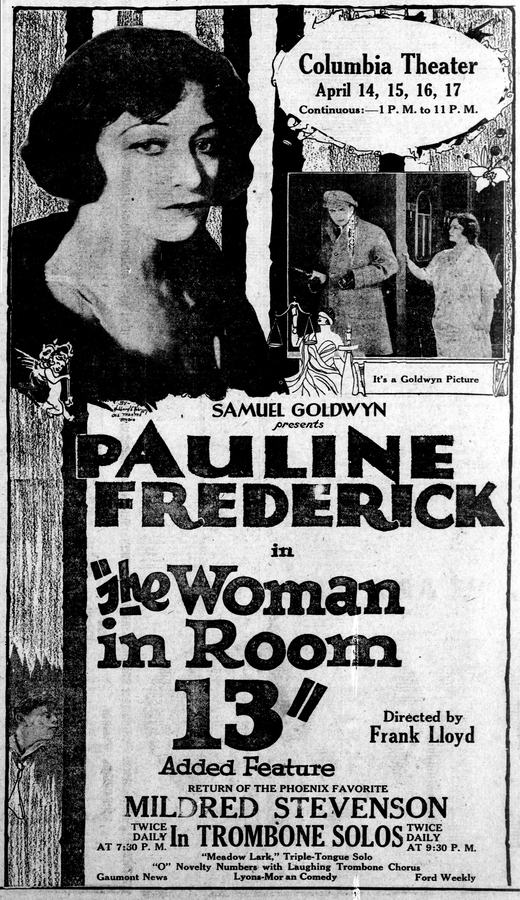
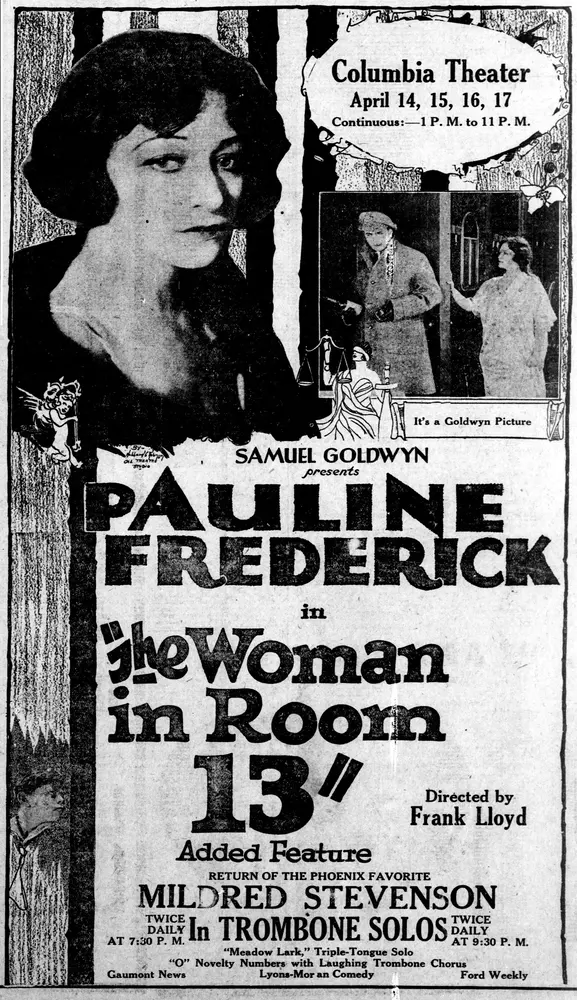
Dir: Frank Lloyd
Laura Bruce is married to John Bruce, police commissioner. She discovers her husband is enjoying a drunken revel with another woman, and vows she will obtain a divorce. After doing so she weds Paul Ramsey. His employer, Dick Turner, a libertine, offers his a responsible position in the west, and she faces a long separation. Ramsey later learns that Turner is interested in his wife and engages a man to protect her, who happens to be her former husband. She finds this out, but does not know he is bent on vengeance. She is inveigled to go to Turner's apartment, where she meets Turner's former "flame." One of them leaves the apartment which is "Room 13." Returning from the West, Ramsey is taken to an adjoining room by Bruce, and listens to a conversation in "Room 13" between a man and a woman. He is convinced it is his wife's voice. Maddened he rushes to the room and batters down the door. He confronts Turner and shoots him. At the trial Ramsey will go free if his wife confesses she was in the room She does and he is acquitted. A reconciliation follows. - Moving Picture World 1920
View Details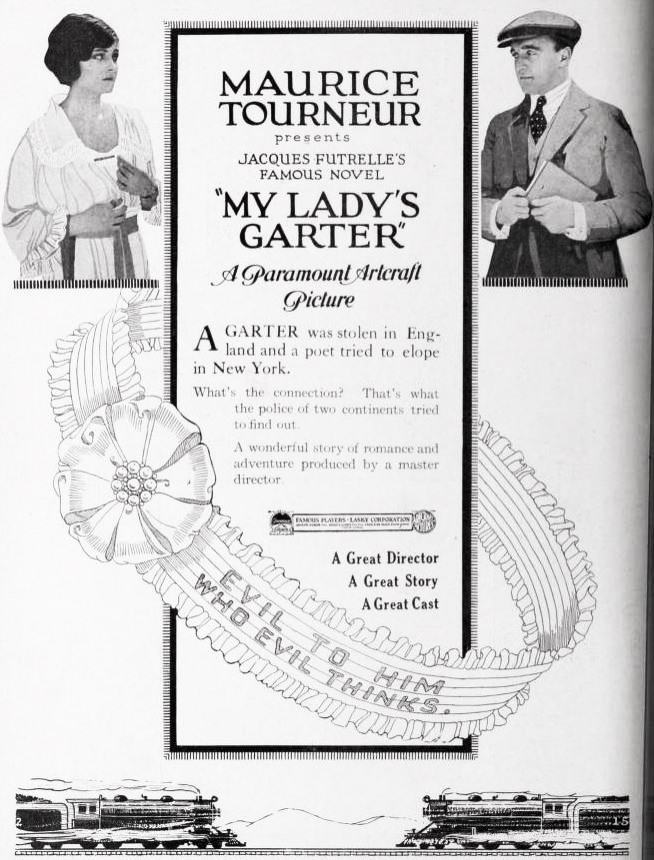
Dir: Maurice Tourneur
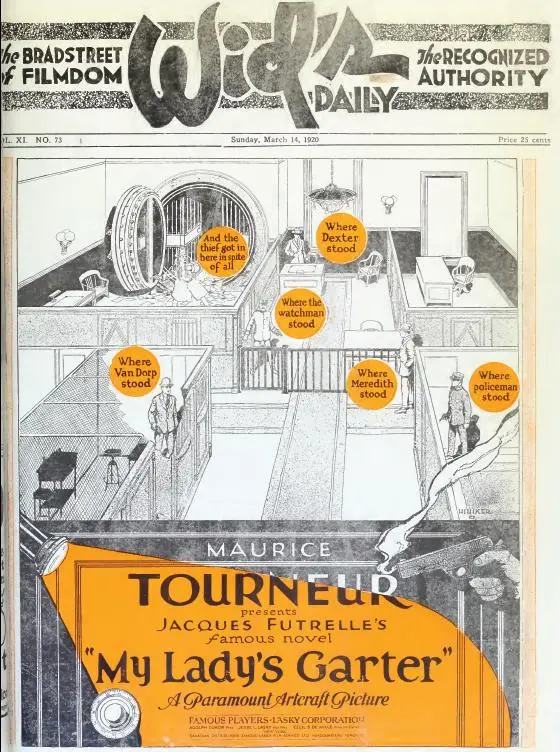
A thief known as The Hawk has stolen the treasured Garter from the British Museum. One of the men pursuing the thief is mistakenly thought to be The Hawk himself, and so must seek his quarry while himself being hunted.
View Details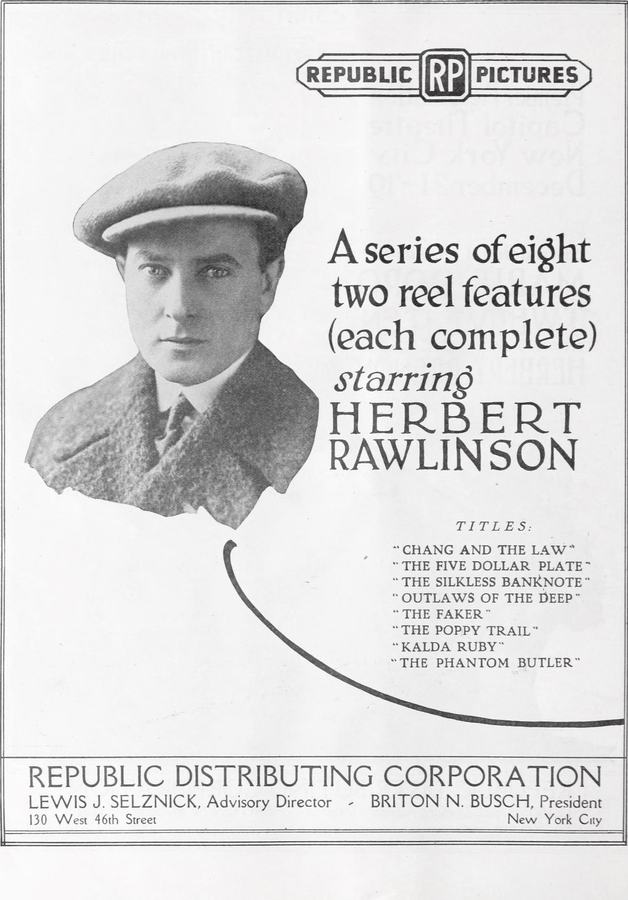
Dir: Unknown Director
A fascinating piece of cinema that shares thematic elements.
View Details
Dir: Marcel Perez
Ralph Barr refuses to lend more money to Trent, who has been rejected by Judith Reynard and is now engaged to Barr. When Trent insults Judith, Barr threatens to kill him. Then Trent calls on Barr, threatening to kill himself and make it appear that Barr killed him if Barr will not lend him the money. Later it seems that Trent has committed suicide and Barr is suspected of the murder, but disappears. A series of complications follows which make it appear that Barr did kill Trent, but it turns out that he was killed from a shot behind the portieres. Another murder takes place and more mystery develops. Finally it is determined that Barr is not guilty, and Judith's loyalty saves him.
View Details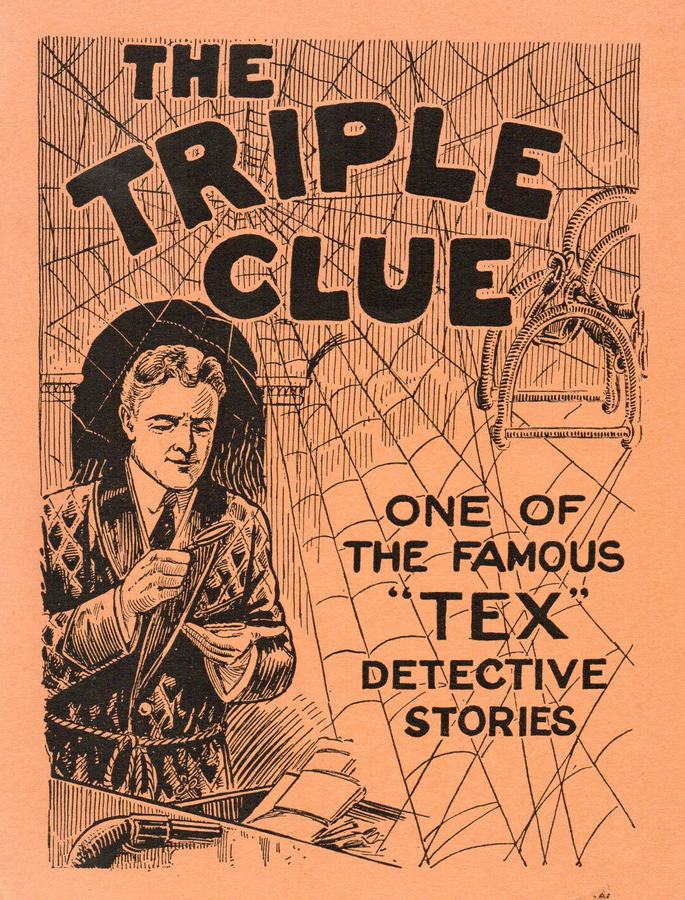
Dir: Tom Collins
Tex clears an innocent man who has been found guilty of murdering a man who was molesting his sweetheart. One of the 'Tex' detective series.
View Details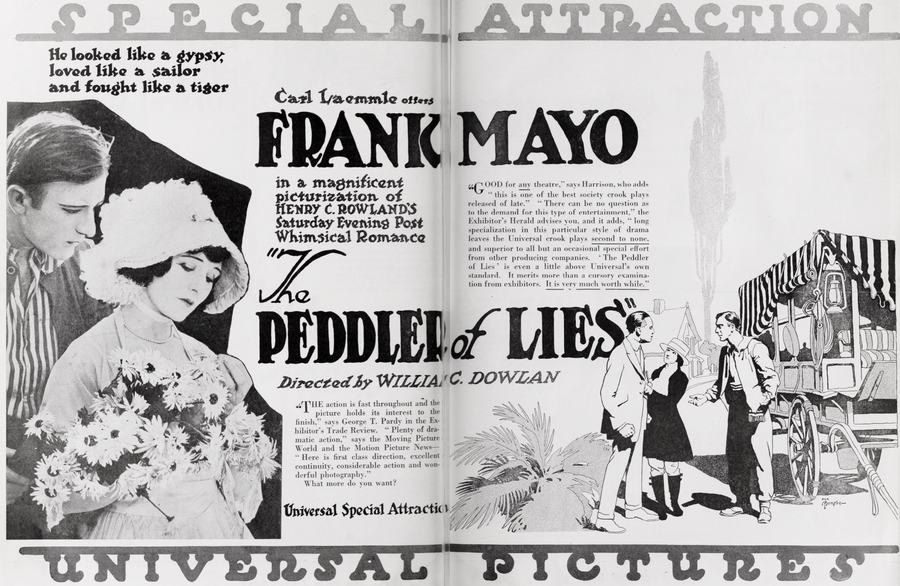
Dir: William C. Dowlan
At a party thrown at the Metcalf estate, the Marquise D'Irancy's Sultana diamond disappears when the lights go out during a power failure. Suspected of the crime is William Kirkland, the wastrel son of the wealthy Kirkland family, but William's sister Diana comes to his defense. Aiding her in the investigation is Clamp, a wandering peddler. After several misadventures, Clamp reveals that he is a secret service agent on the trail of the international criminals, the de Vallignacs, who are summering at the resort. After proving that the de Vallignacs have stolen the diamond, Clamp arrests his prey, clears William and marries Diana.
View Details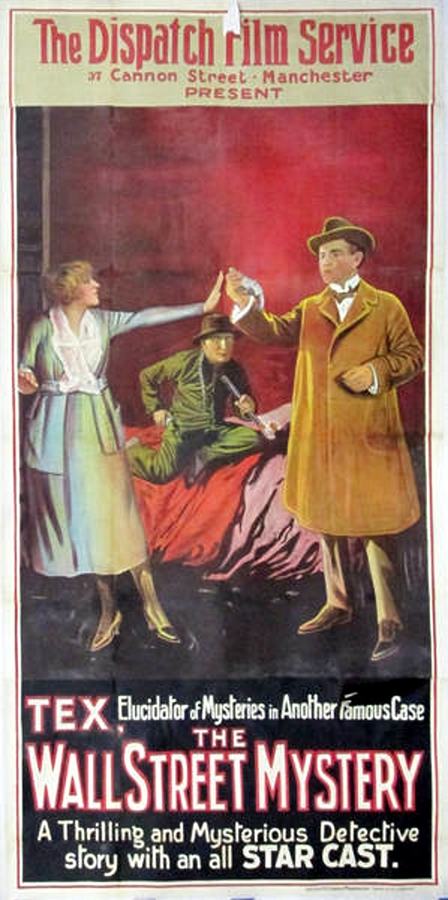
Dir: Tom Collins
When the body of Wall Street broker Norman Temple is found dead in his office, the police arrest contractor James Borden for the crime on the testimony of Temple's secretary that Borden had threatened her employer over an unpaid note. Also under suspicion is Temple's Japanese valet, who quarreled with his employer the day before the murder. Tex, a detective, enters the case, following his own leads which prove the valet innocent. Tex finally deduces that Minkin, one of Temple's clerks, shot his employer when he interrupted the clerk robbing his safe. With Tex's revelation, Minkin's room is searched, the stolen bonds found and Borden is freed.
View Details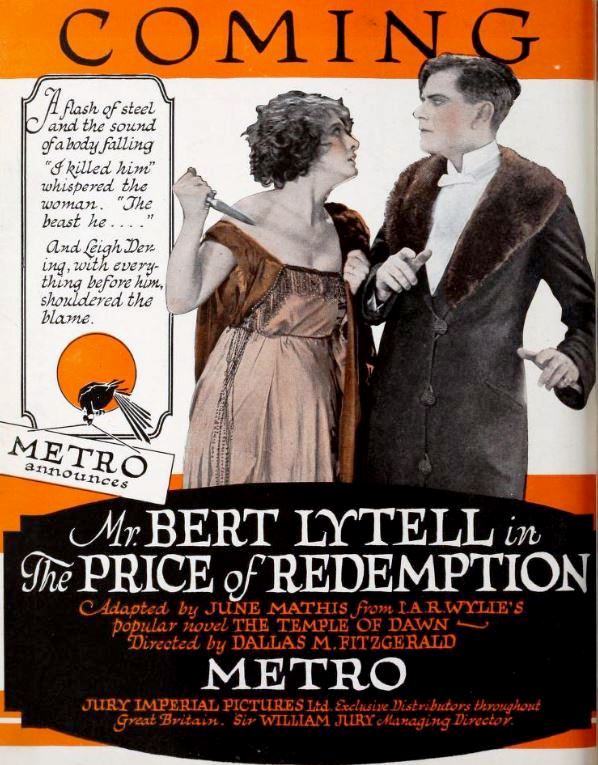
Dir: Dallas M. Fitzgerald
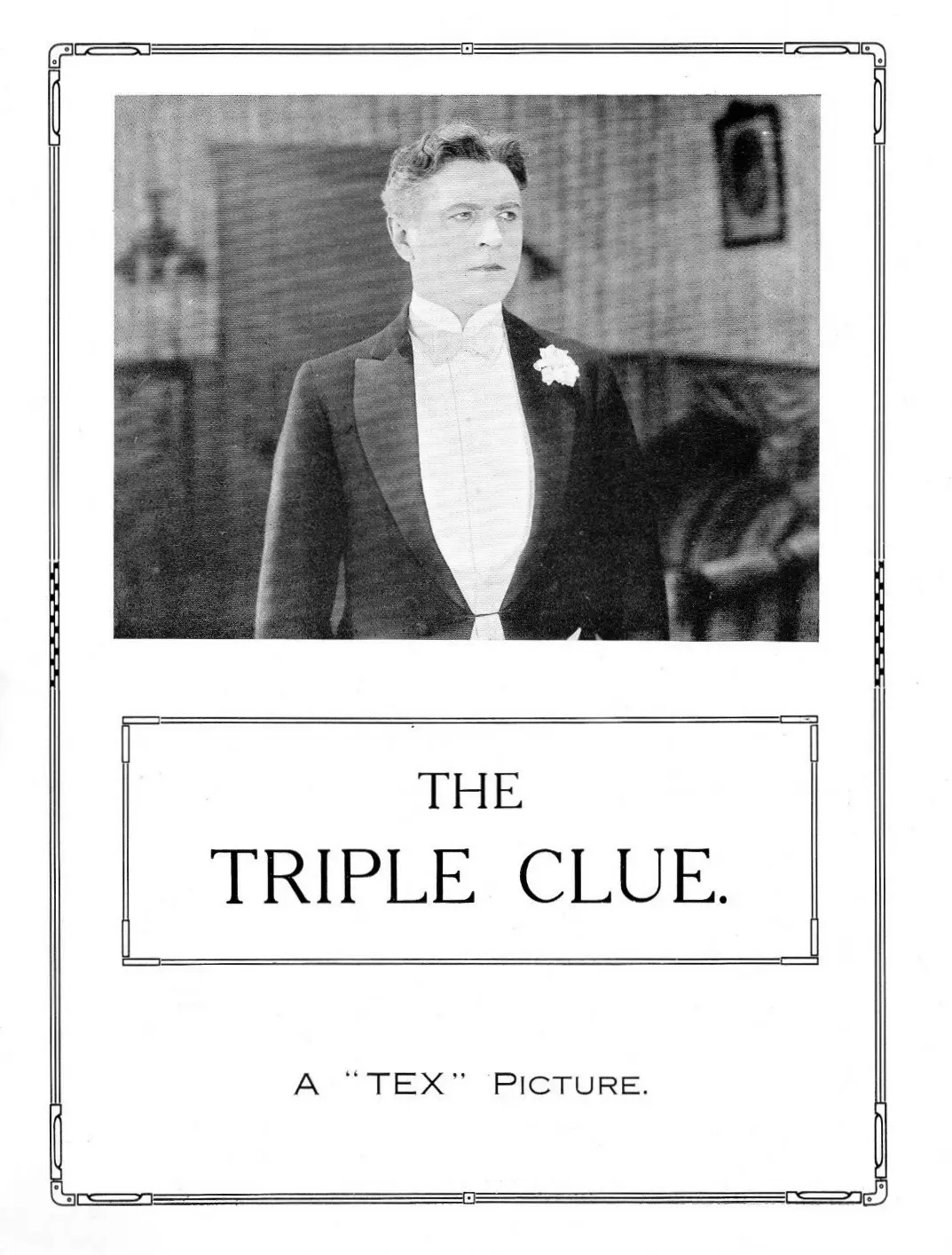
Returning to England a hero after saving a British garrison in India, Leigh Dering marries Jean Desmond, the daughter of a wealthy merchant. Humiliated by the patronage of his wealthy father-in-law, Leigh turns to drink, estranging him from Jean. Returning home one night he finds the body of his wife's father. When Jean accuses her husband of the crime, Leigh disappears, making it seem as if he has been killed in a railway accident. Five years pass and Leigh has become a victim of drink and drugs, barely existing in India. Jean marries Willoughby, an unscrupulous officer who was forced to leave India when his betrayal of the Rajah's sister earned the enmity of the ruler, thus endangering the garrison that Leigh had rescued. When Willoughby returns to India with his new wife, the Rajah seizes upon the opportunity for revenge. Planning to blow up the palace during a reception, the Rajah is thwarted by Leigh. In a rage, the Rajah kills Willoughby in hand-to-hand combat, thereby permitting the reconciliation between Jean and Leigh, who have already paid the price of redemption.
View Details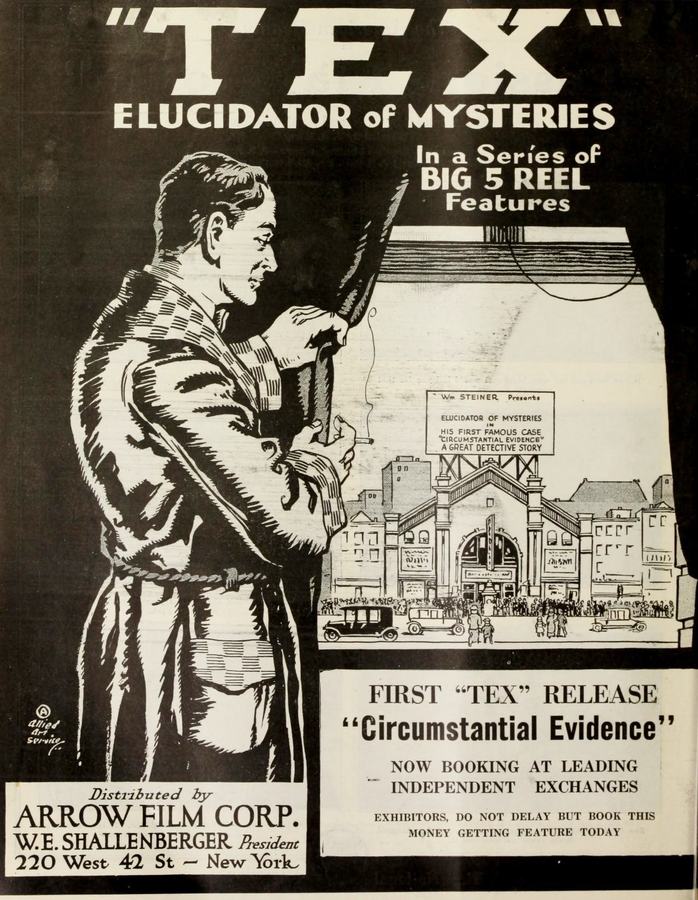
Dir: Tom Collins
Tex, a famous detective, recounts the story of how he went into the crime business: While visiting his old friend, Jack Nelson, a dispute breaks out between Nelson and his butler. Later that night, Nelson is murdered, and the next morning the murder weapon, a knife, is discovered next to the body. Edna, the victim's wife, seizes the knife, and Tex, fearing that she is about to kill herself, throws the weapon out the window. Interpreting Tex's actions as incriminating, the police arrest him, and he is sentenced to prison. Two years later, a fire breaks out at the penitentiary, and Tex's bravery in saving the warden's wife and child wins him a pardon. Determining to solve Nelson's murder, Tex searches for the butler but discovers him to be innocent. Summoned to Edna's deathbed, Tex hears her confess to the crime, thus causing him to devote his life to solving crimes and saving innocents from being convicted on circumstantial evidence.
View Details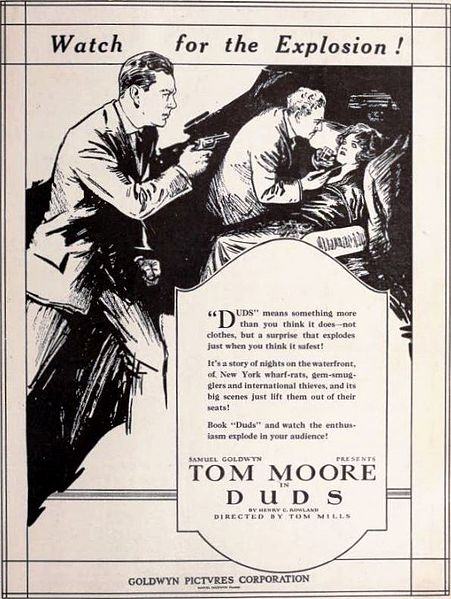
Dir: Thomas R. Mills
Returning from the war front, Captain Phoebe Plunkett accepts an assignment to apprehend jewel smugglers in pursuit of the Sultana diamond. On his mission, he meets Patricia Melton, who introduces herself as a French Secret Service agent also in search of the diamond. Plunkett is in love with Olga Karakoff, daughter of a wealthy jeweler, and he soon comes to suspect that Olga's father is in league with the smugglers. However, Patricia is the true impostor, and after she discovers that the jewel is encased in a locket worn around Olga's neck, she captures Olga and the diamond. Plunkett comes to the rescue and wins both Olga and a large reward for recovering the jewel.
View DetailsAnalysis relative to Chains of Evidence
| Film Title | Atmosphere | Complexity | Similarity |
|---|---|---|---|
| The Woman in Room 13 | Ethereal | Abstract | 91% Match |
| My Lady's Garter | Gritty | Layered | 92% Match |
| The Kalda Ruby | Surreal | Abstract | 86% Match |
| The Way Women Love | Tense | Linear | 93% Match |
| The Triple Clue | Surreal | Dense | 86% Match |
This guide was algorithmically generated using the cinematic metadata of Dallas M. Fitzgerald's archive. Last updated: 6/27/2026.
Back to Chains of Evidence Details →