
DbcultAccessing Vault...
Recommendations
Senior Film Conservator
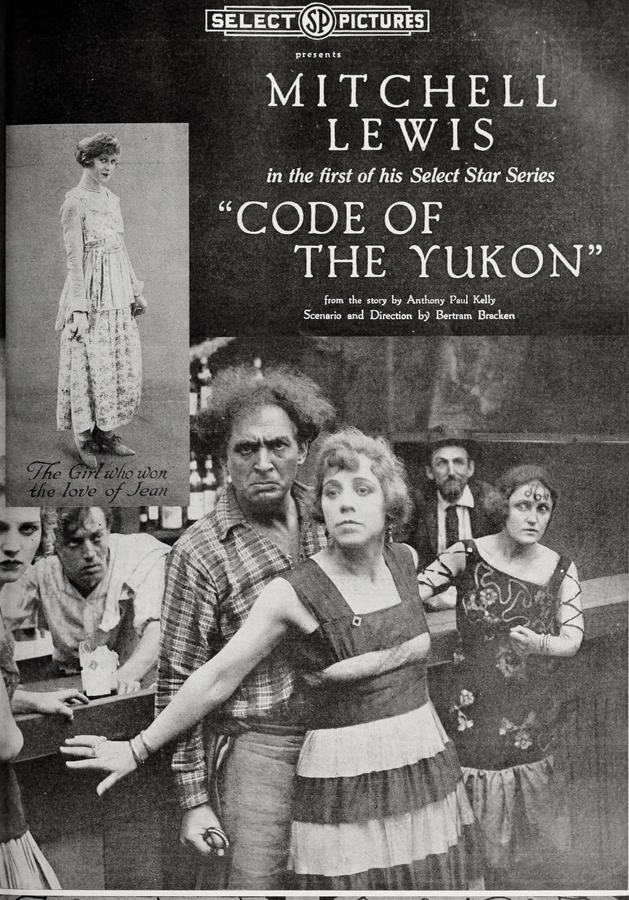
Since its 1918 debut, Code of the Yukon has maintained a unique vision status, the legacy of Code of the Yukon is a beacon for those seeking the unconventional. Our criteria for this list were simple: only the most unique vision and relevant titles.
The 1918 landscape was forever altered by the arrival of to sustain a sense of mystery that persists after the credits roll.
Jean Dubois, who has discovered a gold mine in the Canadian Northwest, seeks revenge on the man who ruined his sister. Jean befriends "Faro" Telford, a gambler who sends for a gang of crooks to take over the mine. Jean's wife runs off with a member of the gang, and Jean, heartbroken, is about to leave the village when "Goldie," a gang member, reveals that it was gang leader Dan Cregan who wronged Jean's sister. Jean is about to murder the crook when lightning strikes a tree, causing it to fall and crush Cregan. Jean's wife returns to him and the two begin anew.
Critics widely regard Code of the Yukon as a cult-favorite piece of cult cinema. Its unique vision is frequently cited as its strongest asset, solidifying its place in United States's film legacy.
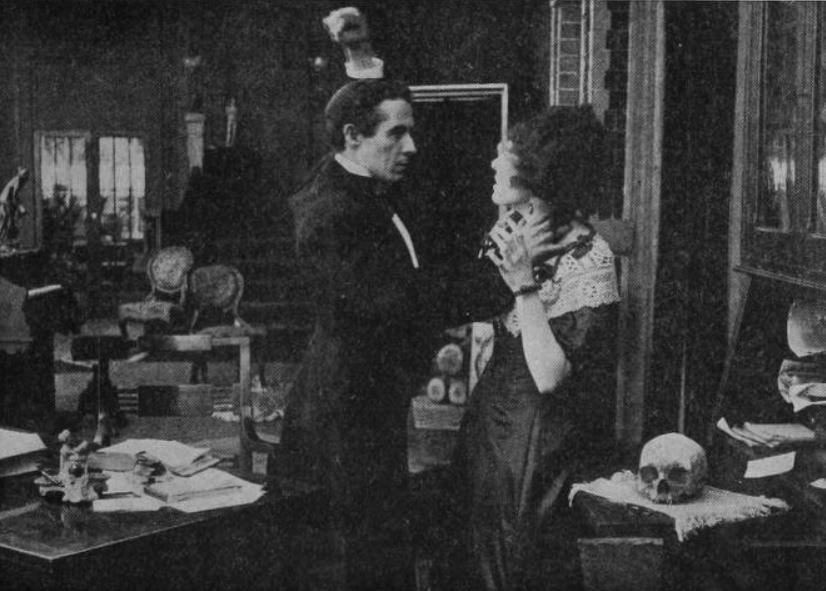
Based on the unique unique vision of Code of the Yukon, our vault has identified these titles as the most compelling follow-up experiences for fans of cult cinema:
Dir: Bertram Bracken
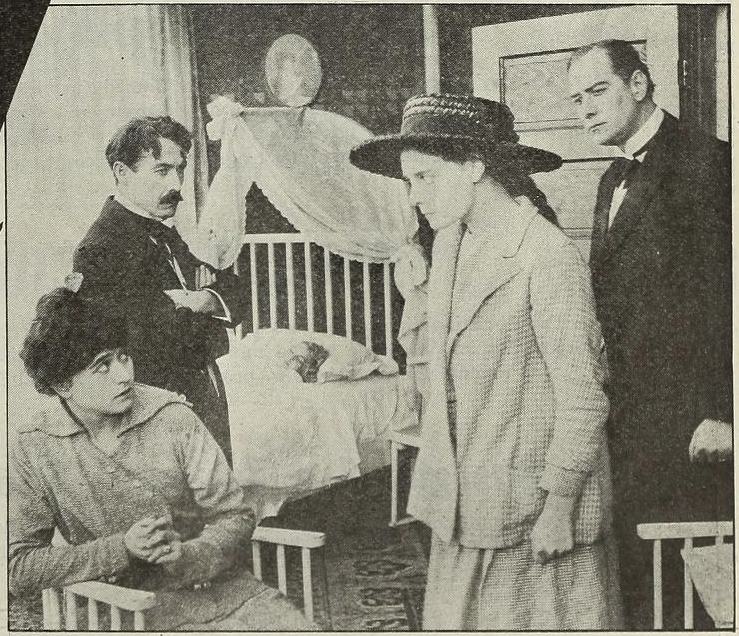
Dr. Guy Hartwell, a young and wealthy Louisiana physician, was a man of strange personality. Five years previous to the opening of the story he married and bestowed sincere love upon his wife. In return she basely played him false and shortly afterward died. From that moment he was a changed man. Embittered against the world, mankind and even distrusting God, the silent and melancholy man lived on. With the doctor lived his widowed sister and her daughter, whom everyone considered as the heir of the physician's wealth. In the same city lived Beulah Benton, who was sent from the orphan asylum out into the world to earn her living as a servant girl, while her little sister Lillian found a home as the foster daughter of a rich lady. At the orphanage Beulah learned to love Eugene, another inmate, but he, too, was adopted by a wealthy family and sent abroad to be educated. He promised upon his return to make Beulah his wife. Beulah yearned to see her sister, but Lillian's foster parents forbade the two to meet. This affected Beulah deeply, but the crushing blow was about to descend. Lillian fell ill, and in spite of every effort of Dr. Hartwell the younger sister died. Beulah, seeing the crepe on the door, forced herself in and for the first time met the doctor. The kindness of his nature was reawakened by the grief-stricken girl, and he took her to his home, attended her through a serious illness, then placed her in school. But Beulah found her new surroundings far from pleasant. While the doctor as yet refused to trust any woman, he treated her with marked respect and consideration, but his sister fearing that the adopted girl would become the heir instead of her own daughter, lost no opportunity to humiliate Beulah. It was more than she could bear, and at last the girl sadly left the doctor's house and returned to the orphanage, but the doctor, however, brought her home again and provided other quarters for his sister and her daughter, both of whom were wholly dependent upon him for support. The years passed and Beulah's lover, Eugene, returned from Europe, a dissipated wretch, his love for the orphan girl forgotten and his hand pledged to the frivolous niece of Dr. Hartwell's false wife. The physician warned the foolish youth to give her up, pleading with him to remain true to his promise to Beulah, but without avail. It was now that Hartwell realized that he himself loved her and declared his affection. Beulah expressed her great gratitude, but still grieving over her false lover told him that she could not return his affections. Hartwell went North and Beulah became a school teacher. An epidemic broke out and people were perishing by the score. Doctor Hartwell returned to the stricken city. The doctor and Beulah met and side by side they fought the ravages of the disease. Clara Saunders a friend of Beulah's fell in love with Hartwell but becomes a victim of the plague, and with her departing breath joined the hands of the two, and bade them be happy. Through comradeship with Beulah, the doctor's faith in God and Man was restored, and his life made still brighter by her voluntary confession of her love for him. Their marriage followed, and Beulah and her husband fearlessly faced the future.
View Details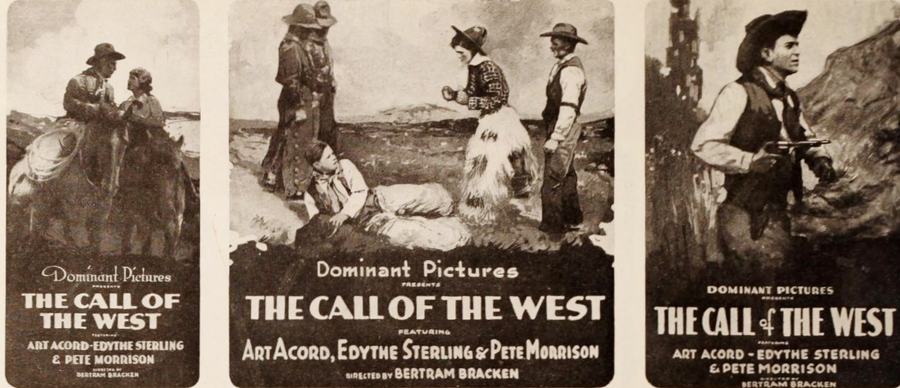
Dir: Bertram Bracken
A fascinating piece of cinema that shares thematic elements.
View Details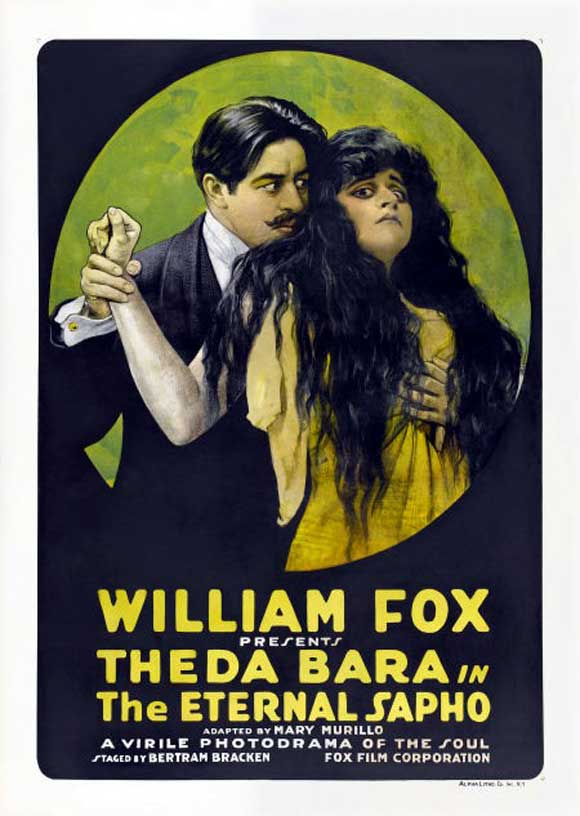
Dir: Bertram Bracken
From Alphonse Daudet's 1884 novel comes a variation: A scheme by a beautiful vamp to marry a wealthy young man fails, and the woman returns to her former lover, a sculptor. She is shocked to discover he has committed suicide, and the tragedy catapults her into insanity.
View Details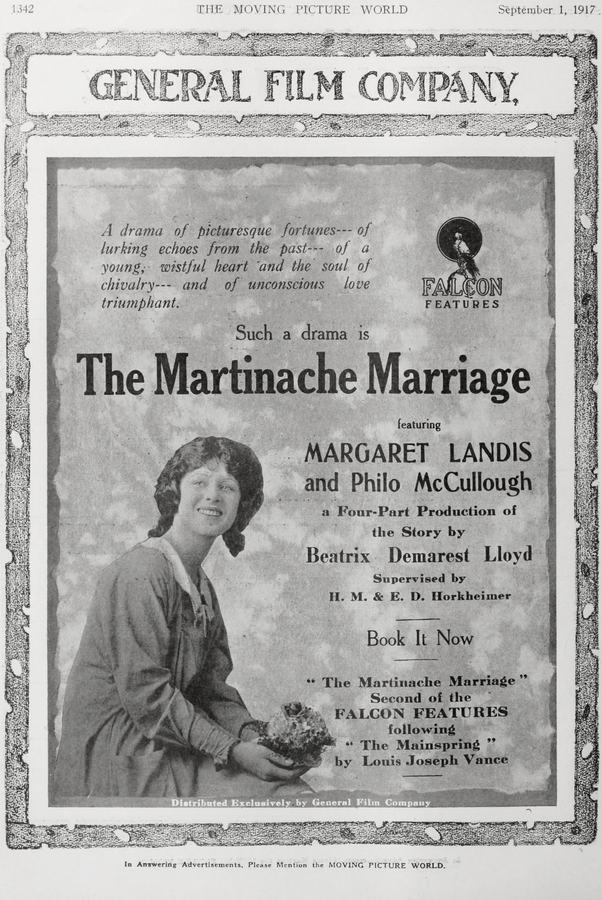
Dir: Bertram Bracken
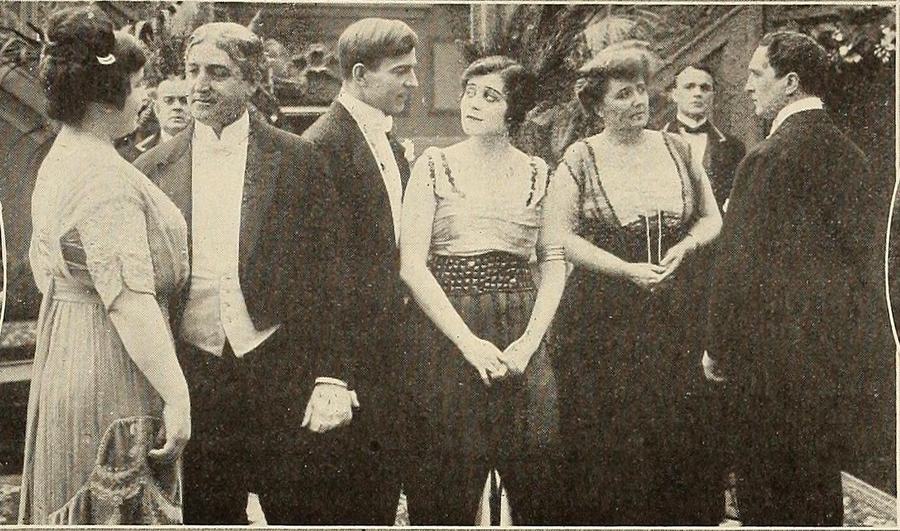
In Paris, wealthy young American Horace Martinache takes a young flower girl to a hospital after knocking her down in his auto, and leaves money with friends to pay for her education. Years later, when Horace's nephew Eric plans to bring home a young actress whom he met in Europe and wants to marry, Horace's mother and sister ask for his help in breaking up the romance. Horace, an unmarried colonel, indulges them and agrees to court her to make her lose interest in Eric. The actress, Sara St. Ypriex, recognizes Horace as her benefactor and encourages him. Horace, unaware that Sara was the flower girl, falls in love with her. After Eric fails to respond to Sara's cries of alarm when one of her other suitors, Roscoe Vandercourt, tries to attack her, Horace protects her, but Vandercourt escapes. Sara accepts Horace's marriage proposal and Vandercourt, really an international crook, is trounced by Sara's father, who earlier served a prison term because of Vandercourt's treachery.
View Details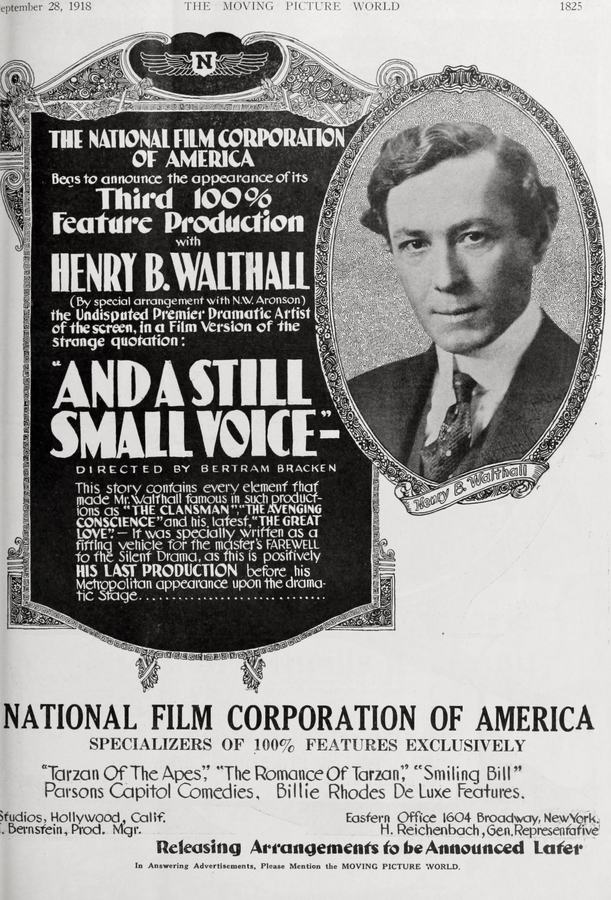
Dir: Bertram Bracken
Cashier Clay Randolph is taken by Richard Dunlap, a swindling gambler, into embezzling $5,000. When Richard loses the money, Clay assumes the responsibility for the crime to protect his former sweetheart, Mary Singleton, who has married Richard. Mary's father, Col. Robert Singleton, gives Clay a copy of Mary Baker Eddy's Science and Health to help him start a new life, but the young man ignores the book and leaves for New York, where he becomes a gentleman thief. Mary and Richard soon leave the South and join him. When Steele, a millionaire, tries to implicate Mary in the supposed theft of a diamond necklace, Clay retrieves the jewels and returns them to the safe. Reciting from Science and Health , Mary telepathically warns Clay not to rob Steele's safe, and later Richard is killed while committing the crime Clay had planned. To redeem himself, Clay enlists in the army to fight in World War I, promising Mary that he will return.
View Details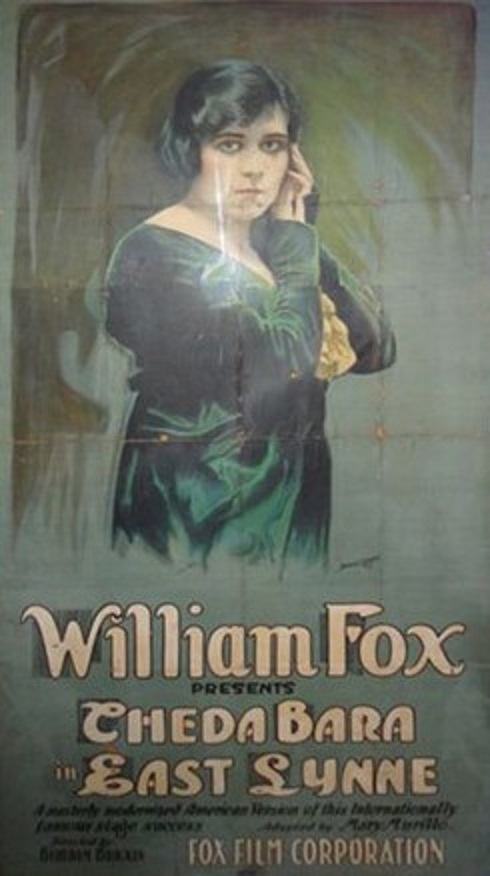
Dir: Bertram Bracken
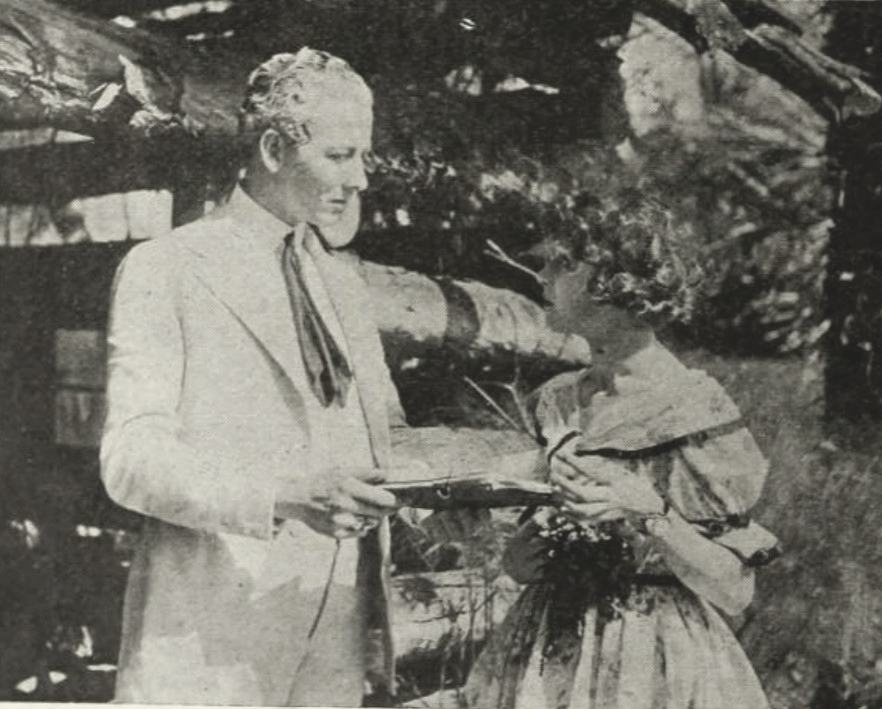
A woman leaves her husband and children for mistaken reasons. After being thought killed in a train crash, she returns in disguise to be the children's governess.
View Details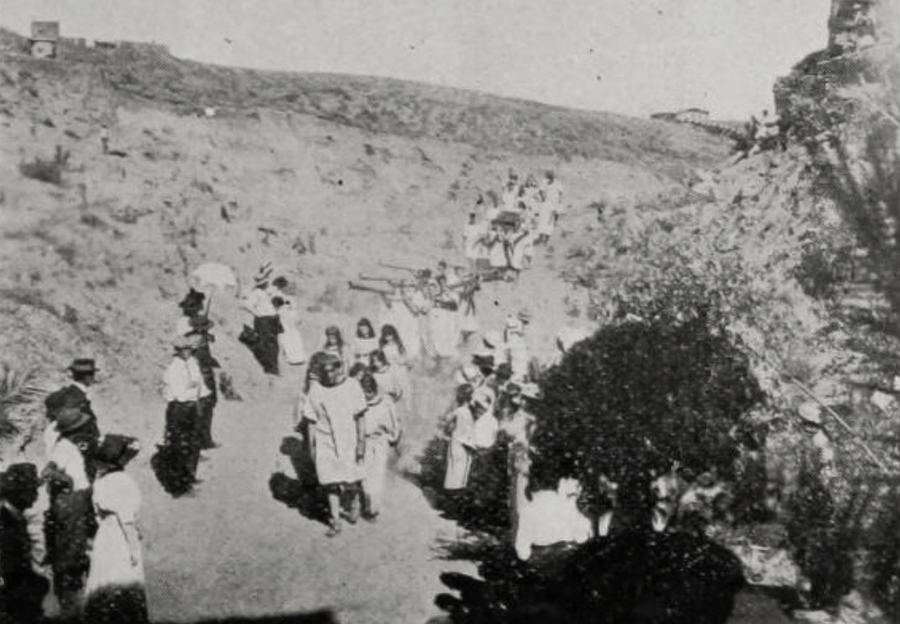
Dir: Bertram Bracken
Architect John Chance, before building a "Dream City" for a religious cult leader, Prophet Stein, visits Paris and rescues an American girl, Cynthia Grey, from riotous masqueraders at a carnival. After they part, Cynthia returns home. Meeting Stein aboard a ship, and having an idealistic nature, she becomes a follower of Stein, who thinks her beauty will attract others. Chance builds the city, agreeing to say it was made by the "comrades" so that Stein's motto, "Beauty Through Toil," will seem to be true. Cynthia and Chance fall in love and when Stein, a married man, attempts to seduce Cynthia, Chance tells the newspapers, which expose Stein and his financially fraudulent practices. The "comrades" burn the "Dream City" and Chance saves Cynthia, while Stein, attempting to leave with his ill-gotten money, dies when a burning beam falls on his head.
View Details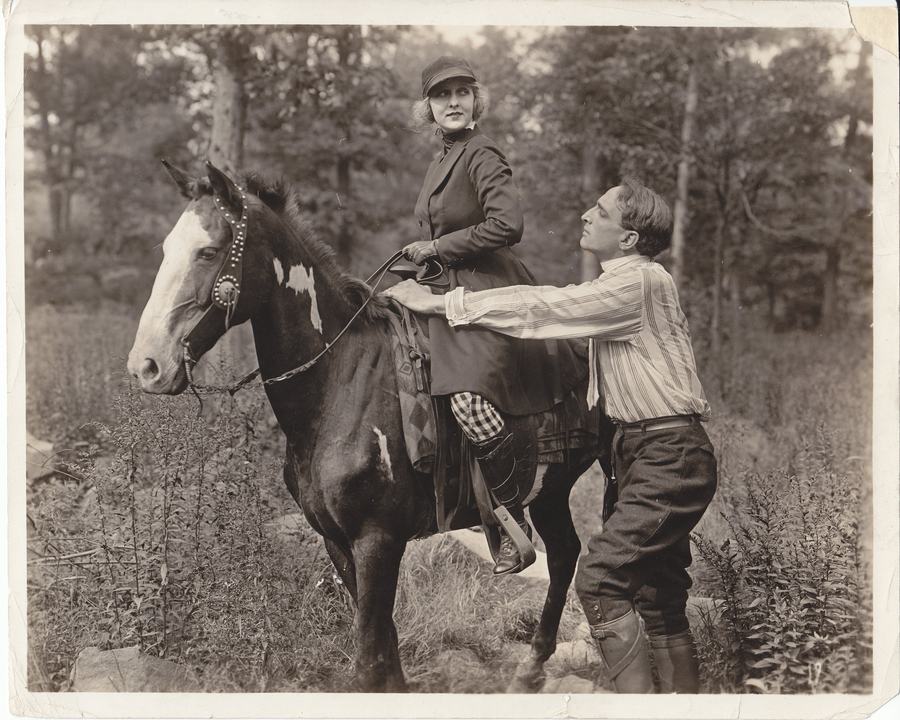
Dir: Bertram Bracken
A rich society girl holds an Indian boy in contempt, but when an important land deal with his father arises, She pretends to be interested in him, long enough for him to persuade his father to sign.
View Details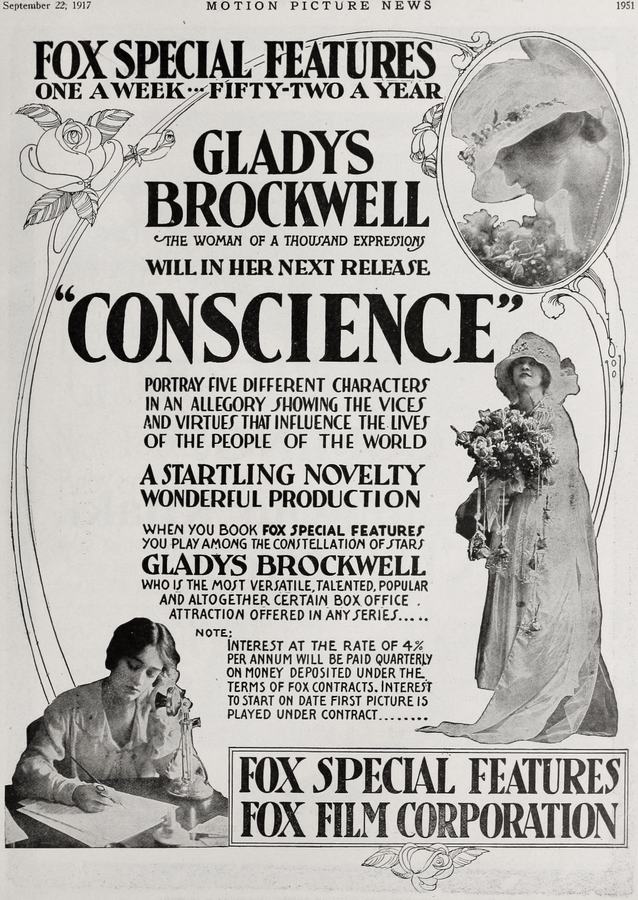
Dir: Bertram Bracken
In a prologue, blind poet John Milton dictates Paradise Lost to his daughters. Serama, the consort of Lucifer, is driven from Paradise by the Archangel Michael, who commands Conscience to enter human souls to judge and punish them. In the main story, society girl Ruth Somers, a reincarnation of Serama, prepares to marry Cecil Brooke, the wealthiest man of her set. Her guardian, Dr. Norton, an incarnation of Lucifer, constantly accompanies her. Ruth is summoned to the Court of Conscience, where the witnesses, Lust, Avarice, Hate, Revenge and Vanity, testify about Ruth's history of seducing and abandoning men. This behavior resulted in the suicide of Madge, the lover of Ned Langley, whom Ruth enthralled and promised to marry, and also the deaths of two rivals for her love. Ruth is ordered back to earth to learn her sentence. When Ned interrupts the wedding, Ruth scorns him and he shoots himself. After Brooke leaves her, the Court dooms Ruth to live with the torment of remembrance. Ruth sends Norton away, then kneels and repents.
View Details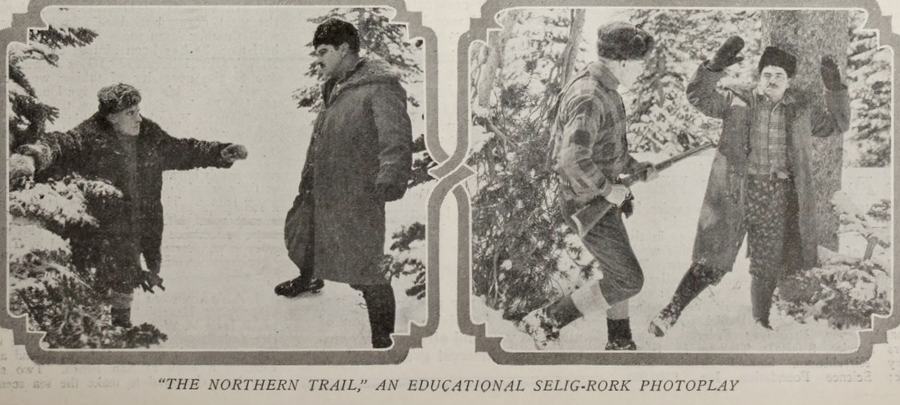
Dir: Bertram Bracken
A thousand dollar prize is offered to the winner of a dog race, and Jan Ducet would have used the money to doctor up his little child's bad leg if he had won. But he lost; and the winner, Otto Franke, runs away with Jan's wife. A priest takes care of the little girl while Jan gives chase and finds the regretful woman in the snow. A fight follows and Jan hurls Otto from a high cliff and returns home with his wife.
View DetailsAnalysis relative to Code of the Yukon
| Film Title | Atmosphere | Complexity | Similarity |
|---|---|---|---|
| Beulah | Surreal | Abstract | 89% Match |
| Call of the West | Ethereal | Linear | 86% Match |
| The Eternal Sappho | Surreal | Abstract | 87% Match |
| The Martinache Marriage | Gritty | High | 93% Match |
| And a Still Small Voice | Ethereal | Layered | 93% Match |
This guide was algorithmically generated using the cinematic metadata of Bertram Bracken's archive. Last updated: 8/16/2026.
Back to Code of the Yukon Details →